


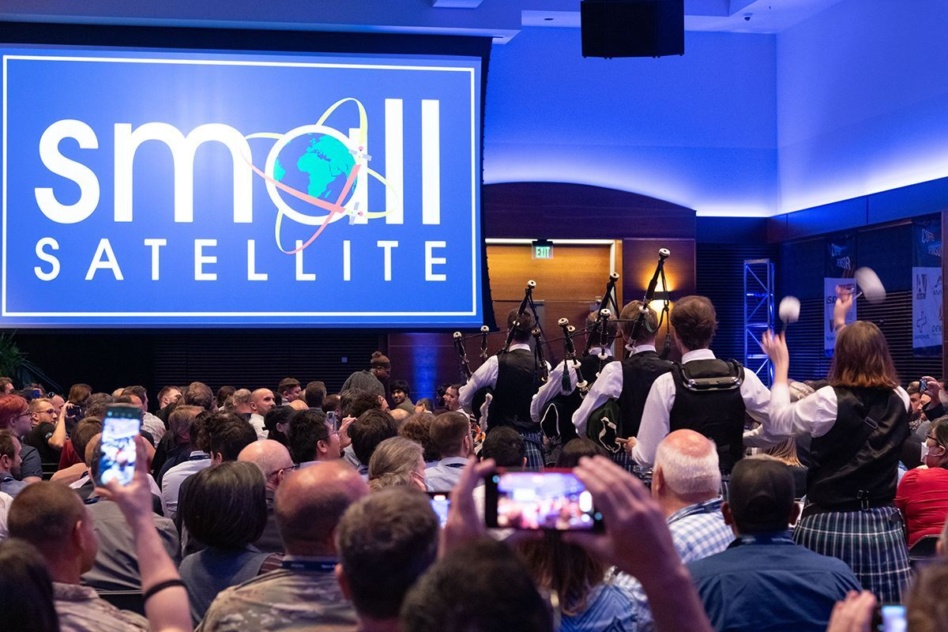
The 2024 edition of SmallSat wrapped up last week, and while many of the hundreds of companies in attendance were keen to make their own announcements, the conference had some news itself: SmallSat has outgrown its home in Logan.
SmallSat 2025 will be held in Salt Lake City, a healthy sign for the smallsat ecosystem.
This just in: The size of this year’s conference meant that the press wires were a fire hose of companies unveiling innovative technologies, new partnerships, and additional funding streams. While we covered some news in the moment (including Benchmark’s partnerships with Starlight and ANT, Impulse’s offering of GEO rideshares, Perceptive Space’s emergence from stealth, and Interstellar’s $21M Series E) here’s our round up of news you may have missed:
On the move: Many of the announcements centered around the growing need for satellites to do more on orbit. As LEO gets more congested, satellites will have to maneuver more regularly—either to avoid other satellites and debris, or to conduct rendezvous and proximity operations (RPO).
To support this future, many companies at SmallSat unveiled new tech and hardware, including:
- Viasat’s multi-mission orchestrator software that will help optimize and automate the growing number of LEO constellations.
- Agile Space Industries’ zero-slosh piston tanks, which will allow satellites to perform quicker, more precise RPO missions.
- Little Place Labs’ virtual mission with Loft Orbital to demonstrate on-orbit edge computing and data processing with the goals of speeding up how quickly satellite data can be analyzed and helping increase the US Air Force’s maritime domain awareness.
Dollars and cents: While there was some talk at the conference about the reduced availability of funds for space companies compared to five years ago, the number of funding announcements revealed in Logan made it clear that many companies weren’t having any trouble. Here are some of those deals:
- Muon Space secured $56.7M in Series B funding to support $100M in customer contracts for its Halo LEO satellites.
- DCubed raised €4.4M ($4.8M) in Series A funding, which will help the company expand its in-space manufacturing capabilities and open up a new office in Colorado.
- Arrow acquired XTERRA to increase the company’s suite of satellite deployment systems.

Inside Starburst’s First Flight, and Portal’s New Bothell Office
“I feel like 80% success now,” CEO Jeff Thurnburg said. “But honestly, to get this far this fast, I’m tempted to call it 100%.”

European MNOs Join Forces to Explore Joint MSS Spectrum Bid
Deutsche Telekom, Telefónica, Orange, and Vodafone plan to establish ground network infrastructure across Europe, and partner with an as-yet undetermined satellite operator for the D2D connection.
Exclusive: EraDrive Lands $13M DoD Award For Autonomy Module
EraDrive won a $13M DoD award, under which the Space Force will buy an undisclosed number of the company’s Era-Node vision-based autonomy modules.
WarpWare Closes Pre-Seed to Bring Agentic Tools to Flight Software
CO-based WarpWare closed its $1.2M pre-seed round today to expand what it calls an AI-enabled engineering platform for space missions.
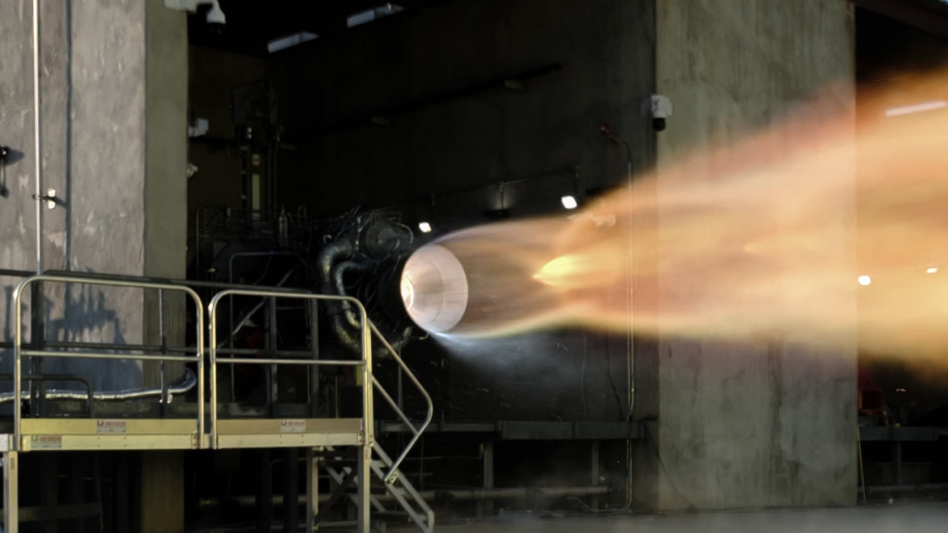
On the heels of a record-setting quarter, Rocket Lab announced Thursday that it had notched a major milestone in its quest for medium launch with a successful hotfire of its new Archimedes engine.
Hot take: Rocket Lab has made its name so far in small launch, but its ambition lies beyond that. The company recently successfully test fired the Archimedes engine that will power its Neutron medium-lift rocket, which it hopes will break SpaceX’s monopoly in medium-sized launch vehicles.
Now they’re in the process of ramping up production of Archimedes engines and continuing to check off milestones in the development of Neutron’s hardware, fairing, avionics, and flight software.
Keep reading