


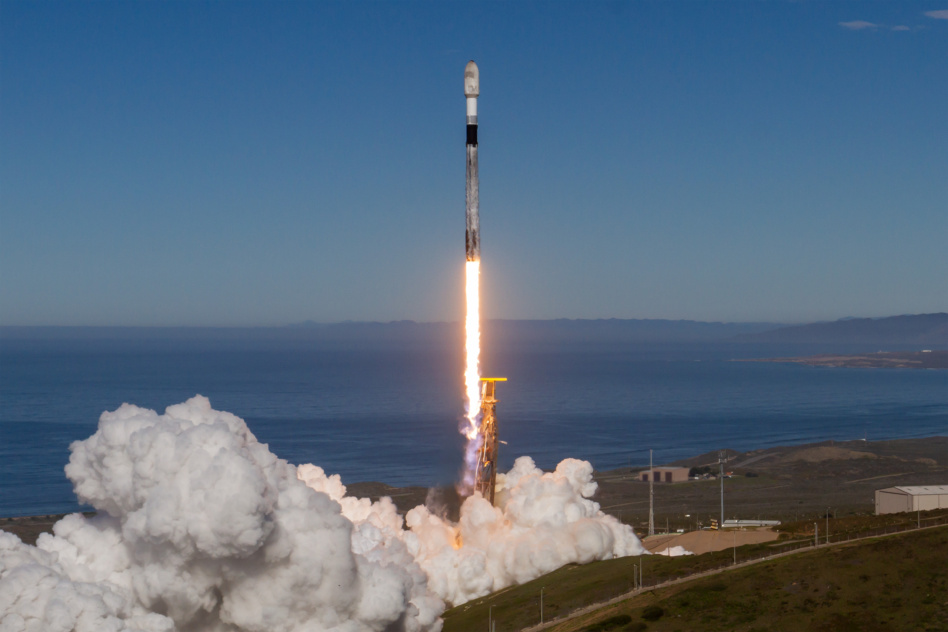
While SpaceX rideshare missions are always chock-full of new tech headed to orbit, Friday’s Transporter-15 flight was busier than most. The launch from Vandenberg Space Force Base in California deployed 140 payloads, which is the second-largest haul since regular Transporter flights began in 2021.
Here’s a peek at what was on board:
Bird’s eye views: Like past rideshare missions, Transporter-15 carried dozens of EO sats intended to kickstart constellations—or build upon tech that’s already in orbit. Highlights of some sats hitching a ride include:
- 36 SuperDove birds and 2 Pelican sats from Planet Labs;
- Five SAR sats from ICEYE, giving enhanced EO capabilities to the Greek National Space Program, Polish military, and BAE System’s Azalea constellation;
- Three NewSat Mark-V sats from Satellogic;
- Eight Eaglet II satellites with hyperspectral imaging and automatic identification systems as part of Italy’s IRIDE national EO constellation;
- Three multispectral satellites by Scanway, which is setting up a national EO constellation for Poland;
- One Formosat satellite as part of Taiwan’s planed eight-sat, high-resolution EO constellation;
- The first climate monitoring EO satellite from a local government in Korea, called GyeonggiSat-1, which will monitor the region directly outside of Seoul.
Satception: The rise of spacetugs, orbital transfer vehicles, and reentry capsules means that some payloads had a connecting flight once SpaceX got them into orbit.
- Impulse Space’s Mira spacetug is hosting a non-Earth imaging camera from HEO, and tech demonstrations from Samara Aerospace, and Zenno Astronautics; it’s also deploying cubesats from FOSSA Systems using Exolaunch’s deployment system.
- Two orbital transfer vehicles from Italian startup D-Orbit are hosting payloads from ESA, Spire, Spaceium, Pale Blue, Planetek and StardustMe.
- Loft Orbital’s YAM-9 rideshare spacecraft is carrying a hyperspectral camera from Wyvern, as well as edge-compute technology to host virtual missions.
- Varda’s fifth reentry capsule, and fourth to fly this year, is carrying a US government payload as part of the Prometheus program to study materials performance at hypersonic speeds.
The future is now: Also on board the SpaceX rideshare are a few technologies that promise to bring humanity into a new digital age.
- Singaporean quantum comms company SpeQtral, along with the UK Science and Technology Facilities Council, sent a satellite to demonstrate its quantum comms tech;
- Blockchain startup Spacecoin sent three 16U sats as part of a larger constellation to test Spacecoin’s decentralized satellite internet network;
- Open Cosmos launched its 6G Starlab satellite to support research into 6G space-to-ground connectivity with laser comms terminals.
Reflect Orbital Buys Two Skyroot Aerospace Launches
Reflect Orbital announced the purchase of two launches today from Indian launcher Skyroot Aerospace.

DOT Proposes Changes to Part 450 Licensing Rules
On Tuesday, Transportation Secretary Sean Duffy announced five proposed FAA rules aiming to streamline and modernize commercial space launch and reentry regulations.
ArbaLabs Launches AI Verification Demo On South Korea’s Nuri Rocket
“In short, tons of companies are looking at the latest and greatest physical AI deployments,” ArbaLabs CEO Ashley Reeves told Payload. “Nobody is really thinking about putting some checks and balances on what these AI models are doing.”
HawkEye 360 Turns its RF-Sensors to Orbital Targets
The DoD wants to better understand what’s going on in orbit. HawkEye 360 ($HAWK) has the inside scoop.
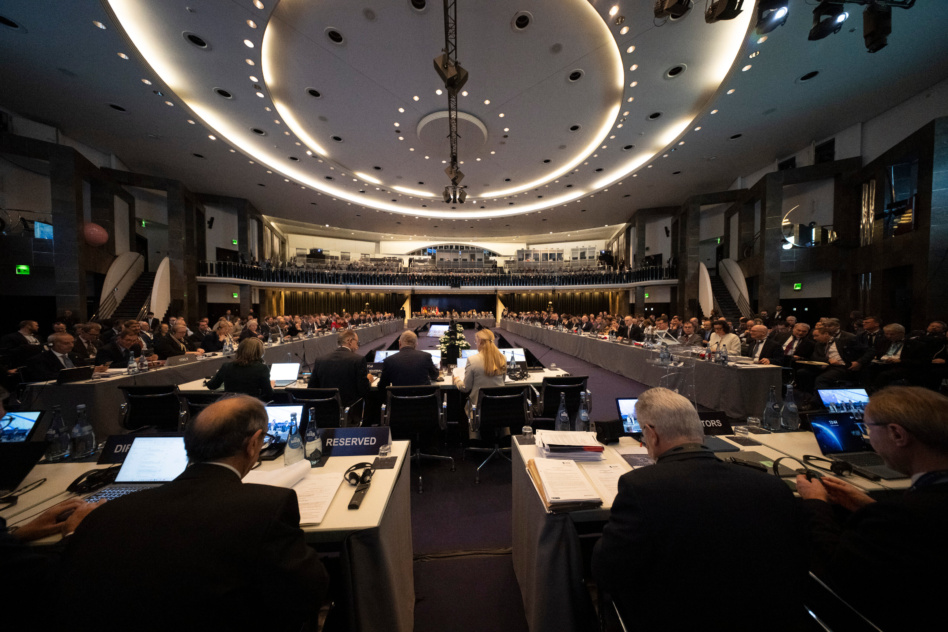
This week, ESA member states approved €22.07B in total contributions covering the next three years of ESA operations—up from €16.9B in 2022.
The funding level is not only the highest amount in ESA history, it’s also 99% of ESA’s proposed €22.25B budget—signaling that Europe is fully aligned on the importance of space in securing European security, and underpinning the future economic prosperity of the region.
“We typically reach 90-92%, maybe 93%…this time it’s different,” ESA Director General Josef Aschbacher said at a press conference following the council. “I think this message by Europe needing to catch up, and to step up, and literally elevate the future of Europe through space, has been taken by our ministers very seriously.”
Keep reading