


It’s earnings season for the space industry, and publicly traded space stocks keep playing the same hit. It goes like this: higher revenue, bigger backlog, and acquisitions to boot.
Voyager Technologies ($VOYG) followed suit with its earnings results for 2025, released yesterday after the bell.
The ones and twos:
- Voyager posted $166.4M in net sales for 2025, up 15% YoY;
- Sales growth was driven by the strength of the company’s defense and natsec business, which saw yearly sales increase 59% YoY—from $77.5M, to $123M.
- The company ended the year with a record $265.6M in total backlog;
- Voyager also closed out 2025 with $704.7M in total liquidity, up 15% from the previous quarter.
Despite the strong performance, the company incurred $116.1M in losses during the year—largely due to the company’s high cost of operations. The horizon, however, looks brighter than ever.
Voyager expects the momentum to continue pushing its sales higher, and projected FY 2026 revenue between $225M and $255M, representing a 35%+ increase over 2025.
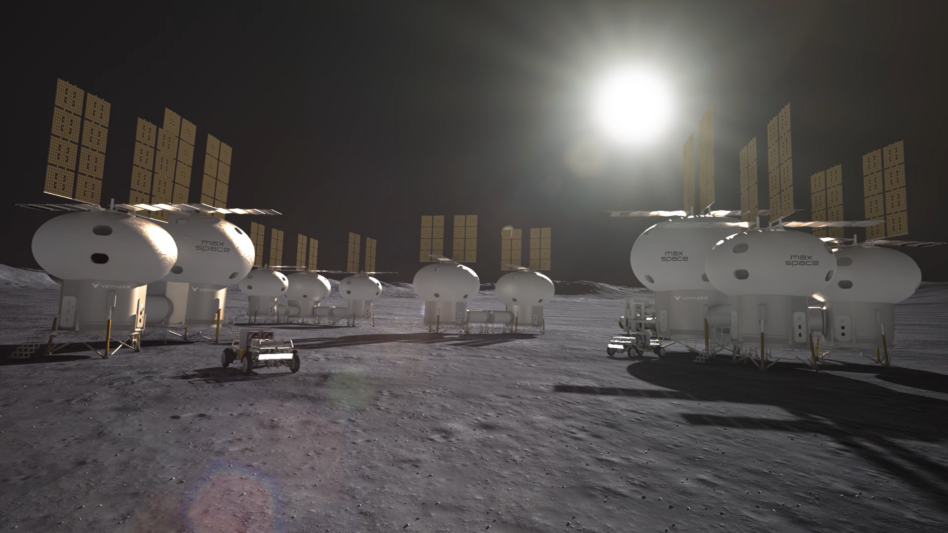
Buying season: Yesterday, Voyager announced an investment in its partner Max Space, which a spokesperson told Via Satellite was in the “low-eight figures.” Last month, Max Space and Voyager announced they would collaborate on the design of an expandable lunar habitat.
The investment follows five acquisitions Voyager made in 2025 to “strengthen portfolio capabilities across propulsion, energetics, space infrastructure, and defense systems,” according to the earnings release.
In the longer term, the company is betting big on the US government’s commitment to creating a commercial environment on the lunar surface. Last month, Voyager outlined its plans to lead the lunar economy, which included new partnerships, deeper investments, and “phased development activities aligned with evolving government and commercial timelines.”

CLPS Companies Excited For NASA’s ‘Opportunity Bomb’ Lunar Plan
Last week, NASA laid out a vision for a lunar base that’s built and supplied through monthly uncrewed lunar landings, with launches beginning as soon as next year.It’s no surprise that CLPS companies are raring to go.
Artemis II Is On The Way To The Moon
NASA astronauts Reid Wiseman, Christina Koch, and Victor Glover, plus Canadian Space Agency astronaut Jeremy Hansen, are on board—with Koch and Glover poised to make history as the first woman and person of color to head to the Moon, and Hansen as the first non-American.
Top Space Lawmaker on Moon Base, Artemis Plans
“What I have heard from colleagues is they’re really rallying behind the idea of going to the Moon,” he told Payload. “Once we establish a base there…that might be the best place to launch to Mars.”
Q&A With Lunar Base Manager Carlos Garcia-Galan
At the start of last week, Carlos Garcia-Galan was working on NASA’s program for a lunar-orbiting habitat. Last Tuesday, however, he became the person overseeing the space agency’s ambitious plan to build a lunar surface base at record speed. During last week’s Ignition event at NASA HQ, Payload sat down with Garcia-Galan, the program executive…
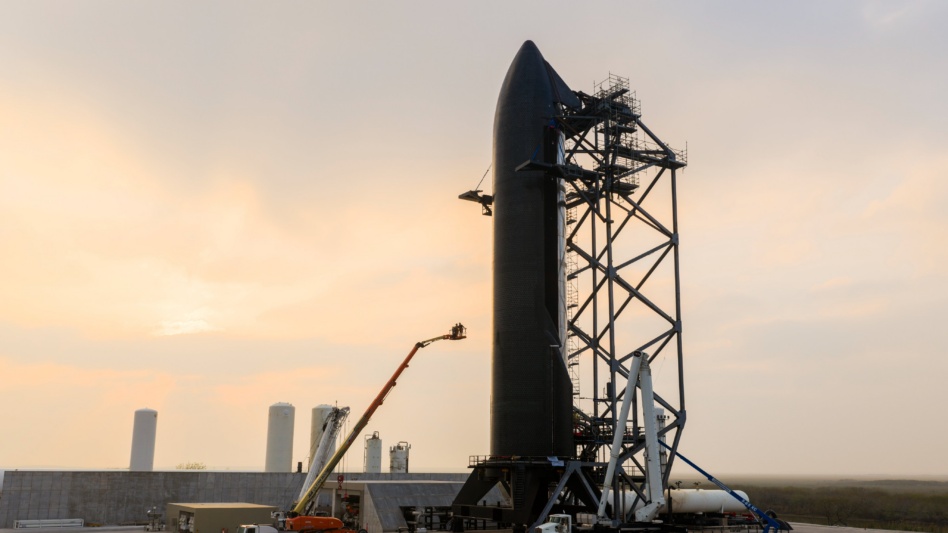
SpaceX CEO Elon Musk turned to X this weekend to announce the first launch of Starship V3 was “about 4 weeks” away.
While we shouldn’t necessarily take Musk at his word—especially seeing as he said the launch was about six weeks away…nearly six weeks ago—the updated timeline means that most of the specifics on the spacecraft are locked in.
SWaP it out: Here’s what we know about the vehicle so far:
Keep reading