


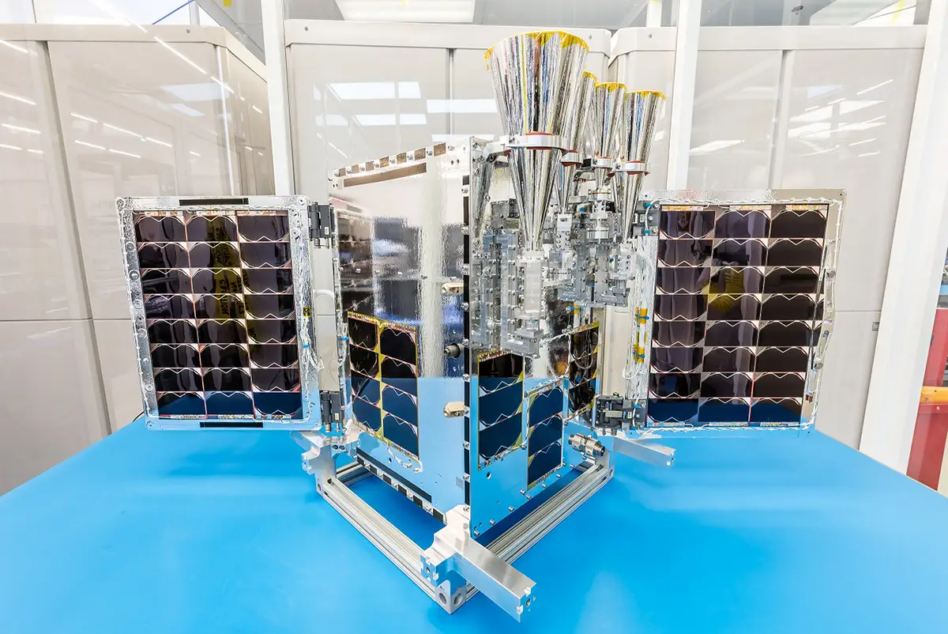
Telesat’s ($TSAT) LEO broadband plans are back on track. On Friday, the company announced a $2.1B CAD ($1.6B) contract with Canadian space tech company MDA ($MDA) to build 198 satellites.
The deal puts an end to Telesat’s previous plan to build its constellation using slightly larger satellites from Thales Alenia Space, which has been beset by supply chain issues and delays. The switch to MDA is saving Telesat ~$2B, the company said in a statement.
Lightspeed
Telesat plans on bringing ultrafast, ultra-secure comms to enterprise and government customers through its planned Lightspeed constellation, which is the largest commercial space project undertaken by a Canadian company.
Telesat has secured $2B in funding commitments for Lightspeed, and is providing $1.6B in its own equity commitments.
- The first 156 satellites needed to get its initial service up and running are fully funded.
- Telesat expects the revenues from that initial service to fund the remainder of the constellation.
- MDA’s contract includes the option for an additional 100 satellites on top of the first 198.
The first Lightspeed launches are slated for mid-2026, and service is expected to begin by the end of 2027. Telesat CCO Glann Katz told SpaceNews that those launches are already contracted, but didn’t provide additional details.
Business is booming
Telesat also reported its Q2 earnings on Friday, revealing profits of $519.9M CAD ($386.3M). The company’s stock jumped more than 45% the day the contract was announced, and is currently up ~62% since Friday before market open.
MDA’s stock surged, too, since the contract with Telesat is the Canadian tech company’s biggest deal yet. It’s trading up ~24% since Friday morning.
- Telesat CEO Dan Goldberg noted in the earnings call that MDA’s digital beam-forming tech, which is intended to increase the efficiency of inter-satellite links, is now “sufficiently mature” to be used.
- That tech will allow Telesat to triple the number of beams per satellite, Goldberg said.
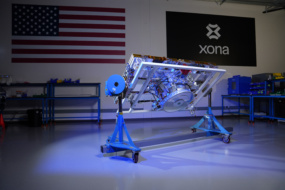
Exclusive: Xona Ramps Up Production Ahead of Pulsar Launch
With FCC approval in hand and six sats ready for the pad, Xona is turning to its next challenge: building the next 250.

Nebex Partners with Thrusters Unlimited to Unlock $700M for Mexico’s Space Ecosystem
The capital will fund EO, telecoms and other strategic capabilities, according to Nebex.

Exclusive: Meridian Space Spins Out from SpinLaunch
“Meridian will carry forward the satcom infrastructure business… SpinLaunch will continue to build on its vision for a lower-cost approach to launch, with further applications in hypersonics to support the Golden Dome program and in the lunar economy,” Meridian Space CEO Massimiliano Ladovaz told Payload.
Rocket Lab CFO Adam Spice Predicts More M&A Deals on the Horizon
Iridium shareholders voted overwhelmingly to approve the company’s acquisition by Rocket Lab. According to Rocket Lab CFO Adam Spice, there’s more M&A on the horizon.

York Space Systems is expanding. This morning, the Denver, CO-based satellite manufacturer announced that it will open the doors to a fourth production facility, dubbed Potomac, and start cranking out buses by Q4.
“Our new Potomac facility represents a significant milestone in York’s growth trajectory, driven by steadily increasing demand from new and existing customers,” CEO Dirk Wallinger said in a release.
York’s philosophy for building satellites revolves around a standard bus that can be outfitted with whatever payloads a customer requires, rather than designing a tailored bus for each mission. The result: the ability to mass-produce buses for a lower price.
Keep reading