


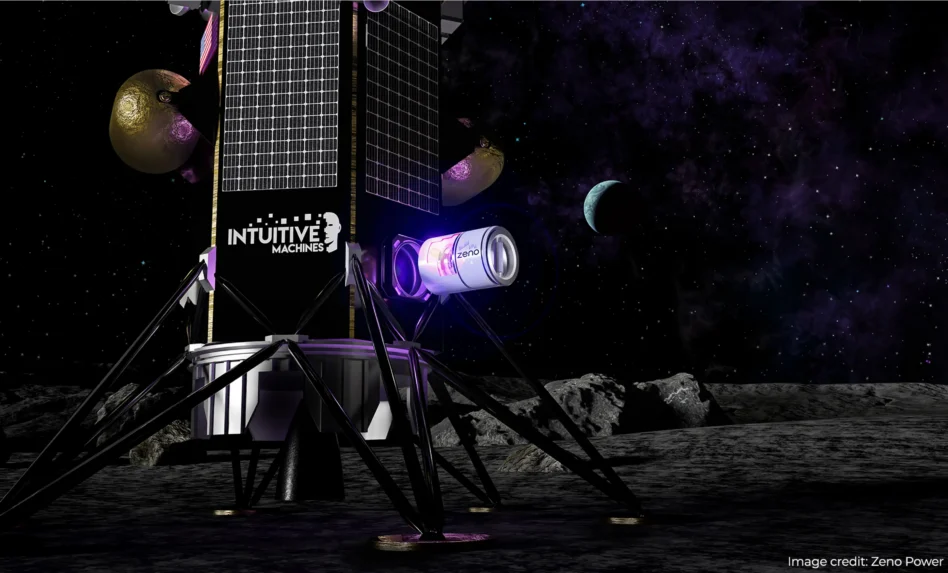
There’s been a lot of criticism of the FY27 NASA budget proposal. Leaders on multiple congressional committees have vowed to block the proposed cuts, and The Planetary Society’s Casey Dreier likened it to an “extinction-level event” for the agency.
But not everyone is unhappy with the proposal as written, and that faint sound of cheering is coming from the budding space nuclear industry, which sees the bill as potentially kick-starting their wildest dreams.
Love language: Isaacman is framing the FY27 proposal as an attempt to reorganize the agency around a singular focus: space exploration. As a result, it advances many high-level goals that will necessarily require space nuclear power for lunar spacecraft to survive the lunar night, and eventually, to support human efforts on Mars. Three line items in the FY27 proposal specifically set aside funds for space nuclear efforts:
- $438.8M for Mars technology, which includes the development of fission reactors as a “major focus;”
- $135.3M for radioisotope power systems through a partnership with the DOE;
- $100.9M for space infrastructure and exploration, which includes funding for the Harmonia Radioisotope Power System Tipping Point team to demonstrate a Stirling generator and lander integration system, with the eventual plan to build into a flight-ready system for future missions.
- $55.4M in additional funds for the Space Technology Mission Directorate to advance initiatives including the development of commercial radioisotope systems for use on the Moon.
More than just money, however, NASA is throwing its full weight behind what Isaacman sees as the agency’s “logical evolution.”
“You will not find an administrator that is a greater champion of nuclear power and propulsion than me,” Isaacman told the House Appropriations Commerce, Justice, and Science Subcommittee this week. “I hope because of the work we’re doing right now…that there is an administrator sitting in front of you 10 years from now and asking for money that’s measured in billions towards nuclear power and propulsion.”
Coupled with the NASA Reauthorization Act of 2026, which included three amendments to boost support for space nuclear priorities, it feels like this sector of the industry is having a moment.
The Feeling is mutual: For the space nuclear industry, the FY27 proposals and Isaacman’s comments ring like Baby Shark in a daycare.
“The commercial space nuclear [industry], I don’t think exists today, but we believe that it could exist in the future,” BWXT president of advanced technologies Kate Kelly told Payload. “The role that NASA is playing is helping lead and navigate that first-of-a-kind transition to demonstrate the technology.”
Already, space nuclear firms are hitting the gas in the expectation that NASA is creating a new market just for them.
“We now see the opportunity to lean forward and invest more in our space product, recognizing that there is that clear demand,” Tyler Bernstein, CEO of Zeno Power, which is developing radioisotope systems for the Harmonia project, told Payload. “We’re seeing a lot of private investors that are excited about that opportunity.”
Update: This story was updated to include additional information about the NASA FY27 funds being directed to nuclear applications.

BlackSky Renews HEO Deal, Adds Gen-3 Imagery for Space Domain Awareness
BlackSky Technology inked a seven-figure deal to extend its partnership with Australian non-Earth imaging (NEI) provider HEO for another year.
NASA Signs Space Nuclear Pact, Says Moon Base Is Ahead of Schedule
Isaacman gave updates at the White House’s “Science: A New Golden Age Summit.”

DOT Proposes Changes to Part 450 Licensing Rules
On Tuesday, Transportation Secretary Sean Duffy announced five proposed FAA rules aiming to streamline and modernize commercial space launch and reentry regulations.
ArbaLabs Launches AI Verification Demo On South Korea’s Nuri Rocket
“In short, tons of companies are looking at the latest and greatest physical AI deployments,” ArbaLabs CEO Ashley Reeves told Payload. “Nobody is really thinking about putting some checks and balances on what these AI models are doing.”


Lawmakers have spent the past week telling NASA that they don’t support the administration’s FY27 budget request for the agency. Now, House appropriators have taken the first legislative step to formally reject the spending plan.
The House Appropriations Commerce, Justice, and Science Subcommittee released its bill for NASA’s FY27 budget, which would provide $24.4B for the agency—a significant plus up from the $18.8B request from the administration. Lawmakers met on Thursday morning to mark up the bill, and advanced it to the full appropriations committee by an 8-6 vote that split along party lines.
“NASA’s successful Artemis II mission around the Moon was an inspiring reminder that we must remain ahead of global competition—and that same vision is reflected throughout this bill,” Rep. Hal Rogers (R-KY), chair of the subcommittee, said in a statement.
Keep reading