


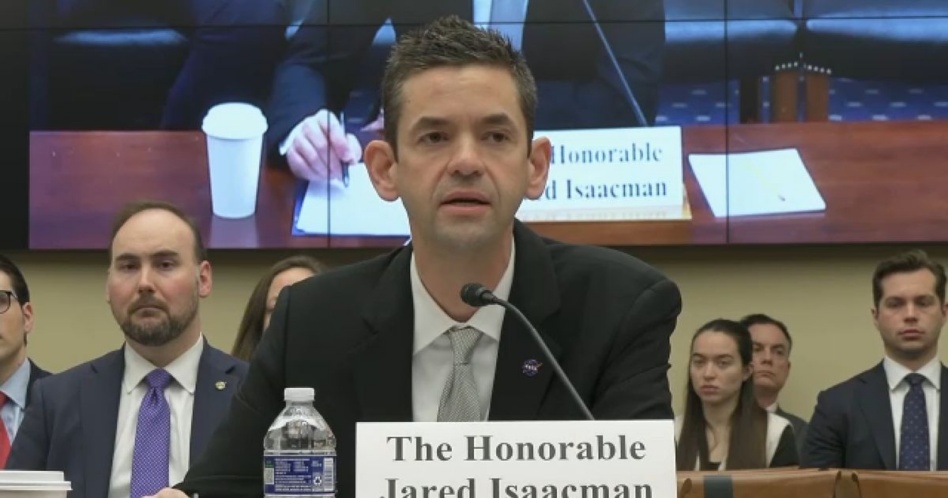
NASA Administrator Jared Isaacman reiterated his defense of the Trump administration’s proposal to cut $5.6B from the agency’s budget while testifying on Capitol Hill yesterday.
The hearing also gave Isaacman a chance to provide more detail on the agency’s top objective: accelerate the US return to the Moon.
Common enemy: Bipartisan representatives on the House Appropriations Committee criticized the proposed budget—and echoed vows made last week by House Science, Space, and Technology Committee members to oppose cuts to science and academia.
Rep. Harold Rogers (R–KY) called the budget proposal “disappointing,” in light of the agency’s goals to ramp up flight cadence to the Moon, build a lunar base, and ultimately beat China in the modern space race.
“The appropriations committee is supportive of these goals, but it’s only through a strong discretionary budget process, in partnership with the committee, that NASA can meet these objectives,” Rogers said.
House Democrats promised specifically to stand in the way of cuts to science and education that they argue could have a longer-term impact on NASA.
“House Democrats will not stand for a 46% cut to the science account,” Rep. Grace Meng (D–NY) said. “We will absolutely not accept the elimination of NASA’s office of STEM education.”
Standing firm: Despite these criticisms, Isaacman remained adamant that the proposed budget doesn’t reduce NASA’s ability to beat China to the Moon—conversely, the cuts would help NASA to focus on winning the space race, Isaacman argued.
“We are absolutely in another space race right now,” Isaacman said. “We have an opportunity, mandate, [and] resources to [win], but any distractions, anything that gets us off track right now…that risk is real.”
Isaacman argued that between the FY2026 budget, the ~$10B in appropriations made in the One Big Beautiful Bill, and reorganization of the workforce, NASA could beat China back to the Moon—even if it’s just by a couple months.
The plan: Isaacman told the committee that approximately 75% of NASA’s workforce is contractors, costing the agency roughly $4.6B annually—$1.5B of which is a premium compared to NASA’s own employees. Bringing workers in house could both save money, and increase NASA’s ability to ramp up lunar launch cadences.
NASA’s goal of launching yearly lunar flights requires streamlined launch operations, “muscle memory,” and a shift from exquisite, one-off hardware to a more productized approach, according to Isaacman. The agency needs to increase access to valves and hypergolic thrusters to meet its lunar vision, and would explore options to leverage the SBIR program to source these from small businesses, he said.
Isaacman also said he would redirect funding from the Lunar Gateway to new projects on the lunar surface (though he may need congressional approval to do this).
NASA Signs Space Nuclear Pact, Says Moon Base Is Ahead of Schedule
Isaacman gave updates at the White House’s “Science: A New Golden Age Summit.”

DOT Proposes Changes to Part 450 Licensing Rules
On Tuesday, Transportation Secretary Sean Duffy announced five proposed FAA rules aiming to streamline and modernize commercial space launch and reentry regulations.

DOE Announces $400M for Frontier Science Research
The Department of Energy is super-charging research into bleeding edge energy tech.
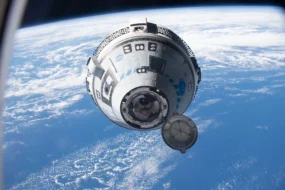
Starliner Targets Uncrewed Flight NET December, Crewed Follow Up in 2028
NASA and Boeing officials announced Monday that they have upgraded and redesigned Starliner following a dicey crewed test flight in 2024, which left NASA astronauts Butch Wilmore and Sunita Williams stuck on ISS for nine months.

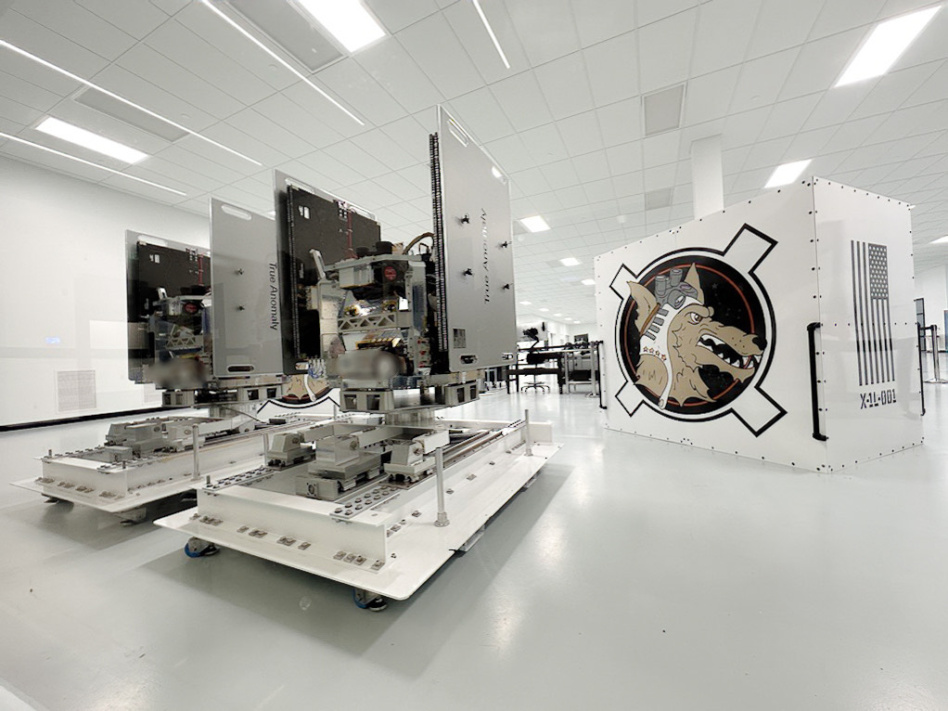
True Anomaly has raised a $650M Series D, announced on the heels of its Golden Dome award for space-based interceptor tech—a new product for the four-year-old company.
“The doctrine and capabilities required for space superiority are nascent, and industry’s bias towards ‘dual use’ platforms is rendering combat capabilities underserved and unsustainable,” True Anomaly CEO Even Rogers said in a statement. “The capital will be invested in space dominance at scale.”
More details: Eclipse and Riot Ventures co-led the round, which valued the company at $2.2B. New investors including Paradigm, Atreides, G Squared, the Private Shares Fund, and VanEck, and existing investors also joined the round.
Keep reading