


LeoLabs clinched $29M in funding to fulfill its dreams of truly global coverage and deep, AI-powered analytics to support its LEO-monitoring space radar network.
GP Bullhound and 1941 participated in the round as new investors in LeoLabs. Existing investors Insight Partners, Velvet Sea Ventures, Space Capital, MDSV Capital, and the AngelList Syndicate led by Dylan Taylor also participated.
AI, take the wheel: For a space data collection firm, the ability to process large volumes of data is essential. LeoLabs has invested in AI-powered software that can turn the jumble of data collected by its radar network each day into usable insights for its customers.
According to LeoLabs CEO Daniel Ceperley, AI makes a big difference in several key areas when running a space-tracking business:
- Detecting and predicting maneuvers. LeoLabs is working toward “space behavior awareness at scale,” Ceperley told Payload, and AI helps to understand the behavior of thousands—or tens of thousands—of satellites at once much more easily.
- Categorizing space objects, by sorting by their form and function.
- Managing global sensor networks. “AI techniques are really good at telling each radar site what to do and when to do it,” Ceperley said.
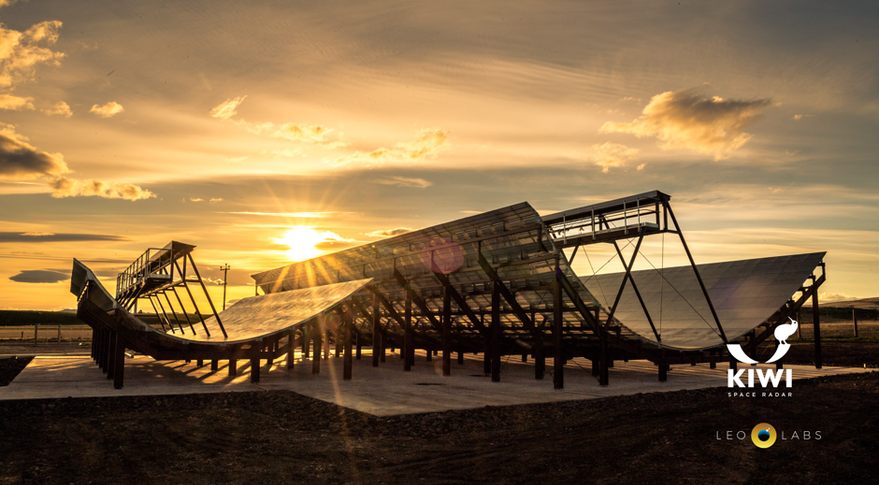
Look up: LeoLabs’ ground radar network is the “heart and soul” of the business, Ceperley said. The company has radars up and running at six sites across the globe, and it’s eyeing even more expansion to increase its coverage of the cosmos, including one more undisclosed radar site opening this year.
Doing business: With this new round of funding, LeoLabs is aiming to expand its relationships with the US and its allies through investment in the go-to-market side of the business.
“The US Department of Defense, US Department of Commerce, allies as well, they’re trying to stitch together many different satellites, many different regulatory requirements,” Ceperley said. “By working with the right partners, we can actually present them a turnkey solution.”

Kuva Space Spots Illegal Poppy Farms from Orbit
Kuva Space released data today from a pilot program that demonstrated its ability to monitor illegal crop farming from space.

Open Cosmos Raises €300M Funding Round
“We deliberately wanted strong European representation because we’re building strategic infrastructure in Europe, while also bringing in investors from elsewhere where it made sense,” Open Cosmos cofounder and CEO Rafel Jorda Siquier told Payload via email.

Sophia Space, SLI Set Terms for $300M Satellite Leasing Deal
Orbital compute startup Sophia Space and space asset leasing company SLI have set terms for a $300M asset-financing deal.

International Space Summit Highlights the Strength of Europe’s Space Ecosystem
Efforts by the US government to rain on Europe’s parade this week backfired.

Palantir, the AI data and analytics unicorn, is getting more deeply involved in the space domain. The company announced yesterday that it had entered a strategic collaboration with Voyager Space to explore potential AI and ML demos in space, with an eye on Starlab development.
“This alliance represents a shared commitment to advancing the frontiers of global commerce, civil, and national security capabilities, reaffirming the critical role industry has to bring leading-edge technology to the evolving landscape of space exploration and security,” Shyam Sankar, Palantir CTO, said in a release.
AI in space: Under the newly signed MoU, Voyager and Palantir will look for ways to incorporate advanced edge computing capabilities and AI/ML tech into Starlab in its nascent stages. That could include expanding space domain awareness and enabling allied nations doing business aboard the station to process and distribute data securely.
Keep reading