


Around the world, companies are spending more and more money to back new proliferated satellite constellations. In response, European manufacturers are boosting their production capacities to capture as much demand as possible.
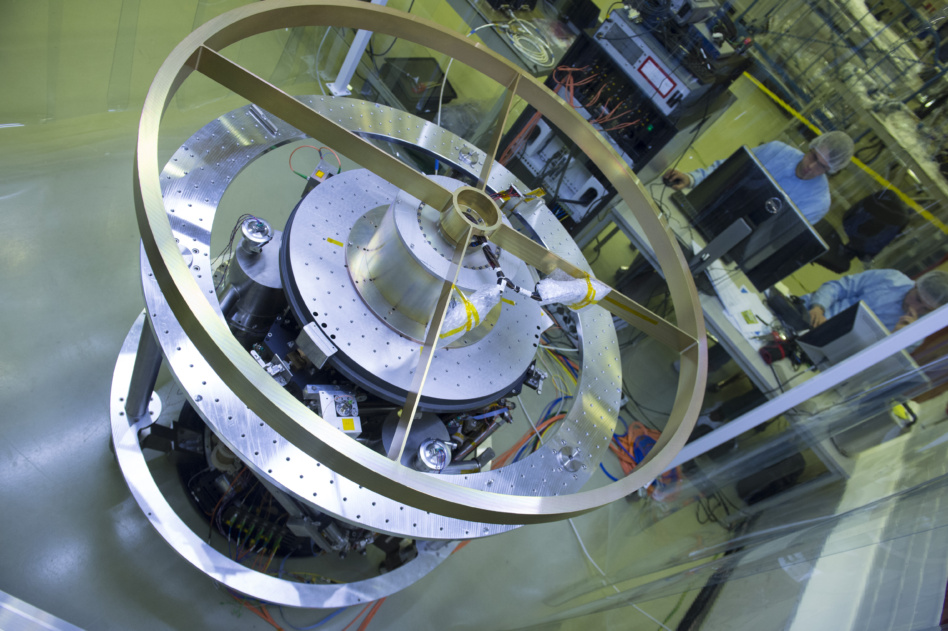
This week, Beyond Gravity became the latest European parts manufacturer to expand its production facility. The company doubled the area of its solar array drive mechanism production facility in Zurich, increasing annual production capacity more than fivefold—from 36 to 200 units. The company also said it could expand its facility in Florida if demand continues to grow.
Basking in it: Beyond Gravity’s mechanisms help satellites align their solar arrays to the sun’s light, both increasing the efficiency of solar power production and offering spacecraft a better chance of maintaining a continuous power supply. The mechanisms also drive efficiencies for satellite manufacturers, as the ability to adjust the angle of solar arrays means satellites can launch with smaller arrays—lower weight, cheaper launch…you get it.
Beyond Gravity is also working on a next-gen, two-axis version of the drive mechanism, which promises even greater energy yield for missions with higher power requirements.
Signal intelligence: Beyond Gravity’s solar array drive mechanisms have been used on some big name science missions in the past, including ESA’s BepiColombo mission to Mercury and ESA’s Hera planetary defense mission. In addition, the Orion capsule—a key part of the NASA-led Artemis lunar missions—will use a two-axis drive mechanism, according to Beyond Gravity.
While large, high-value missions will remain a focus, the company’s manufacturing boost actually comes in direct response to the shifting priorities of commercial and civil satellite operators—away from the low volume exquisite missions of the past, and toward proliferated LEO constellations.
“Demand in Europe will be driven by IRIS2 and other planned satellite constellations that support European independence,” Oliver Grassmann, executive VP of Beyond Gravity’s satellite division, told Payload via email. “We believe that the space race will intensify further…[and] expect satellite lifespans to be shorter than in the past, due to the prevalence of constellations.”
The bottom line: Beyond Gravity isn’t alone in making capital investments to achieve higher output; it’s happening across the European space manufacturing ecosystem.
Through it all, one thing is clear: Europe is moving toward serialized production, and a much more robust COTS market that could fuel a feedback loop of cost reductions and compounding demand.
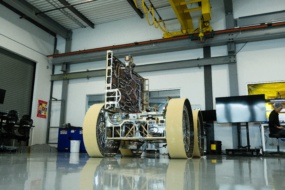
Hewlett Packard Enterprise to Send AI Compute Module to the Moon
Hewlett Packard Enterprise ($HPE) is taking remote working to a whole new level.

Seraphim Space Investment Trust Doubled its Value in 2026
Seraphim’s major holdings—ICEYE, ALL.SPACE, D-Orbit, HawkEye 360, and Xona Space Systems, which together represent more than 75% of the firm’s portfolio—all had a great year, and that success has trickled upwards.

UKSA Taps ClearSpace for Country’s First Debris Removal Mission
The UK Space Agency is dressing up as a waste-management company for Halloween.
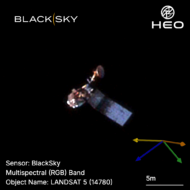
BlackSky Renews HEO Deal, Adds Gen-3 Imagery for Space Domain Awareness
BlackSky Technology inked a seven-figure deal to extend its partnership with Australian non-Earth imaging (NEI) provider HEO for another year.

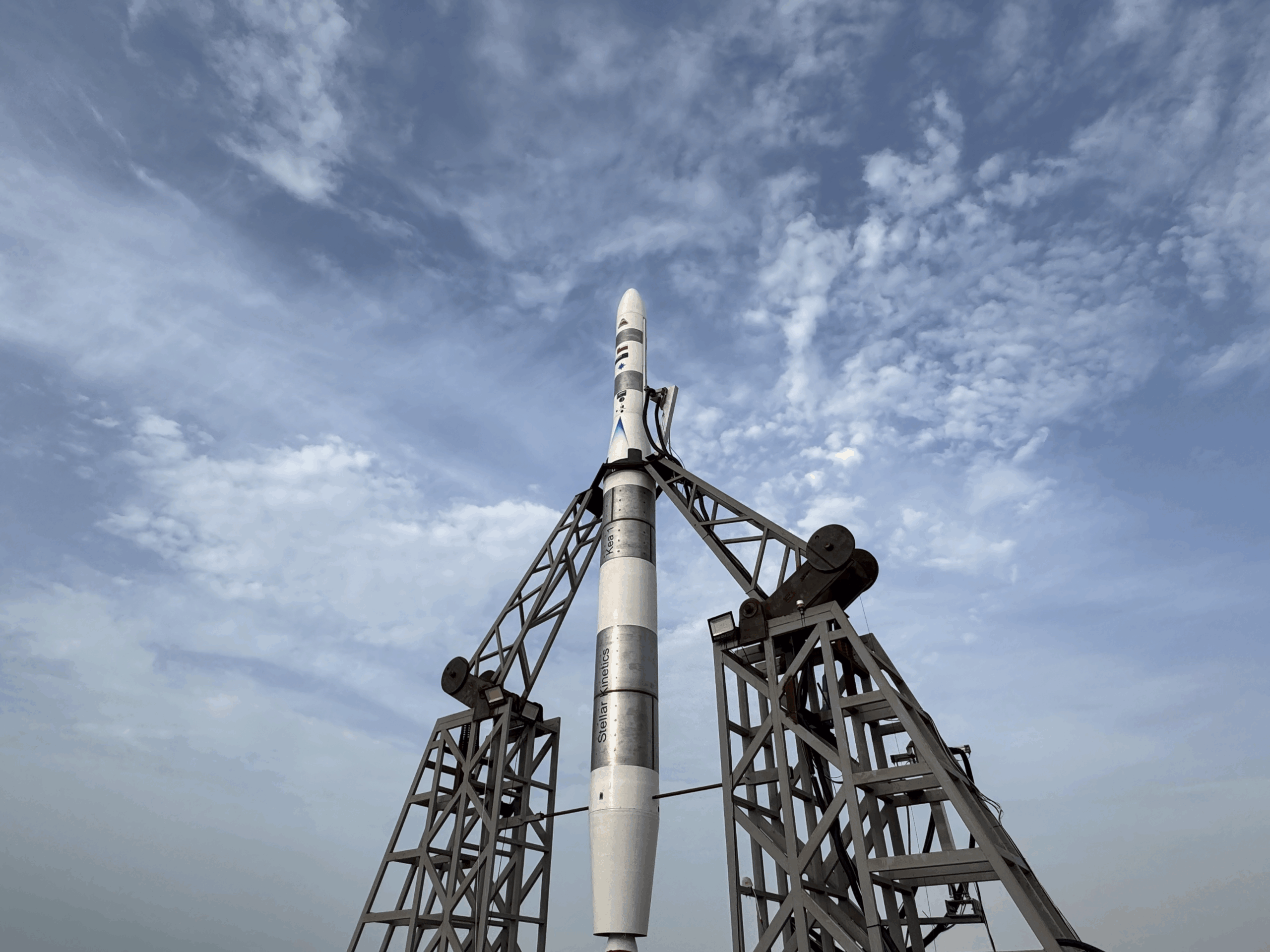
Oman’s Civil Aviation Authority (CAA) has approved a procedure to license space launches swiftly—a key milestone ahead of operations at the nation’s new Etlaq Spaceport.
The procedure, which will allow regulators to fast-track applications in just 45 days, aims to help Oman become the Middle East’s No. 1 commercial space hub. The application processing timeline—if officials are able to stick to it, in practice—would be among the fastest in the world, and the regulation places no limit on the number of launches conducted from Oman’s soil.
The context: Etlaq Spaceport, which is overseen by Oman’s National Space Services Company, hosted the launch of NASCOM’s suborbital Duqm-1 rocket in December. The facility now invites launch operators from all over the world to use it for suborbital flights, as well as orbital launches of micro, small, medium, and heavy launchers aiming for equatorial, polar or sun-synchronous orbits.
Keep reading