


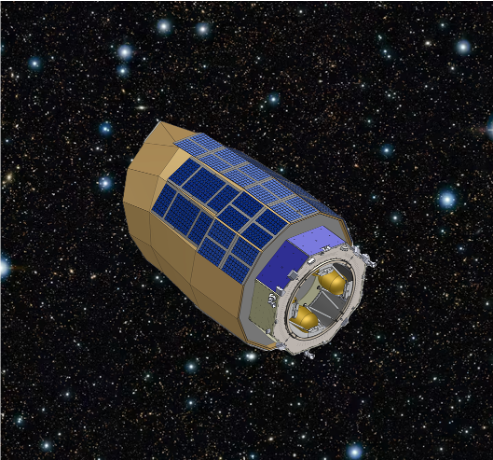
Billionaire backers have already taken the launch sector by storm. Now, one is getting into the space-science game.
Former Google CEO Eric Schmidt announced late Wednesday that Schmidt Sciences, one of his philanthropies, would build the Eric and Wendy Schmidt Observatory System.
“Astronomy is ripe for new ideas, and we are working with scientists globally to build four new telescopes—one in space, three on the ground!” Schmidt wrote on X.
Guiding light: Schmidt Sciences aims to approach observatories in a fundamentally different way than the decades-long, multi-billion-dollar, government-driven programs of the past that produced the Hubble Space Telescope and the James Webb Space Telescope. The ethos of the project falls into four pillars:
- Moving faster and accepting more risk;
- Incorporating modular designs to save money;
- Allowing global access to data and software;
- Collaborating with international partners on science.
Look up: The Lazuli Space Observatory—the in-space asset being developed by the group—is expected to host a 3-meter mirror. The project is aiming, at least initially, to snap photos within four hours of the telescope being tasked—a metric that officials hope will drop to 90 minutes, according to the website. It will also be able to watch targets for up to 12 hours at a time.
The telescope is expected to use 80% commercial off-the-shelf parts and cost hundreds of millions of dollars, according to Space News—an order of magnitude less than NASA-led telescopes. The outlet also reported that Lazuli could launch as early as mid-2028.
Context: The investment represents the latest step in the private sector picking up the mantle on space science, which was once solely the purview of government agencies. Another example is Rocket Lab’s private mission to look for signs of microbial life in the clouds of Venus.
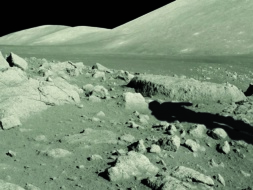
National Academies Rank Nonpolar Moon Sites
A new report from the National Academies ranks the top four non-polar sites for future crewed lunar missions.

DOE Announces $400M for Frontier Science Research
The Department of Energy is super-charging research into bleeding edge energy tech.

Exclusive: Exolaunch Books its first Starfall Mission
Exolaunch signed an agreement to support customer payloads on a SpaceX Starfall reentry mission scheduled to launch on a Starship NET 2029.
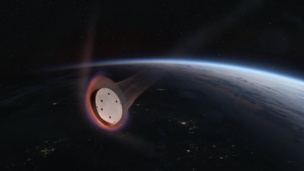
Exclusive: Space Cargo Unlimited Booked a Third of its Starfall Capacity
Demand appears to be skyrocketing, thanks to a new wave of pharmaceutical companies and researchers realizing that microgravity can provide benefits in drug discovery and research.
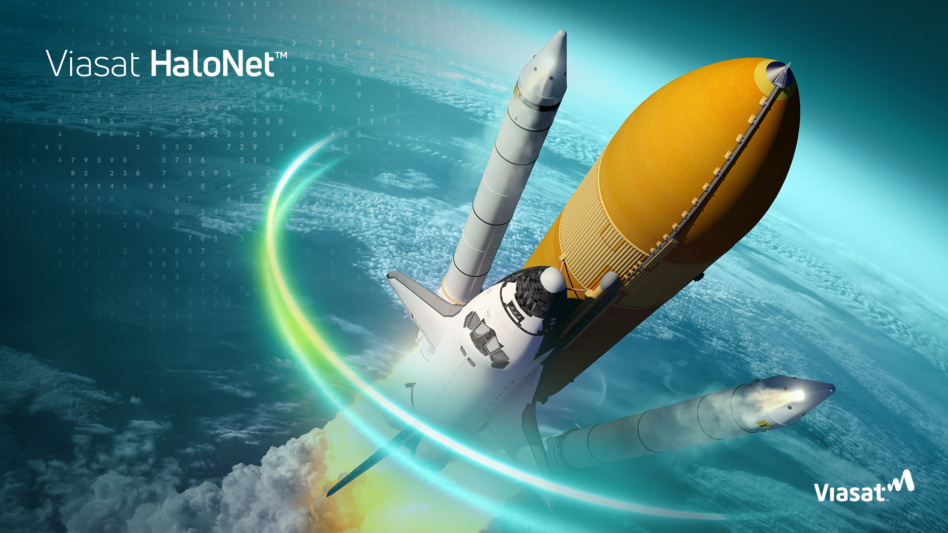
Part 2 in a series on orbital communications
For decades, space launch providers have faced the same persistent challenge: intermittent loss of telemetry data when rockets travel out of range of ground stations. These “blackouts” can last for minutes—leaving long and critical periods when vehicle health, performance, and safety information go dark. Viasat’s HaloNet Launch Telemetry Data Relay Service (DRS)aims to change that, by providing continuous, global coverage from ascent through early orbit.
“Whenever anyone launches a multimillion-dollar rocket or a billion-dollar payload, they need to know the continuous health of that rocket,” said Arnie Christianson, Senior Director, Program Management, Viasat Government, Space and Mission Systems. Launch telemetry to ground controllers provides the equivalent of a car’s dashboard, he explained. “Engine temperature, trajectory, pressure, performance—it’s how you know everything is working as intended.”
Keep reading