



Predicting the future is no simple task, but for space weather forecasting startup Hale SWx, it’s part of the business model.
The startup predicts the Sun’s activity with greater accuracy than existing approaches—and customers are quickly signing on to leverage those insights (and what they can do for the lifespan of sat constellations.)
Today, signal intelligence constellation operator HawkEye 360 announced a five-year deal to use Hale’s forecasts and atmospheric density predictions to inform its satellite deployment plans. HawkEye may be Hale’s latest customer, but it’s not the first: Hale signed similar agreements with Planet, and is running both paid and unpaid pilot programs with other constellation operators.
How it works: Founded by former KSAT US CEO Katherine Monson and heliophysicist Scott McIntosh, Hale sells data to satellite operators who use the short- and long-range solar forecasts to plan their constellations.
Unlike traditional solar forecasts, which study the spread of sunspots on the solar surface to predict space weather, Hale focuses on the underlying electromagnetic forces that drive the solar cycle.
The result is far more accurate than the guesstimations space companies are used to, Monson told Payload. Hale’s model produces an average “skill score” of ~0.72—a measure of accuracy between a complete guess (0) and perfect prediction (1).
“I would expect that we are going to be the gold standard,” Monson said. “We’re capturing less than 10% of the value we create…so it’s usually a slam dunk for our partners in terms of return on investment.”
How it’s used: With Hale, HawkEye 360 and other constellation operators are able to forecast space weather patterns years in advance, and make plans to replenish their satellite constellations only when sats on orbit are nearing the end of their life.
The ultimate benefit is capital efficiency, as operators can avoid unexpected outages from their satellites prematurely de-orbiting due to increased solar activity without needing to overinvest in redundant hardware.
“By removing the guesswork from orbital lifespan predictions, we can optimize our replenishment strategy and capital expenditures over a five-year horizon,” HawkEye 360 director of systems engineering Chris Habib said in a statement. “This level of precision allows us to scale as a defense tech powerhouse while maximizing the value of every asset on orbit.”

Fortastra Raises $30M Series A to Fund its Next Security Spacecraft
The US military has weapons in space, and—with the orbital arsenal expanding—security is becoming a top priority.
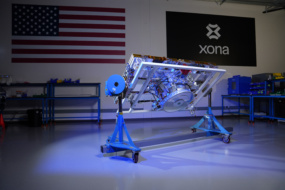
Exclusive: Xona Ramps Up Production Ahead of Pulsar Launch
With FCC approval in hand and six sats ready for the pad, Xona is turning to its next challenge: building the next 250.
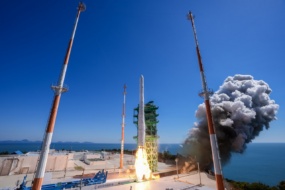
ArbaLabs Launches AI Verification Demo On South Korea’s Nuri Rocket
“In short, tons of companies are looking at the latest and greatest physical AI deployments,” ArbaLabs CEO Ashley Reeves told Payload. “Nobody is really thinking about putting some checks and balances on what these AI models are doing.”

Nebex Partners with Thrusters Unlimited to Unlock $700M for Mexico’s Space Ecosystem
The capital will fund EO, telecoms and other strategic capabilities, according to Nebex.

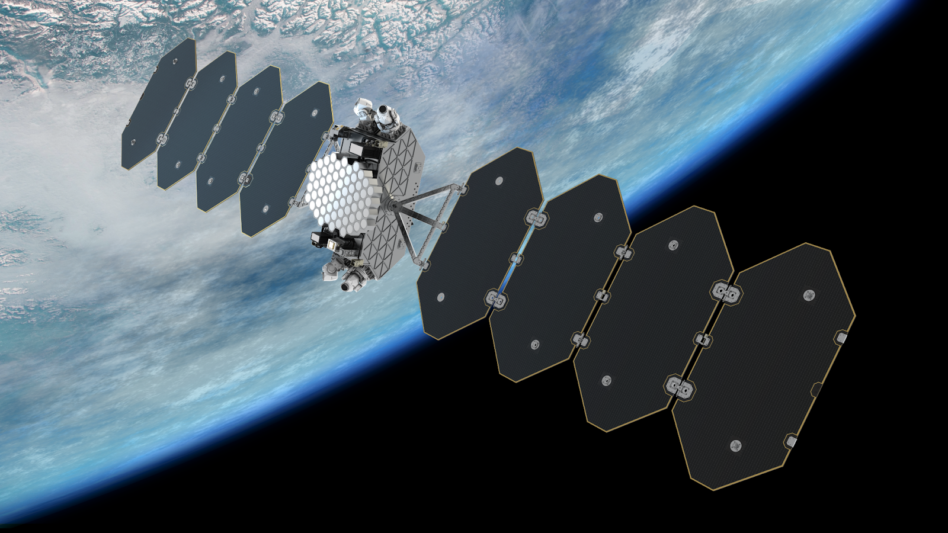
2026 has started off strong with large funding rounds—and things aren’t slowing down as we head into the second month of the year.
Yesterday, spacecom company CesiumAstro announced that it closed a $270M round of funding—which will help the company to cement further contracts in the defense sector, and build out its natsec business.
The company pulled in a total of $470M, which was split into two buckets:
Keep reading