


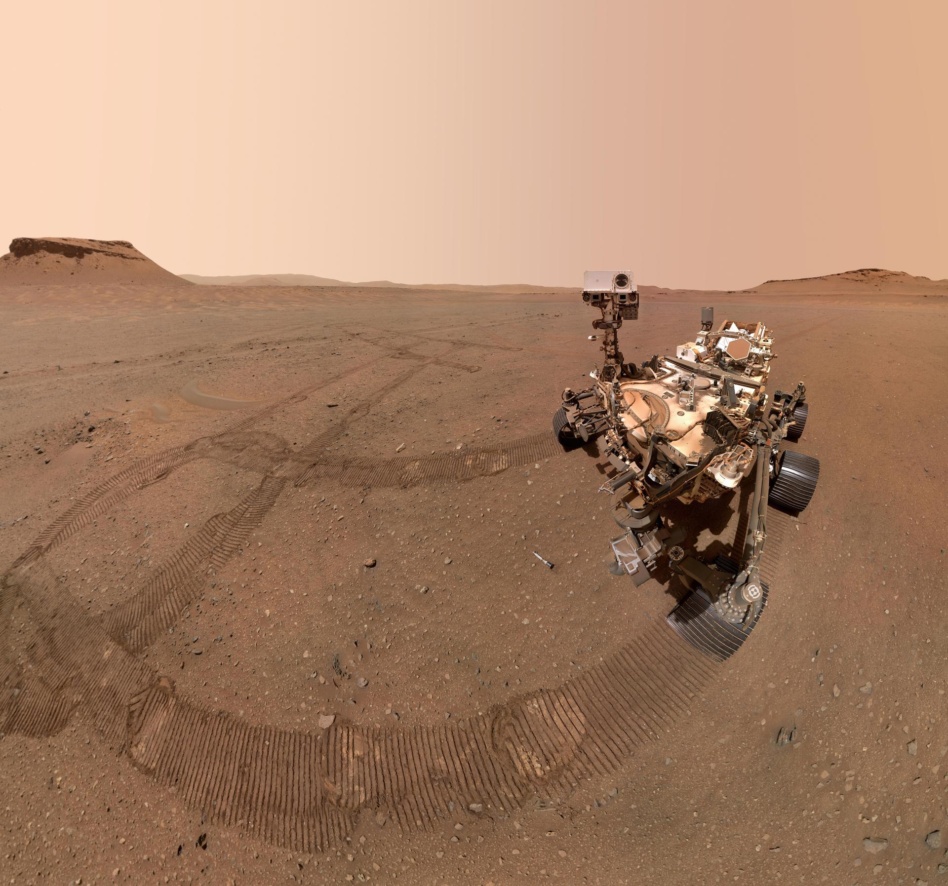
With Mars Sample Return canceled, the question is no longer how to bring samples home—but how far existing space law can stretch before its gaps become consequential.
Finders keepers?: International space law does not treat abandoned missions as abandoned property. Article VIII of the 1967 Outer Space Treaty makes clear that a launching state—in this case, the United States—retains jurisdiction and control over the objects it launches into space wherever they are located, including on celestial bodies such as Mars. There is no concept of abandonment in space law, simply because a return mission is delayed, redesigned, or canceled. The Mars sample tubes left behind by NASA remain US space objects, even if the US has no plans to retrieve them.
That conclusion is reinforced by the Rescue and Return Agreement, which requires any state that recovers a space object to return it to the launching state—upon request. That means that, while another country could physically retrieve the tubes on Mars, doing so would not transfer ownership. Recovery is not appropriation, and possession does not confer title. Absent US consent, international space law requires that the tubes be returned to the United States—though the US could choose to contract with another state or private actor to retrieve them on its behalf and, by agreement, share or relinquish ownership.
Legal loophole: Past practice offers some guidance, but not a complete answer. The US, Russia and China have all returned lunar samples, and ownership was never seriously contested. Those missions, however, did not present the possibility that another state might retrieve and return the material. Mars Sample Return is different precisely because the US may not be the next actor capable of bringing those samples back to Earth.
That distinction matters because the Rescue and Return Agreement speaks clearly to the return of space objects, not extracted material. If another state were to retrieve the Mars sample tubes and return them to Earth, international law would plainly require the return of the container. Whether that obligation also extends to the contents is less explicit. And that ambiguity is what makes this scenario legally novel.
The law, at home and abroad: Under US domestic law, the answer is straightforward. The US Commercial Space Launch Competitiveness Act of 2015, recognizes that US citizens—and presumably the US itself—own space resources they obtain. The Artemis Accords, and the 60 nations that have signed onto them, agree that resource extraction does not violate the Outer Space Treaty’s prohibition on territorial claims. From a US legal perspective, once lawfully extracted, the contents of the tubes are treated as US property.
International law, however, is more cautious. While the Outer Space Treaty clearly bars territorial claims, the treaty is largely silent on the legal status of extracted resources. That silence leaves room, at least rhetorically, for another state to argue that while the container is a US space object, the material inside it is not subject to unilateral ownership claims.
In practice, separating the vessel from its contents would be difficult to defend. Returning the container but not the contents would test the limits of “jurisdiction and control” under Article VIII. Returning both the object and its contents, by contrast, would align practice with the increasingly accepted view that extracted resources are capable of ownership.
Stake your claim: If the United States leaves the tubes on Mars indefinitely, does that suggest that the US owns the land they’re resting on? Probably not, but it does expose one of the enduring structural tensions in space law: Jurisdiction without sovereignty. And if another mission were to damage the tubes accidentally, liability would attach to the offending state, though valuing that harm would be difficult.
Michelle Hanlon is executive director of the Center for Air and Space Law at the University of Mississippi School of Law and the cofounder, president and CEO of For All Moonkind.

Op-ed: The Technologies That Could Define the Future of Space
Daniel Biedermann, a partner at NewSpace Capital, gives his insights on what technologies are driving the future of space tech.
Op-ed: Aging Weather Satellites Are Raising Risks for America. It’s Time for a Hybrid Solution.
When we lose our visibility, we lose our edge. The military needs more, higher-quality weather data, not less.

Op-ed: Up to a Trillion Dollars is About to Chase Space. What Kind of Economy Will Be Built?
The largest IPO in history is here, and capital is expected to flow into the space industry at record volume. Whether that capital builds an economy that fully operates—or one that just accumulates hardware—is a choice we are about to make.
Opinion: Commercial Space Is Generating Signals Decision-Makers Cannot Hear
Launch cadences, debris accumulation rates, reusing hardware, conjunction events—the commercial sector is generating more operational signals than any previous era of space activity. However, the mechanism that decides whether a signal reaches a decision-maker or disappears into the background noise is broken.

ISRO’s Polar Satellite Launch Vehicle (PSLV) suffered an anomaly six minutes after launch Sunday, falling into a tumble at the end of the third stage engine burn. Many speculated that all 16 satellites on board had been lost.
One payload, however—Orbital Paradigm’s Kestrel Initial Demonstrator, or KID—survived the mishap long enough to separate from the launch vehicle and transmit minutes of valuable reentry data before crash-landing back on Earth.
In an exclusive interview with Payload, Orbital Paradigm CEO Francesco Cacciatore shared the details of KID’s narrow escape from disaster.
Keep reading