


We’re solidly in the era of the LEO megaconstellation, and the number of satellites in an increasingly congested orbital plane just keeps climbing. We’re not fearmongering here, but putting more stuff in LEO ups the odds that a collision may occur—and bring with it serious financial and geopolitical implications.
This week, the World Economic Forum came out with a report, produced in partnership with the Centre for Space Futures, the Saudi Space Agency, LeoLabs, and Novaspace, titled “Clear Orbit, Secure Future: A Call to Action on Space Debris.”
The report’s findings are, well, expensive.
- Even without any major collisions in orbit, WEF’s orbital population model projects that congestion in space will cost industry between $25.8B and $42.3B over the next decade.
- A destructive collision would send that number skyrocketing.
“If the ambitions of a rapidly expanding space economy, encompassing commercial space stations, large satellite constellations and global satellites services are to be realized sustainably, urgent progress is needed in regulation, methodologies, international collaboration, technology innovation, and investment,” the report’s foreword said.
Hidden costs: Those projections come from a combination of revenue lost from service interruptions, satellite replacements and hardware loss, as well as from the cost of performing ever more risk-reducing maneuvers in orbit to maintain safe distances between satellites.
- The cost of anomalies is projected to be between $14.2B and $30.7B.
- The cost of maneuvers alone is projected to be $560M.
- The cost of probable non-catastrophic failures, including infrastructure and service losses, is projected to be $11.1B.
The report notes that even at the high end of its projection of the cost of anomalies, $30.7B, only accounts for ~1.4% of the total value of space infrastructure in the next decade, totaling $3.03T.
The call to action: WEF is not the first to say that more collaboration between actors, including active data-sharing, is needed to prevent conjunction events in orbit. But it is the latest to call for that communication to improve. And all that is on top of better adherence to newer responsible best practices, for conducting launch and operations.
“Launch providers should commit to controlled reentries, and end the practice of abandoning upper stages in congested orbits,” the conclusion reads. “Regulators, in turn, need to embed international best practices in domestic law through licensing conditions and encouraging financial incentives that reward sustainable behaviour, where feasible and appropriate.”
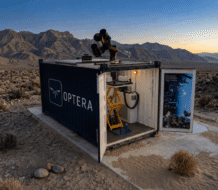
Optera Raises £3M to Open New UK HQ
The funding round comes amid the UK government’s full-court press to expand its sovereign technical capabilities.
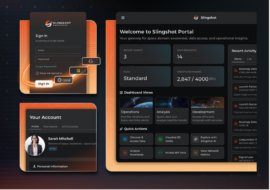
Slingshot Introduces AI-Powered Portal Platform
Slingshot Aerospace introduced a new platform today that will allow operators to spot anomalies—and make decisions—in an AI-powered, one-stop-shop.
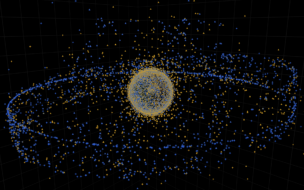
Kayhan Space Launches Satcat Terminal
Business and liberal arts majors rejoice!
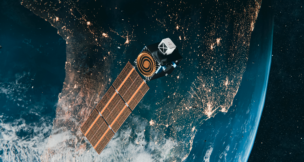
Portal, Paladin Team On Debris Removal Service
“This is about making debris removal operational, not experimental,” Portal CEO Jeff Thornburg said in a statement. “Satellite data underpins communications, navigation, weather forecasting, and national security. Maintaining that infrastructure requires active debris management.”

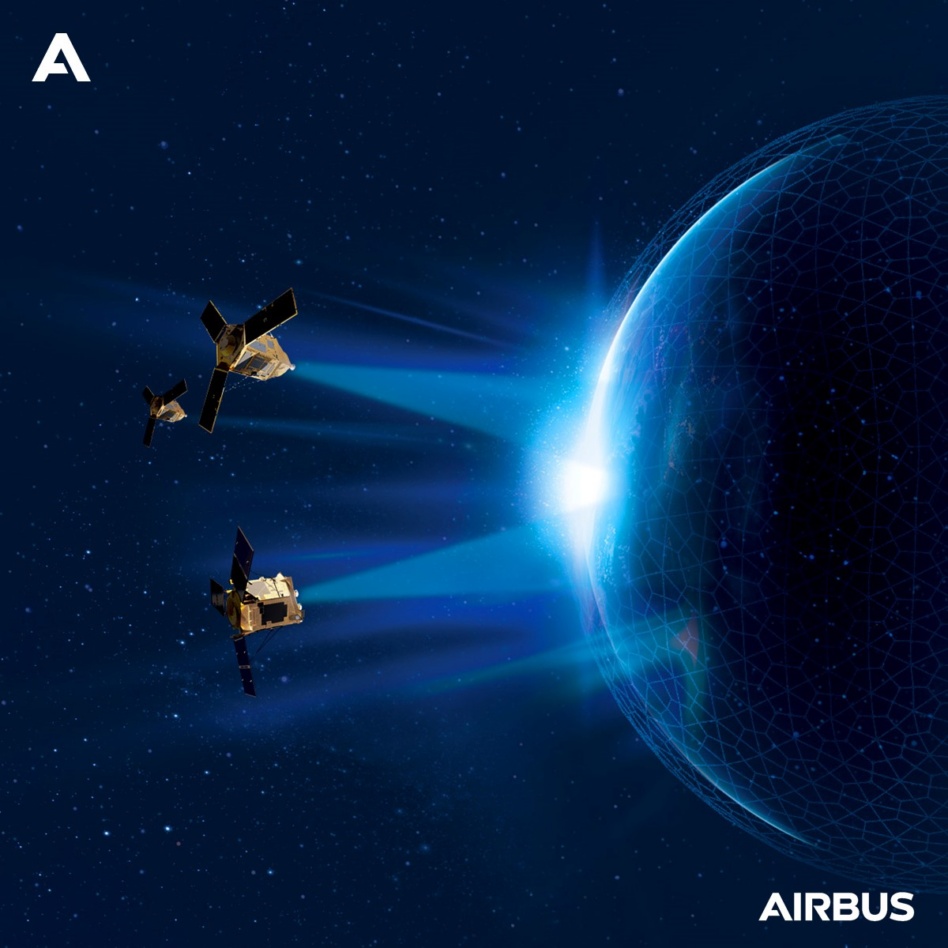
The European space market may be dominated by large A&D primes, but the startup community is proving it still has an edge when it comes to innovative tech.
Airbus Defence and Space announced an agreement today with Skynopy to leverage the startup’s software-defined ground station tech, which aims to decrease latency on Airbus’ Pléiades Neo EO constellation.
“This collaboration highlights Airbus’ ability to work with innovative European startups to continuously enhance its services, and remain at the forefront of Earth observation capabilities,” Airbus Head of Space Digital Eric Even said in a statement.
Keep reading