


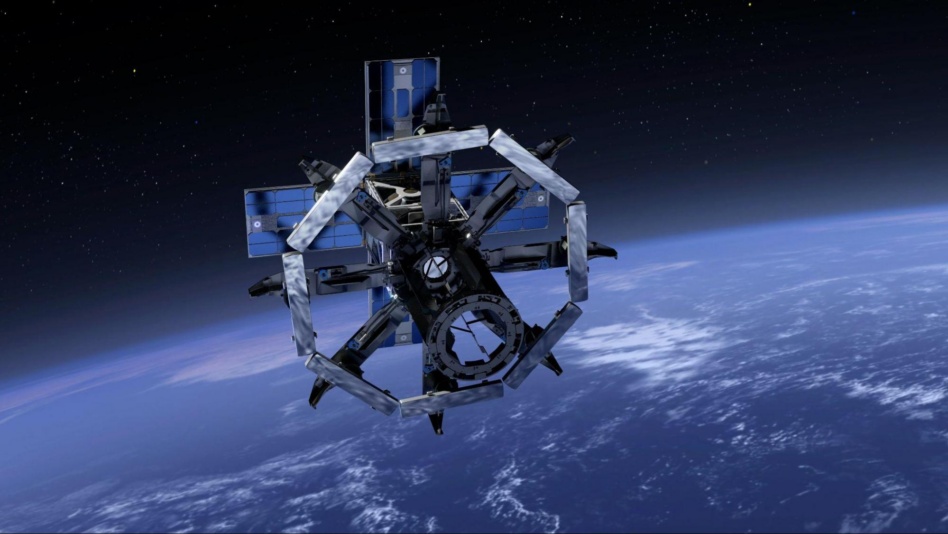
Israel-based startup Remondo unveiled plans for a super-high-resolution EO payload today, which aims to provide customers with sub-30 cm resolution imagery from LEO at prices that won’t break the bank.
Instead of increasing resolution by creating a larger mirror or a more powerful optical sensor, the company has invented what it calls a “Partial Aperture Imaging System (PAIS),” which uses a ring of smaller mirrors, a light modulator, and a coding system to create high-res digital images.
By using cheaper materials and designing the sat to fold up for launch, Remondo expects the end result to be two-to-three times cheaper than full aperture alternatives. The company believes it can eventually build, operate, and launch each sat for $2M or less, according to CEO Ido Priel.
“The main barrier in this market has always been cost,” Priel told Payload. “You can have a low-resolution satellite at low cost, but the market isn’t there. The market is always looking for that higher and higher resolution.”
Rollout plan: The company has tested its technology in the lab. The real test, however, will come when Remondo flies its first sat to orbit in mid-2027, and second sat later that same year. Between VC funding and multiple grants from the Israeli government, Remondo has raised $20M to support those demos.
The company’s ultimate aim is to build a constellation of ~32 satellites to offer frequent revisit rates and worldwide coverage.
“PAIS architecture changes the unit economics to make persistent ISR from space a reality,” Amikam Norkin, managing partner at Ace Capital Partners (a Remondo investor), and former commander of the Israeli Air Force. “This is the kind of deep-tech innovation that can reshape the Earth-observation market.”
Say cheese! Priel explained that capturing images more granular than 30-cm from orbit opens the door for ISR applications that today exist only in the realm of aerial photography, or ground-based imaging systems. Namely, Remondo’s tech would be able to spot human beings from orbit.
“At one meter, I guess you can’t really see people and count them,” Priel said. “People, as we know, could be an interesting object for different kinds of applications…definitely for defense.”
Remondo isn’t just gunning for defense dollars with its planned constellation, however. Priel told Payload that if costs can continue to fall, Remondo’s PAIS architecture could open the door for “real-time Google Earth,” and help commercial ventures leverage insights into human activity. Just like how Ring cameras can help you find your lost dog.
deltaVision Raises €10.2M to Build In-Orbit Refueling Tech
deltaVision plans to use the new capital to fund two parallel expansion efforts: grow its manufacturing capacity, and research new capabilities.

Skyroot Aerospace Reaches Orbit with Vikram-1 Rocket
Skyroot Aerospace became the first private Indian company to reach orbit on Saturday, when its Vikram-1 rocket lifted off from India’s primary spaceport—the Satish Dhawan Space Centre.
Beyond Reach Labs Raises $10M Seed, Moves to NYC
No matter how lofty the space industry’s dreams get, the reality of spaceflight remains limited by size, weight, and power constraints

ISU Founder Shares a Vision Beyond Liquidation
Payload spoke with ISU cofounder Bob Richards and Dean Emerita Angie Bukley about what happened, and what comes next.
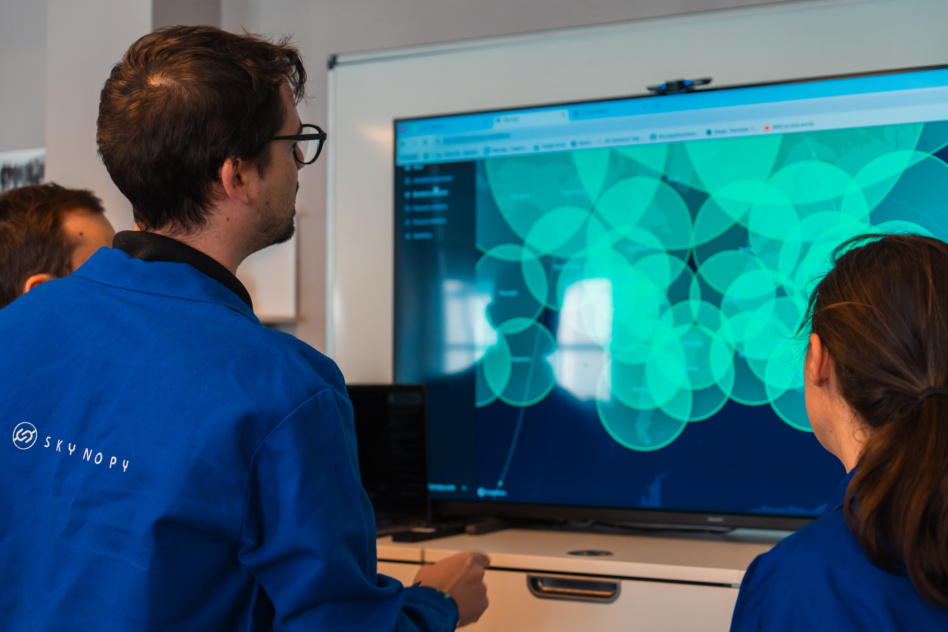
French ground-station-as-a-service startup Skynopy won an award from the French government to integrate a ground antenna, owned and operated by the Kenya Space Agency (KSA), into its commercial network.
The SkyConnect Kenya award from the French Ministry of Economy, Finance, and Industrial and Digital Sovereignty—worth about €500K ($589.6K), according to Skynopy business development lead Nathan Juglard—is part of the government’s push to have French businesses help modernize strategic infrastructure in developing countries.
How it works: Skynopy’s ground-station-as-a-service model works by merging otherwise disconnected antennas into a cohesive network so satellites don’t need to worry about where they downlink their data.
Keep reading