


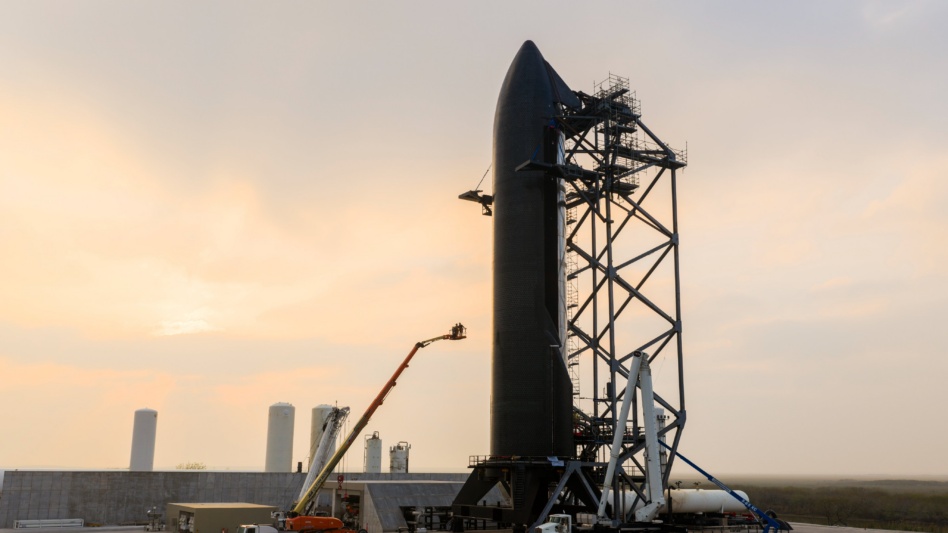
SpaceX CEO Elon Musk turned to X this weekend to announce the first launch of Starship V3 was “about 4 weeks” away.
While we shouldn’t necessarily take Musk at his word—especially seeing as he said the launch was about six weeks away…nearly six weeks ago—the updated timeline means that most of the specifics on the spacecraft are locked in.
SWaP it out: Here’s what we know about the vehicle so far:
- Size: Starship V3 is expected to stand about five feet taller than V2, and the structure has been upgraded to handle heavier lift loads.
- Weight: V3 is equipped with greater payload and fuel propellant capacity. The ship aims to be able to carry 100 tons of payload to LEO—far more than V2.
- Power: The ship will also be powered by upgraded Raptor V3 engines, which hit 280tf— roughly 50% greater thrust than Raptor 1, at lower cost and lower weight.
The grid fins on Starship V3’s Super Heavy booster will be 50% larger than V2, though it will have one fewer. The fins are also designed to be stronger than those used on previous Starship flights, and include new mechanisms to support the booster’s catch upon reentry.
Form and function: The new vehicle has a laundry list of upgrades under the hood to support SpaceX’s goal of longer-duration missions at a faster cadence, as it competes against Blue Origin for future Artemis Moon flights. These Starship upgrades include improvements to energy storage, avionics, and fuel capacity.
Starship V3 will also feature SpaceX’s docking adapters, which are designed to help Starships transfer fuel in space—a key milestone for the company this year as it looks to demonstrate its ability to support future lunar flights.
SpaceX has also invested in infrastructure to support rapid cadence. Starship V3’s Super Heavy Booster will rely on a new fuel propellant transfer tube, which is about the same size as a Falcon 9 rocket, to support speedy refueling and simultaneous engine startup.
SpaceX is also boosting production of its heat-shield tiles to support quicker flight turnarounds in the future. The company’s production facility in Cape Canaveral is churning out 1,000 heat shield tiles per day, but is built to produce as many as 7,000 per day to sustain 10 Starships each month.

Colare Raises $2.5M to Expand its Hardware-Focused Hiring Platform
Colare’s technical-assessment platform maps the requirements of a role, and recreates decisions future engineers could face on the job.

Exclusive: DoD Taps Orbital Operations for Cryogenic Spacecraft Demo
The Long Beach, CA, startup has won up to $35M from the DoD under a prototype Other Transaction Agreement to fly a full-scale, in-orbit demo of Astraeus—its cryogenic-maneuvering vehicle.
Xona Raises $250M Series D to Scale Commercial GPS Constellation
Xona’s long-term plan is to build a ~258-sat constellation to offer an upgraded commercial alternative to government GPS networks.
Hewlett Packard Enterprise to Send AI Compute Module to the Moon
Hewlett Packard Enterprise ($HPE) is taking remote working to a whole new level.

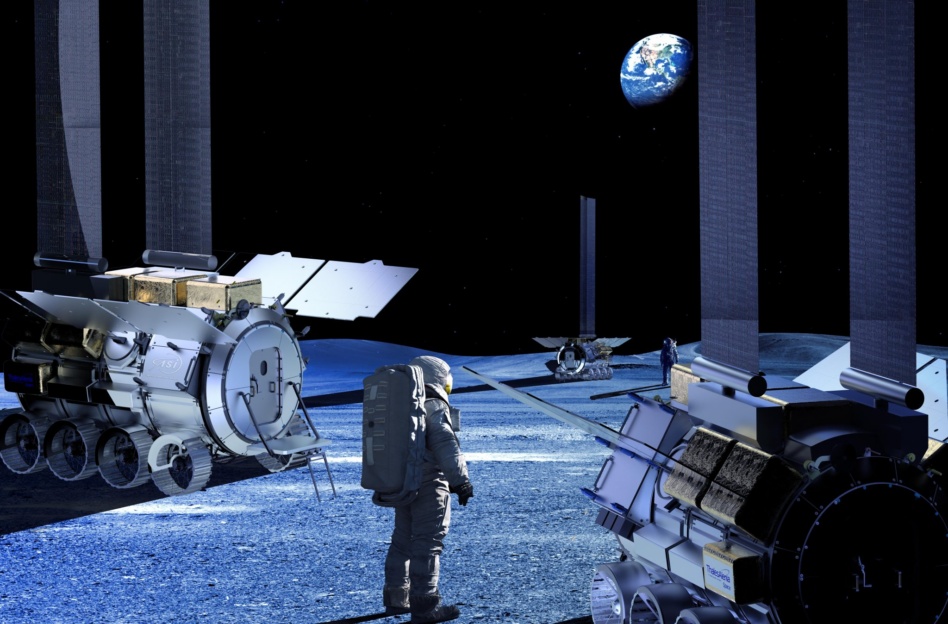
Astrobotic will build the wheels of the Italian Space Agency’s planned driveable lunar habitat, the company announced on Friday.
The Pittsburgh, PA-based space firm won a contract of undisclosed value from Thales Alenia Space to contribute the wheels for Italy’s Multi-Purpose Habitation.
Repurposing: The wheels are designed to be light and flexible to both save on launch costs and help the roving habitat handle the uneven lunar terrain. Astrobotic is planning to build on work it has already done on the wheels for its Astrobotic Mobility Platform, and create a larger tire that can last for the Italian Space Agency’s planned 10-year mission.
Keep reading