


The Trump administration proposed an $18.8B fiscal 2027 budget for NASA—a 23% decrease from the funding level enacted by Congress for fiscal 2026.
The budget proposal includes the same top line as the administration’s fiscal 2026 request, and would make similar cuts to NASA’s science and STEM missions.
- It comes just one week after NASA announced a significant shift in its Artemis program, including a proposal to establish a lunar base and plans to launch to the Moon monthly with robotic landers and biannually with crew.
- The budget also arrived hours after the Artemis II astronauts, flying the first lunar crewed mission since 1972, made a critical in-space engine burn to later fly around the Moon.
Key numbers: Here are some high-level funding numbers in the White House document:
- $8.5B for Artemis, fully funding the landers, suits, and transportation that will be required for lunar operations;
- $175M for robotic missions to start establishing a lunar base camp, plus allowing NASA to repurpose funding for the now-canceled Gateway for operations on the Moon’s surface;
- $109M to shift NASA’s Landsat EO program to commercial providers;
- $3.4B in science cuts through eliminating 40+ missions;
- $297M reduction in space tech
- $1.1B cut to ISS spending, as the orbiting lab reaches the end of its lifespan—even though NASA’s new plan in LEO is to attach commercial modules to the government habitat;
- $143M in STEM cuts.
History repeats itself: The president proposes, but Congress disposes—and if the past is precedent, NASA can expect more money to be flowing in the door.
For fiscal 2026, the White House proposed an $18.8B budget. After lengthy debates on Capitol Hill—and an advocacy push from space-science organizations—Congress passed a $24.4B NASA budget in January, largely rejecting the severe cuts in the administration’s plan.
Cut the fat: NASA Administrator Jared Isaacman has not yet commented on the budget release, as of publishing time. However, when asked last week about if his ambitious lunar plans had been taken into account in the fiscal 2027 request, Isaacman emphasized that the agency needs to spend smarter—not spend more.
“We don’t have a top-line problem,” Isaacman said at a press conference March 24. “This is about allocation of our resources in line with the president’s objective, and then doing it as efficiently as you possibly can.”
War room: The White House also released some high level details of its $1.5T DoD budget request, but more details—including Space Force funding levels—are expected to be released later this month.
“The budget prioritizes funding to secure and defend America’s vital national and economic security interests in, from, and to space,” the budget document says. “Space investments encompass efforts in support of the Golden Dome for America, America’s launch infrastructure, and classified programs.”
Xona Clears Final Regulatory Hurdle for PNT Constellation
Xona Space Systems has won FCC approval to broadcast its Pulsar navigation signals from a full satellite constellation, clearing the last regulatory hurdle before the company can scale deployment.
NordSpace Funds NVD Amid Canada’s Export Push
NordSpace Ventures announced an investment in North Vector Dynamics this week, a company building full-spectrum sovereign missile capability.
NASA Puts $2B Price Tag on Nuclear Mars Mission
The $2B Space Reactor-1 Freedom is said to be the first fission-powered interplanetary spacecraft.
Intel Authorization Act Proposes Limiting Commercial EO Access
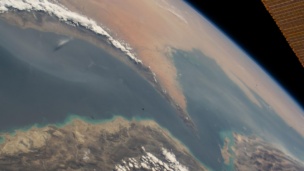
EO data is a privilege, not a right, and the US government wants to control what EO satellite operators can and can’t share with the public.


There are no good neighbors for the commercial space nuclear power business.
Lots of challenges face commercial space nuclear missions—but experts at an industry seminar on Thursday only called one a “show stopper”—insurance.
The rub: Entrepreneurs believe they can safely launch radioactive material into orbit without creating an accident of atomic proportions, but insurance companies are still balking at the word “nuclear,” according to company leaders and experts at the Nuclear Launch Seminar in Washington, DC, hosted by the Association of Commercial Space Professionals and the Nuclear Energy Institute.
Keep reading