


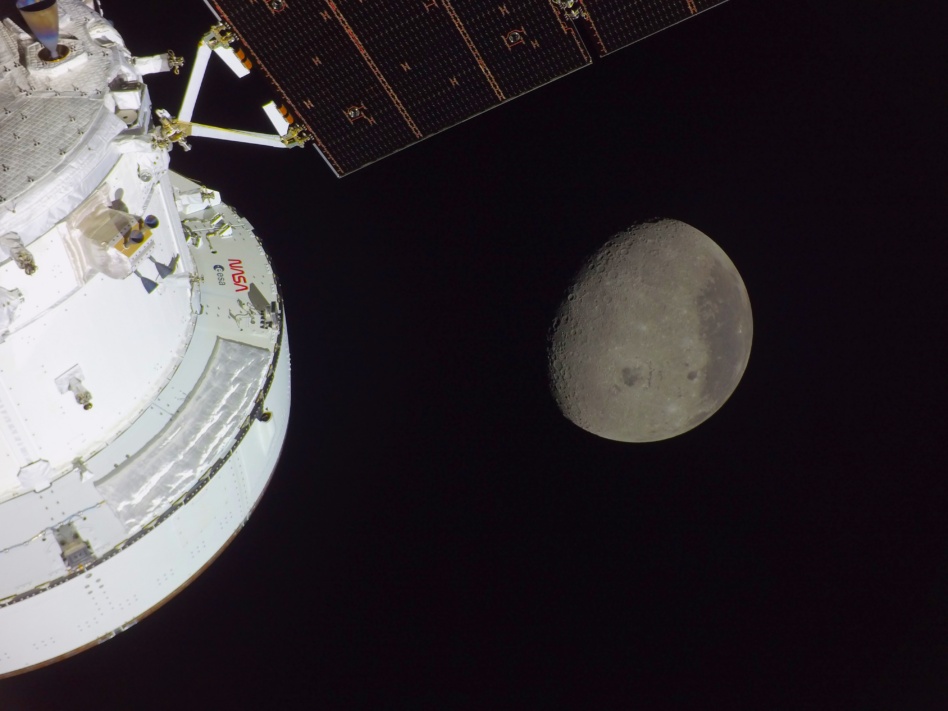
Artemis II is at the tail end of its 10-day journey around the Moon, capping off a mission that has highlighted the technical prowess of hundreds of space industry suppliers from around the world.
At the heart of Artemis II’s Orion spacecraft, which is expected to splash down in the Pacific Ocean today, is the European Service Module (ESM), built by Airbus Defence and Space in Bremen, Germany, on behalf of ESA.
The ESM housed the power, thermal control, and life support systems that kept the four-person crew alive. The module also housed the main engine and eight secondary engines from Aerojet Rocketdyne, and 24 of Airbus’ own maneuvering thrusters, which together have kept the mission on track with minimal corrective measures.
“We’re sort of quietly in the background, doing our job just as intended,” Siân Cleaver, Airbus’ industrial manager for the Orion ESM program, told Payload. “The service module has worked almost flawlessly.”
One of many: Airbus’ success on the Artemis II mission didn’t arise out of a vacuum, however. The module was built on the shoulders of years of Airbus’ previous spaceflight hardware, which includes the Columbus lab on the ISS, and the Automated Transfer Vehicle, which supplied the ISS through five missions between 2008 and 2014.
This history is part of the reason that Airbus has been able to secure work on the first sequence of Artemis flights. Airbus won the contract from ESA to deliver ESM-1 through ESM-6, and has made significant progress on hardware for these missions:
- Airbus has already delivered vehicles for Artemis III and IV to NASA’s Kennedy Space Center;
- ESM-5 and ESM-6 are under production in Bremen, slated for delivery in 2027 and 2028, respectively, according to Cleaver.
Change afoot: But how is this the future impacted by NASA’s recent “Ignition” announcement, which included widespread changes to the Artemis program? The announcement proposed shelving of the Lunar Gateway module, which relied heavily on work already completed by ESA and other international agencies. However, Cleaver pointed out Airbus’ contract is with ESA, so largely unaffected by NASA whiplash. Also, the emotional rollercoaster isn’t new.
“I’ve been in the space industry long enough to have seen a few of these big announcements, and they sound really overly ambitious sometimes,” Cleaver said. “Give it some time…we’ll start to see those plans materializing and becoming a little bit more realistic.”
Ultimately, even if Gateway goes away for good, humanity’s growing ambitions for the Moon are good news for Airbus, and for the wider European space industry—as long as ESA continues to back it.
“I really, really, really hope that the European Space Agency in particular steps up, rises to the challenge, and grabs the work that I’m sure is possible to come our way,” Cleaver said. “We’ve got great heritage, we’ve got great hardware in Europe, and it would be such a shame if that wasn’t utilized in the future.”

Isaacman Doubles Down on New NASA Model for International Partnerships
Isaacman is less than a year on the job, but he’s already upended the way the agency interacts with the rest of the world.
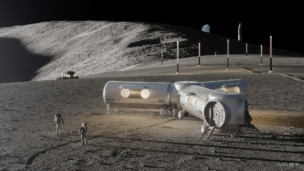
Vast Announces New Lunar Programs Division
Vast announced a Lunar Programs division, building on its commercial space station and satellite development work to support NASA’s Moon Base ambitions.
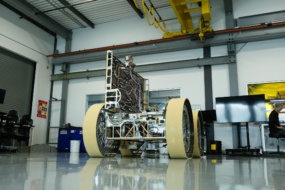
Exclusive: Astrolab, Interstellar Mapping Hunt Lunar Water
A new partnership between Astrolab and Interstellar Mapping is one giant leap for mapkind.
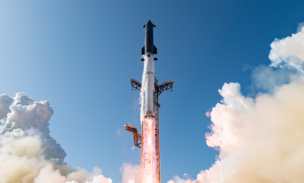
Exclusive: Exolaunch Books its first Starfall Mission
Exolaunch signed an agreement to support customer payloads on a SpaceX Starfall reentry mission scheduled to launch on a Starship NET 2029.

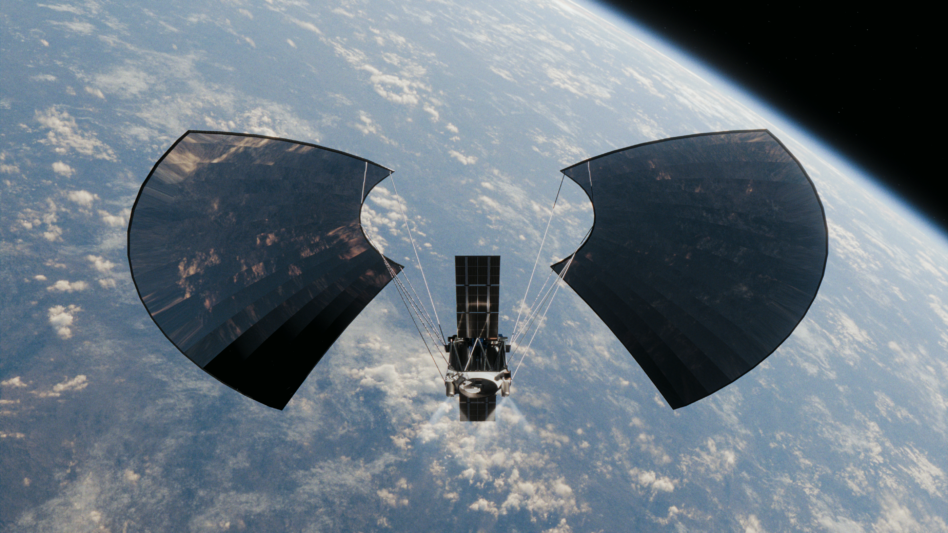
Portal Space Systems raised a $50M Series A to continue building its maneuverable spacecraft.
Geodesic Capital and Mach33 led the round, which also included participation from Booz Allen Ventures, Ark Invest, AlleyCorp, and FUSE.
Why it matters: Customers today don’t just want to get to space—they want to be able to move around once they’re there. That’s where Portal’s Supernova and Starburst spacecraft come in. These spacecraft aim to provide a critical capability for payloads catching a rideshare launch that need to get to a specific orbit—and for companies looking to be good orbital stewards and deorbit at the end of their mission.
Keep reading