



Private European capital markets are increasingly comfortable backing space-industry upstarts.
The European Space Policy Institute (ESPI) released its annual report on the global space investing landscape—Space Venture 2025—which found that European space ventures attracted €1.4B in private investment last year.
- The total value represents an 8% decrease YoY.
- However, €1.2B came from venture capital checkbooks—a 13% uptick compared to 2024.
- The remaining came mainly through debt financing.
It’s a small share compared to the global €11.7B total for private capital raised last year, but at least on the VC front, things are trending in the right direction.
“We are really in a moment where Europe is scaling up,” ESPI Director Hermann Ludwig Moeller told reporters on a call after the report release. “There is certainly an opportunity for the private side to scale up, as the public investments have been increasing in Germany, other countries with the European Space Agency and elsewhere…this is an opportunity for the whole of Europe.”
The good news: There’s a healthy spread of capital across the region. Germany topped the rankings, followed by Finland, France, Bulgaria, and the UK.
Ventures in smaller nations demonstrated commercial success in 2025, and large raises by companies like Finland’s ICEYE and Bulgaria’s Endurosat flipped the script of a European space industry that’s typically dominated by the “Big Four” nations: France, Germany, Italy, and the UK.
In fact, 2025 was the first year on record that the rest of Europe secured more private investment than the “Big Four” nations. Europe was also able to post VC funding growth—despite investments decreasing in each of the Big Four YoY.
“We see that more and more new space hubs, new technology hubs, new capability hubs are appearing across Europe,” ESPI Lead on Industry & Finance João Falcão Serra told reporters. “This is, of course, an opportunity for a lot of countries in Europe—and also an opportunity for Europe to have a more cohesive economy, and to be able to capture this new wave.”
The bad: It’s not all sunshine and roses for Europe, however. ESPI officials pointed to multiple hurdles that could stand in the way of Europe’s future in space.
The first, and most obvious, is the scale-up gap. Private European investors were happy to back early-stage space startups in 2025, but the amount of private money on the continent dedicated to helping companies grow is sparse.
In 2025, not a single growth stage funding round was led by a European private investor, according to ESPI. As a result, European space startups are still heavily dependent on public capital and foreign investors.
“Foreign investment is not an issue by itself,” Falcão Serra said. “But if you are tapping into foreign investment because you have no other alternatives at home, then that puts you in a weak[er] position and potentially highlight[s] vulnerabilities in the ecosystem.”
The second issue highlighted by the report is exit strategies. European space companies may provide limited liquidity options for their investors, contributing to the lack of European growth stage financing. Unlike in the US, the exit pathway to public markets is not as streamlined, and many space-industry startups end up putting themselves up for sale to make investors whole.
And even if European startups can get the approval to sell, buyers are often a long way away. Since 2014, about one-third of European space company acquisitions went to foreign buyers, according to ESPI, which ultimately drives revenues fostered on the continent to entities outside of Europe’s borders.
Crystal ball: ESPI officials were cautiously optimistic on the future of the European space industry.
National governments and ESA have thrust more money than ever into their space industries. Across the board, private investment lifted its taboo on defense spending, lubricating the pathway for private money to flow into the space economy.
As public capital flows in, officials across Europe expect an increase in private capital cofinancing opportunities. Also, ESA and national governments alike have put an emphasis on invigorating private capital.
“We’re certainly now in a situation where there is…energy in the system that we didn’t have before, and I would be hopeful that this is a positive impulse,” Moeller said.

Exclusive: Kapta Space Raises $24M Series A to Build Moving Target Radar Payload
Seattle-based Kapta Space announced a $24M Series A to build next-gen radar payloads designed to track moving targets.
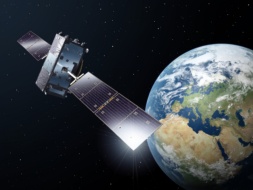
Europe’s Space Defenses Fall Just Shy of Weaponization
Europe doesn’t have any weapons in space—but that doesn’t mean the region is comfortable flying around in orbit defenseless.

Skyrora Shifts Orbital Launch Timeline to 2030
First-mover advantage isn’t all it’s cracked up to be—at least, that’s the thought process for UK launcher Skyrora.

Satlyt Raises $8M Seed to Expand Its Virtual ODC Network
Satlyt was founded in 2024 by Afullo, an alum of SpaceX and Google who spent years trying to convince both companies to invest in in-space edge computing opportunities.
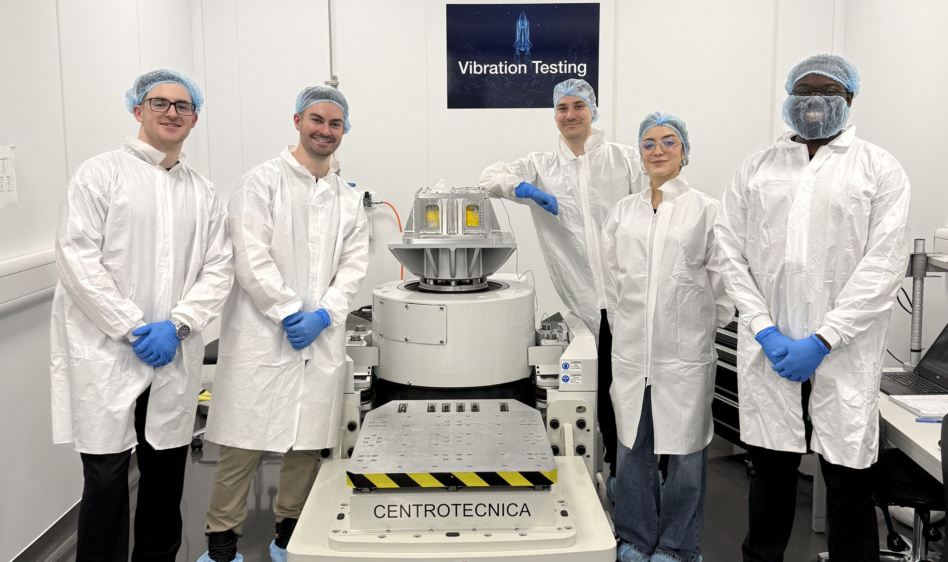
London-based BioOrbit announced a £9.8M (€11.4M) seed round yesterday to ramp up its space-drug manufacturing capabilities and expand its presence in the US market.
LocalGlobe and BREEGA co-led the round, which included participation from Auxxo, Seedcamp, Type One Ventures, 7percent Ventures, and undisclosed angel investors.
Meet BioOrbit: Founded in 2023, BioOrbit is attempting to leverage microgravity to reformulate drugs so that they can be self administered by patients instead of requiring medical staff to administer them.
Keep reading