



Northrop Grumman ($NOC) announced a partnership with Apex yesterday to collaborate on the development of space-based interceptor (SBI) satellites as part of the US Golden Dome missile-defense shield.
Having demonstrated key capabilities through ground tests this year, Northrop Grumman is on track to deliver on-orbit missile defense capabilities with Apex in 2027, according to the announcement.
Autobots, assemble: Northrop Grumman—one of 12 companies selected to build the SBI component of Golden Dome—is the latest defense prime to announce a partnership with the space industry to field its proposal. In May:
- Raytheon partnered with Rocket Lab;
- Anduril partnered with a team of space companies—including Impulse Space, Inversion Space, K2 Space, Sandia National Laboratories, and Voyager Technologies.
These partnerships aim to help defense primes deploy satellites under the aggressive high-volume and low-cost requirements set out by the DoD. While the Pentagon has been tight-lipped about the specifics of Golden Dome—and cost projections differ widely—the DoD estimates that it will cost $185B. It could consist of at least 7,000 sats at full capacity.
So, it’s no surprise that defense primes are subcontracting space industry scale-ups that have used growth-stage financing rounds to invest in high-capacity satellite production facilities.
“Apex was founded specifically to support proliferated constellations like Golden Dome,” Apex CEO Ian Cinnamon said in a statement. “This partnership will enable operational, constellation-scale space-based missile defense and allow us to rapidly support an urgent need.”
One band, one sound: Apex is also steaming ahead with an SBI demo of its own this year. In October, Apex announced a $15M, self-funded demonstration mission—called Project Shadow—to validate SBI capabilities in LEO, launching NET this month.
Under Project Shadow, Apex’s Nova satellite-bus platform will be fitted with an “orbital magazine” carrying two scaled-down demo interceptors.
The mission won’t actually intercept anything, but it’s designed to demonstrate many of the capabilities necessary for Golden Dome to perform as planned, including Link-182-capable inter-satellite links, infrared missile-warning-and-tracking payloads, and solid-rocket motor interceptors.
A spokesperson for Apex confirmed the Project Shadow demo mission is moving ahead in parallel to the work being done with Northrop Grumman.

Colare Raises $2.5M to Expand its Hardware-Focused Hiring Platform
Colare’s technical-assessment platform maps the requirements of a role, and recreates decisions future engineers could face on the job.

Exclusive: DoD Taps Orbital Operations for Cryogenic Spacecraft Demo
The Long Beach, CA, startup has won up to $35M from the DoD under a prototype Other Transaction Agreement to fly a full-scale, in-orbit demo of Astraeus—its cryogenic-maneuvering vehicle.
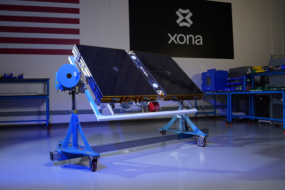
Xona Raises $250M Series D to Scale Commercial GPS Constellation
Xona’s long-term plan is to build a ~258-sat constellation to offer an upgraded commercial alternative to government GPS networks.
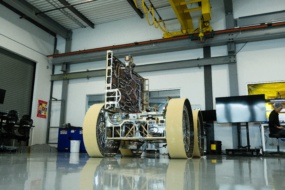
Hewlett Packard Enterprise to Send AI Compute Module to the Moon
Hewlett Packard Enterprise ($HPE) is taking remote working to a whole new level.

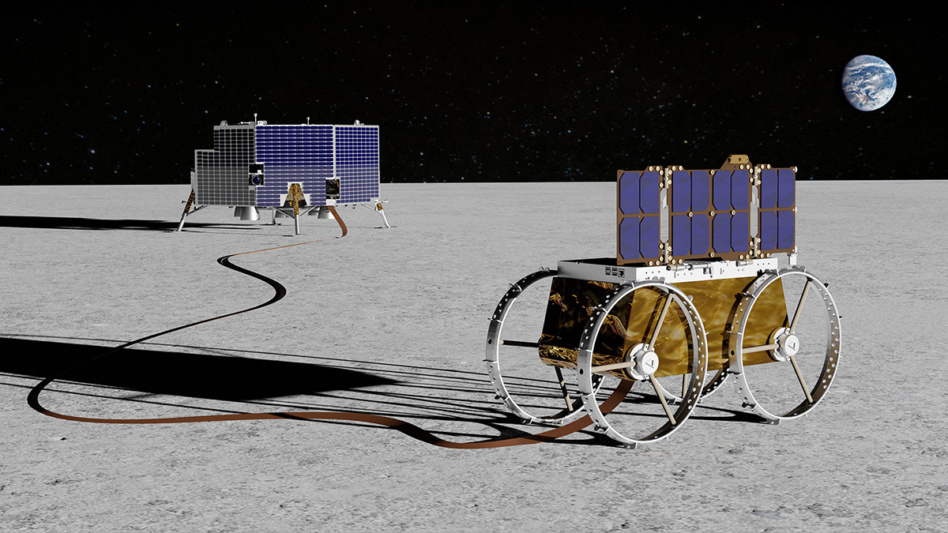
Voyager Technologies ($VOYG) will acquire Astrobotic for ~$300M, signaling its aim to have a bigger role in NASA’s return to the Moon, the company announced this morning
“We are building the infrastructure foundation that will make America’s permanent presence on the Moon a reality,” CEO Dylan Taylor said in a statement. “With Astrobotic, Voyager is now a lunar platform that will have capability at every infrastructure layer needed to put Americans on the lunar surface and keep them there.”
Full stack: Last week, NASA announced that Astrobotic’s Griffin Mission One, which was previously selected for lunar delivery under the CLPS program, would fly the space agency’s Moon Base II mission to begin building planned lunar base infrastructure.
Keep reading