



What’s cheaper than building your own constellation? Splitting one.
On Monday, Space42 and Viasat agreed to formally establish Equatys, a shared satellite-and-ground-infrastructure company for D2D connectivity and advanced mobile satellite services.
The cofounders plan to commit up to $1B in equity, $800M of it once the company is formed.
“Think of Equatys as a shared infrastructure in space, and Space42 and Viasat will be their first two clients,” Space42 Managing Director Karim Michel Sabbagh told reporters Tuesday at World Space Business Week in Paris.
Check please: Space42 and Viasat will each put in $400M upon formation, pending regulatory approvals and Viasat’s appointment as prime technology contractor. Space42 is expected to add $200M more in a future round that will be open to outside investors.
- A separate step-up agreement of undisclosed size will boost joint funding for the first-gen constellation.
- Future funding is expected to come from founders’ equity, third-party equity, and debt. Operators using the system wouldn’t need to invest.
Sabbagh said not to read into the uneven split, since Space42 could be diluted more as investors join.
Can you hear me? Equatys is designed around the telecom tower model. Operators would share sats and ground infrastructure, but keep their own spectrum and customers.
- The first phase will include fewer than 200 sats, which executives said is enough for continuous coverage up to ~50° to 55° latitude.
- The architecture is designed to scale to 2,800 sats across 60 orbital planes and three altitude layers.
- Executives are targeting service by the end of 2029—roughly a year past the initial 2025 goal of commercial rollout within three years.
During the briefing, Viasat chair and CEO Mark Dankberg pitched the system as a fix for a problem carriers know well: dropped calls. Beyond remote regions, Equatys aims to fill metro-coverage gaps by briefly handing off calls to satellites before returning them to terrestrial networks, a capability Dankberg acknowledged doesn’t exist yet.
Sabbagh said satellite calls shouldn’t cost users more, adding that space unit economics must be “comparable to the unit economics of the terrestrial network.”
Please hold: The deal puts dollar figures and a planned prime contractor behind a venture that first made headlines in September 2025. No operator customers or launch markets have been named yet, though Space42 announced exploratory partnerships with e& UAE and Indonesia’s Telkomsat in March.

Kuva Space Spots Illegal Poppy Farms from Orbit
Kuva Space released data today from a pilot program that demonstrated its ability to monitor illegal crop farming from space.
Open Cosmos Raises €300M Funding Round
“We deliberately wanted strong European representation because we’re building strategic infrastructure in Europe, while also bringing in investors from elsewhere where it made sense,” Open Cosmos cofounder and CEO Rafel Jorda Siquier told Payload via email.

Sophia Space, SLI Set Terms for $300M Satellite Leasing Deal
Orbital compute startup Sophia Space and space asset leasing company SLI have set terms for a $300M asset-financing deal.

International Space Summit Highlights the Strength of Europe’s Space Ecosystem
Efforts by the US government to rain on Europe’s parade this week backfired.
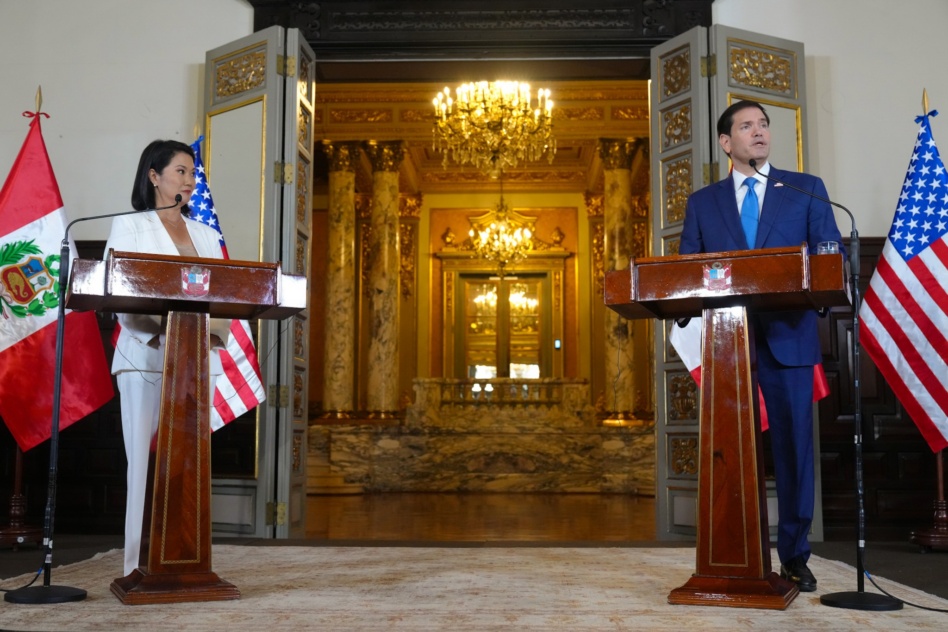
The State Department’s latest space effort puts foreign-assistance dollars behind US space companies, with Peru as the launchpad.
On Sept. 10, Secretary of State Marco Rubio unveiled the department’s new flagship initiative for space diplomacy—the Space Catalyst Partnership (SCP)—during an official visit to Lima. By creating new opportunities for foreign governments and space agencies to engage with the US civil and commercial space sectors, the SCP aims to deepen cooperation between the US and Artemis Accords signatories.
Alongside the announcement, Rubio also unveiled the SCP’s first project—a two-year, $6.5M effort to bring satellite internet to rural southern Peru.
Keep reading