


Just like your favorite Pokémon, Vast is evolving!
The space infrastructure company is establishing a Lunar Programs division, Vast announced today. The company will build on its commercial space station and satellite development work to support NASA’s Moon Base ambitions.
“Vast has the manufacturing capability, flight heritage, and technical expertise needed to help build humanity’s first lunar outpost,” Vast CEO Max Haot said in a statement. “By vertically integrating the engineering, manufacturing, and testing of habitats and infrastructure, Vast can move with the speed, efficiency, and safety that this national imperative demands.”
Not just a phase: To align with NASA’s iterative approach to Moon Base, Vast is taking a phased approach to deploying its lunar architecture.
- Phase 1 establishes reliable access to the surface—deploying foundational infrastructure, and conducting tech demos to reduce risk for future systems.
- Phase 2 builds the initial Moon Base operations and crewed systems—introducing permanent surface elements for critical habitation technologies.
- Phase 3 enables an enduring crewed presence—deploying the infrastructure required for long-duration operations.
Gotta build ‘em all: Many of the technologies and processes developed for Haven can be scaled for lunar operations, according to Vast. As each Haven module improves upon its predecessor, Vast officials also hope the company’s lunar habitats will benefit from these continuous upgrades.
Some of the tech that Vast intends to develop for the Moon includes:
- Power station: Vast’s infrastructure includes solar generation, energy storage, and power distribution of subsequent lunar activities.
- Haven-derived lunar airlock: The free-standing airlock is designed to overcome near-term challenges of lunar surface operations: ingress and dust mitigation, pressure-vessel reliability, extravehicular-activity-suit compatibility, efficient pumping operations, and surface-placement techniques.
- Lunar habitat: The crown jewel of Vast’s lunar architecture is a multi-module habitat for long-duration crewed operations. The lunar habitat design includes life support, thermal-control systems, avionics, comms systems, and the consumables.
Phoning home: Lunar surface assets don’t provide much functionality without a pathway to communicate home—and with the rest of the lunar ecosystem. Vast’s lunar plans also include a proposed comms and positioning constellation for continuous lunar south pole coverage, and improved SSA for surface and orbital operations.
Vast’s vision for the new constellation includes:
- Complementing NASA’s planned Lunar Communications Relay and Navigation Systems network;
- Reducing reliance on constrained shared assets, such as NASA’s Deep Space Network;
- Scaling to broader lunar activity, by adding orbital planes in the future.
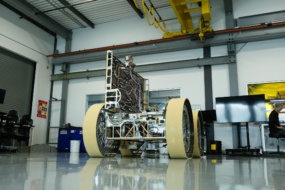
Exclusive: Astrolab, Interstellar Mapping Hunt Lunar Water
A new partnership between Astrolab and Interstellar Mapping is one giant leap for mapkind.
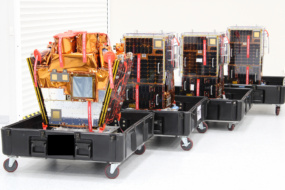
Satellogic Expands DoD Work As it Preps for Next Launch
Satellogic is gearing up to launch its latest batch of satellites next month, potentially including the company’s first Merlin sat, which is designed to gather constant 1-m-resolution EO imagery.
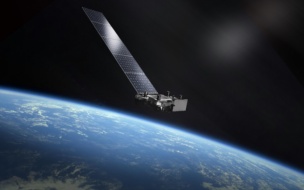
Tomorrow.io Unveils Next-Gen Weather Forecasting Instruments
Tomorrow.io announced the five instruments that will fly aboard DeepSky—its next-gen constellation built for real-time global atmospheric monitoring.

Exclusive: City Labs Plans Second Nuclear Demo
Following the success of City Labs’ first nuclear-powered betavoltaic demo, City Labs is planning a demo of its radioisotope heating unit.

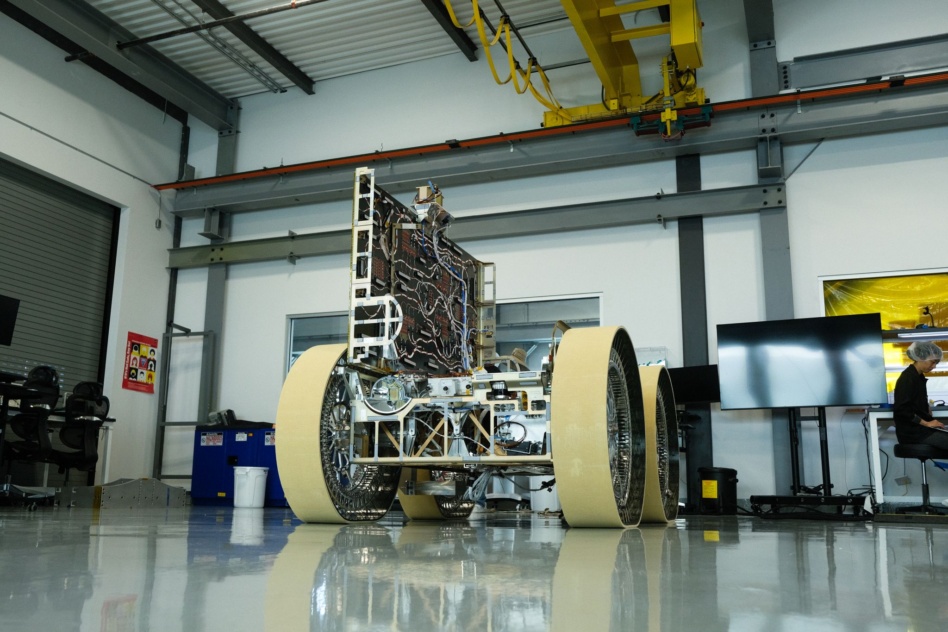
A new partnership between Astrolab and Interstellar Mapping is one giant leap for mapkind.
Interstellar Mapping will support Astrolab’s mission to hunt for water on the lunar surface later this year as part of NASA’s mission to build the Moon Base, the companies exclusively told Payload. It’s Interstellar Mapping’s first time working on a US commercial rover mission.
Hide and seek: Under the partnership, Interstellar Mapping will study what’s lying underneath the lunar surface, specifically looking for “hydrogen-bearing volatiles,” aka the water and ice that will be crucial to the Moon serving as a strategic gas station for missions to Mars and beyond.
Keep reading