


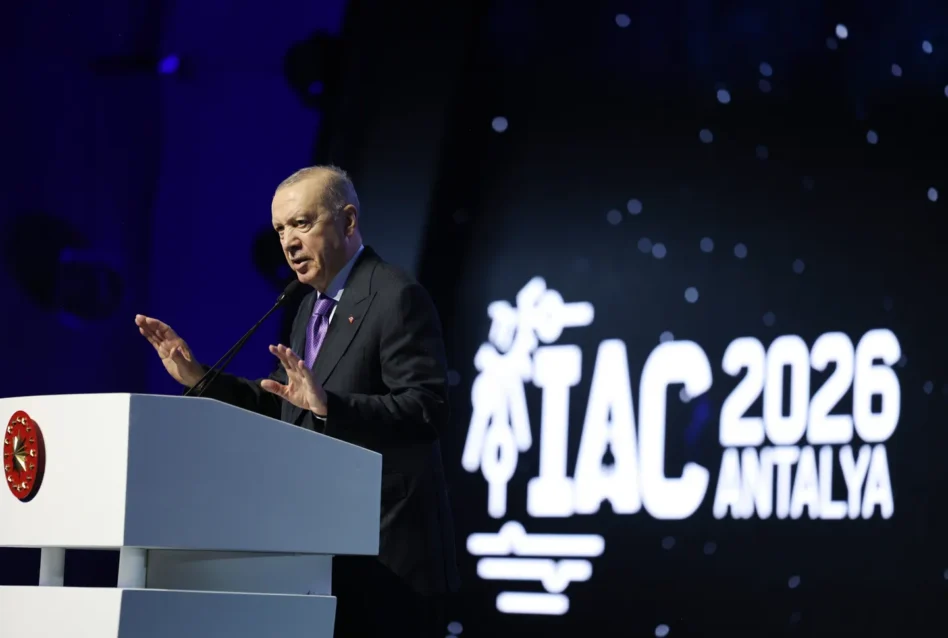
Turkey is not letting its moment in the space spotlight go to waste.
The international space community gathered in Antalya this week for the 2026 International Astronautical Congress, and representatives from Turkey are leveraging the opportunity to showcase the country’s space prowess, from arranging peace declarations to signing satellite launch deals.
During the opening ceremonies, President Recep Tayyip Erdoğan took the stage to reflect on progress made since Turkey established its National Space Program in 2021—pointing to milestones such as the country’s first ISS astronaut and the homegrown Türksat 6A satellite.
Peace offering: On Sunday, senior leaders from 21 countries adopted the Turkish-led Antalya Declaration at the IAC’s Ministers and Members of Parliament Meeting. According to Industry and Technology Minister Mehmet Fatih Kacır, the declaration commits signatories to peace, responsibility, and cooperation in space. The full text and list of signatories have not been made public.
Erdoğan used his opening ceremony speech to condemn the overall weaponization of space and threat of a potential arms race—making him one of the first NATO leaders to publicly do so following the US acknowledging last month that it operates space-control weapons.
Crossroads: The dual-continental country takes its role as a bridge between East and West literally when it comes to space partnerships.
- In August, Turkey became the 71st nation to sign the Artemis Accords. This week, Antalya is hosting the Accords’ annual principals’ meeting.
- It has not formally joined the China–Russia-led International Lunar Research Station, but reportedly applied to join in 2024.
Turkey wants to run its own partnerships, too. Erdoğan said construction is underway on a previously announced spaceport in Somalia, which he pitched as a boost for Africa’s space ecosystem. Le Monde has reported the site will double as a ballistic-missile-test site.
Made in Turkey: At home, Turkey is building its own hardware, from satellites to rockets.
- At the congress, Turkish Aerospace and Roketsan signed a contract for HÜRSAT-2, which Turkish Aerospace bills as a mass-producible EO sat, slated to launch on Roketsan’s homegrown ŞİMŞEK-1 rocket.
- Turkey’s ~3.5-ton spacecraft for its first Moon mission is fully built—more than 80% domestically made—and in testing ahead of a launch targeted for early 2027.
- Following its 2024 ISS and suborbital flights, Turkey has pledged to send many more astronauts, scientists, and engineers to space, though Erdoğan gave no timeline.
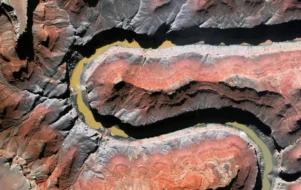
Nebex Partners with Thrusters Unlimited to Unlock $700M for Mexico’s Space Ecosystem
The capital will fund EO, telecoms and other strategic capabilities, according to Nebex.
Isaacman Doubles Down on New NASA Model for International Partnerships
Isaacman is less than a year on the job, but he’s already upended the way the agency interacts with the rest of the world.
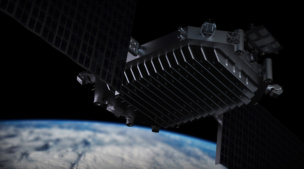
EnduroSat Raises $205M, Notches Vantor Sat Win
It was the third nine-figure fundraise announced by a European company during the past two weeks, following Open Cosmos’ €300M ($348.6M) raise and The Exploration Company’s $450M Series C.

Viasat and Space42 Commit Up to $1B to Equatys Joint Venture
Space42 and Viasat agreed to formally establish Equatys, a shared satellite-and-ground-infrastructure company for D2D connectivity and advanced mobile satellite services.


NYC financial-exchange startup Nebex announced a partnership with Thrusters Unlimited, a Mexican EO and space system manufacturer, to help structure $700M in funds for Mexican sovereign space programs.
The capital will fund EO, telecoms and other strategic capabilities, according to Nebex. The partnership aims to help Mexican demand find industrial supply, and manage the flow of capital, procurement requirements, and national priorities.
Under the collaboration, Nebex will manage the flow of capital through its financial exchange platform, while Thrusters Unlimited provides local know-how and connections to Mexican procurement programs and space-industry suppliers.
Keep reading