



RATLOG launched this week—but not from a pad.
The heavy-lift rocket startup debuted in Y Combinator as part of the Fall 2026 batch.
As students in Dresden, Germany, the RATLOG founders were disappointed by the lack of ambitious job opportunities available after graduating—so they decided to build their own instead.
“Every launch company wants to catch SpaceX,” RATLOG CEO and cofounder Charlie Weise told Payload. “SpaceX has like 20 years in advance. Nobody can change time, or make time go back.”
Chopping block: RATLOG’s pitch diverges from the traditional approach to rocket-engine design—starting with eliminating ~90% of the engine’s parts.
- RATLOG’s engine skips the turbopump and builds pressure by physically rotating the whole engine, the company says. In a rotating detonation engine, by contrast, only the flame spins.
- Turbopumps are complex, hard to scale, and a leading cause of rocket failures, according to Weise.
- Ditching the turbopump comes at a cost, since a rotating engine puts new demands on the bearings, Weise said.
“We are the only company who really does something completely different,” Weise said. “There are companies who do a different fuel or something like that, or build a tank out of another material, but these are all incremental steps.”
The rocket targets Falcon 9 specs—which customers already build to—but likely with a wider fairing.
Time is of the essence: RATLOG is focused on moving quickly. The team landed its first funding—a €30k ($34k) grant from the German government—in April. With the money, it tested its first prototype in early September and joined Y Combinator a few weeks later.
“Because we move at a very high speed with very, very low resources, our team is pretty good at building things from literally nothing very fast,” Weise said.
Still, even for a fast-moving team, the timeline is ambitious. Isar Aerospace, founded in 2018, didn’t fly its first, smaller rocket until 2025.
- By 2027, RATLOG wants a complete flight-ready engine.
- In 2028, it plans to hot-fire the first stage in a hopper test.
- For the first launch, the team is targeting 2029 or 2030.
What comes next: Before any of that, the company must nail the YC Demo Day in December. RATLOG plans to hot-fire its flight combustion chamber in November, and it’ll need to demonstrate commercial traction.
RATLOG says it has letters of intent from customers, mostly orbital data center and constellation companies, and sees an opening to become, in Weise’s words, “a cheaper and more available Ariane 6” in Europe.
“A lot of other companies already start small,” Weise said. “When we talk to customers, they don’t want to ride with small rockets.”
For launch sites, RATLOG is exploring its options, with Oman and the UAE as likely contenders.

Seraphim Space Investment Trust Doubled its Value in 2026
Seraphim’s major holdings—ICEYE, ALL.SPACE, D-Orbit, HawkEye 360, and Xona Space Systems, which together represent more than 75% of the firm’s portfolio—all had a great year, and that success has trickled upwards.
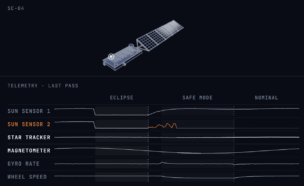
Exclusive: In Orbit Aerospace Pivots From Re-entry Vehicles to Spacecraft Autonomy
In Orbit has won new government contracts for its onboard AI system, which the company says can run a spacecraft’s operations without waiting on ground control.
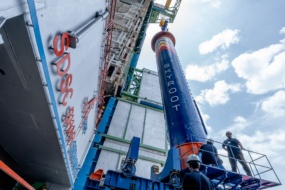
Reflect Orbital Buys Two Skyroot Aerospace Launches
Reflect Orbital announced the purchase of two launches today from Indian launcher Skyroot Aerospace.

Fortastra Raises $30M Series A to Fund its Next Security Spacecraft
The US military has weapons in space, and—with the orbital arsenal expanding—security is becoming a top priority.


Seraphim Space Investment Trust ($SSIT) published its FY26 financials yesterday, revealing a valuation of £605.5M (€716.3M)—more than double its value in June 2025.
Seraphim’s major holdings—ICEYE, ALL.SPACE, D-Orbit, HawkEye 360, and Xona Space Systems, which together represent more than 75% of the firm’s portfolio—all had a great year, and that success has trickled upwards. However, Seraphim has also benefitted heavily from a favorable macroeconomic environment, as government spending on space continues to increase and VC interest in the sector grows.
“When we started in 2016, our thesis was that space will become a critical infrastructure, and that there’ll be a handful of category leaders that create disproportionate amounts of value as the sector matures,” Seraphim Space CEO Mark Boggett told Payload. “We’ve been carefully trying to pick those companies, and this is the year that it’s starting to really be validated.”
Keep reading