


MERRITT ISLAND, FL—CesiumAstro plans to build and deploy a new constellation—called Synchronicity—consisting of 737 satellites. The company made a downpayment on it Thursday, closing a $730M financing round.
Janus Henderson led the equity round, which included additional participation from Insight Partners, Sands Capital, Sumitomo Corporation of Americas, Woven Capital, Incharge Capital, Magnetar, AV, and NewSpace Capital.
The round included a $100M debt facility provided by the Export-Import Bank of the United States and JPMorgan in addition to $630M in equity financing.
Small step, giant leap: The announcement comes just over a month after CesiumAstro sent its first satellite to orbit. Element-1 launched on SpaceX’s Transporter-18 rideshare in October, on a mission designed to pave the way for the full Synchronicity constellation.
“You can build a satellite like you used you that’s a billion dollars and bullet proof, but you’ve taken a decade to test it out,” CesiumAstro founder and CEO Shey Sabripour told Payload. “We did [this satellite] in two and a half years.”
Element-1 is the first of eight planned spacecraft with launches secured between 2028 and 2029. These sats are intended to build out CesiumAstro’s in-space compute capabilities.
The proposed Synchronicity fleet is designed to broadcast over Ku-, Ka-, and V-band frequencies, and will come equipped with onboard compute capabilities to deliver competitive flexibility and resiliency for commercial and national security customers.
How the hundreds of Synchronicity sats will get to orbit, however, is an open question. Sabripour said CesiumAstro is strategizing about what partnerships are necessary to reach its goal of 350 satellites in orbit by 2032.
All for one: The constellation will combine tech that CesiumAstro has spent nearly a decade building, through in-house R&D and a slew of recent acquisitions.
In the past year, CesiumAstro purchased three companies, each adding critical IP to CesiumAstro’s portfolio.
- Jariet Technologies, an RF System-on-Chip semiconductor company focused on satcom, electronic warfare, and radar tech. The acquisition added “advanced mixed-signal semiconductors, digital signal processing, and digital beamforming capabilities” to Cesium’s arsenal, according to the announcement.
- 1Aardvark, a mission software company, giving Cesium spacecraft the ability to operate “in contested or connectivity-constrained environments.”
- Vidrovr, an AI company focused on signal analysis, accelerating CesiumAstro’s integration of AI into its satcom operations.
And CesiumAstro doesn’t plan on stopping the shopping spree anytime soon.
“There’s a few things that we’re still buying and will continue to buy if the supply chain is resilient and made in the US,” Sabripour said. “If it’s not, and it’s being endangered because there are a lot of acquisitions then we’ll buy them. We have our eyes on quite a few.”
In addition to more potential M&A opportunities, CesiumAstro plans to use the new funds to invest heavily in its manufacturing capacity—announcing plans to spent $500M over the next five years to expand its footprint in Austin and purchase 270,000 sq ft of manufacturing space.
Although the company’s acquisitions have brought on hundreds of new employees since the buying spree began in February, it plans to add 550 more jobs by 2030.
Northwood Space Raises $375M Series C at $2B Valuation
Northwood Space is attempting to build the world’s largest ground-station network, and now it has a massive pool of capital to fund its buildout.

Argotec Raises €50M To Scale Small Sat Manufacturing
NUO Space S.p.A—the space arm of the Milan-based private equity firm—led the round.

Seraphim Space Launches Space Academy
Thinking of going back to school? Seraphim Space is taking applications.

Exclusive: Rendezvous Robotics Raises $20M to Develop Self-Assembling Spacecraft
Rendezvous Robotics is developing technology to allow future satellites to launch in pieces that can self-assemble in space.

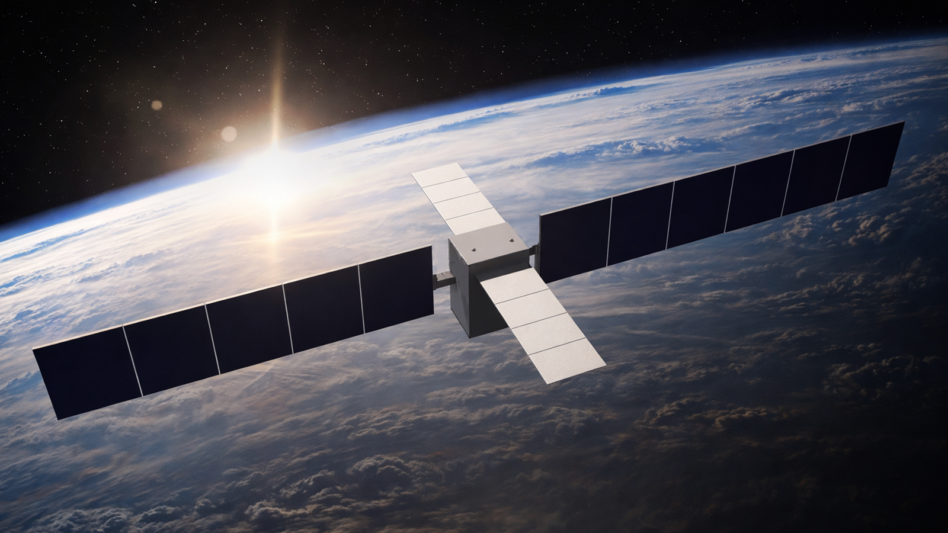
Satellite autonomy startup Orca Aerospace announced a deal worth up to $20M with LA-based Orbital to put its software on Orbital’s planned data-center fleet.
Orca’s says its software will act as an autonomous navigator, linking each sat’s flight software to Orbital’s ground control. It will enable satellites to handle maneuvers, tasks, and fault responses on their own, consulting humans only when needed.
Keep reading