


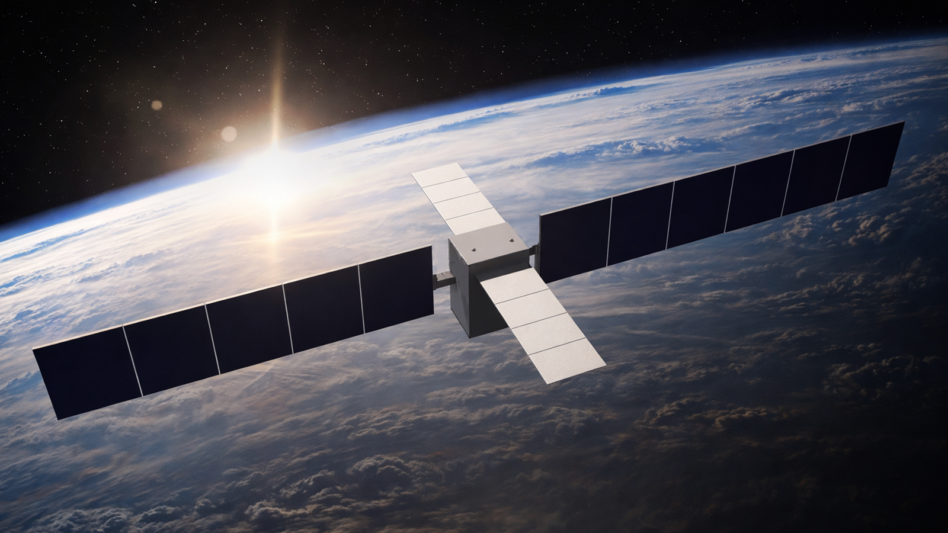
Satellite autonomy startup Orca Aerospace announced a deal worth up to $20M with LA-based Orbital to put its software on Orbital’s planned data-center fleet.
Orca’s says its software will act as an autonomous navigator, linking each sat’s flight software to Orbital’s ground control. It will enable satellites to handle maneuvers, tasks, and fault responses on their own, consulting humans only when needed.
“Onboard autonomy helps us make it so that collision avoidance is an easy thing that doesn’t require a large team of operators,” Orca Aerospace CEO and cofounder Jacob Ososke told Payload. “For Orbital to scale at the size that it needs to, and for it to scale safely, Orca’s technology stack is something that really needs to live onboard.”
Below deck: Orca’s software plugs in once per flight-software stack, so that every satellite follows the same behaviors and rules. It starts in “shadow mode,” sending telemetry down for human review, then gains autonomy in layers, Ososke said.
- A small onboard AI model suggests next steps, like maneuvers or changes of plan.
- Another rules-based program turns those choices into commands.
- Finally, a safety kernel checks each command against the mission rules and vehicle limits Orbital sets, before the command is sent.
The companies hope this is the start of a long-term partnership, in which Orbital’s data centers provide the compute for Orca’s platform. That would let other spacecraft join the pod by connecting to Orbital sats instead of the ground. Orca plans to keep its coordination protocols open to share data with other operators.
“For us, it’s just using the Orca OS as our autonomy and interface software layer,” Orbital CEO and founder Euwyn Poon told Payload, comparing Orca’s software to Tesla’s full self-driving mode. “It is…essentially replacing the need for us to have a team of human operators to do the same thing, and more importantly, scales out.”
Charting the course: Under the letter of intent, Orbital will pay Orca an integration fee—plus a license fee for each satellite that runs Orca’s software.
- Orca will integrate once with the flight software from Reflex Aerospace, Orbital’s bus partner.
- The software is slotted to fly on Orbital-1 in 2028, and the companies may test parts of it earlier on Orbital’s July 2027 Pathfinder.
- Orbital plans to grow its fleet from 10 satellites in 2029, to 100 in 2030, and 1,000 in 2031.
Choppy waters: While all of LEO is getting crowded, the orbits of interest for most data-center constellations are going to be particularly tight. Many are targeting dawn-dusk sun-synchronous orbit, where paths converge over the poles. Like Starlink, those fleets will likely need autonomy to keep pace with the flood of collision-avoidance maneuvers.
“There’s no central kind of governing or mapping function,” Poon said. “So every individual unit needs to handle its own navigation.”
Orbital Matter, EnduroSat Announce an In-Space Manufacturing Mission in 2028
Orbital Matter announced it would partner with EnduroSat for mission in 2028 to deploy a 5 kW solar array with its 3D printing capabilities.
Starfish Loses Contact with Otter, Cutting SSPICY Short
Starfish’s Otter spacecraft has joined the graveyard it was sent to inspect.
Exclusive: Sceye Signs Deal to Fly HAPS Fleet for SoftBank
Sceye signed a five-year, master-services agreement with SoftBank to manufacture, launch, and operate a fleet of Sceye’s high-altitude platform systems (HAPS) over Japan.
Tumbleweed Raises €6.9M to Build its Own Reentry Vehicle
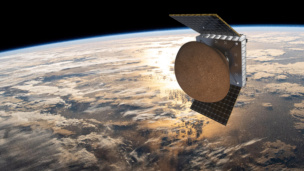
Vienna-based startup Tumbleweed is attempting to build an anti-gravity machine.

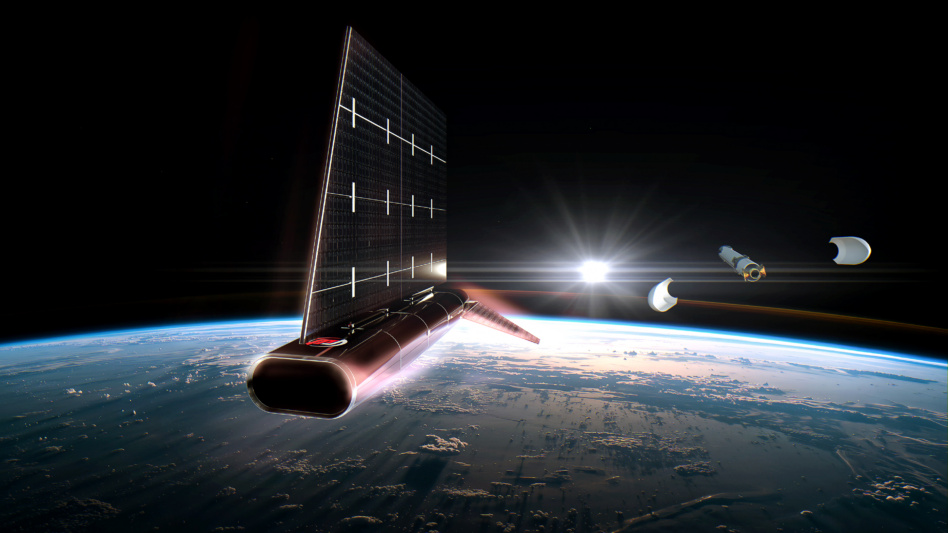
A group of otters is called a bevy, and DARPA just ordered another.
Redwire ($RDW) announced Wednesday that it landed a $20M DARPA contract as part of the agency’s Otter program, which funds air-breathing electric propulsion (ABEP) tech with the long-term goal of building a new DoD capability for sats to fly between 90 km and 250 km in altitude.
DARPA’s focus on low-altitude spaceflight comes at a time when tensions on-orbit are reaching new heights. As militaries around the world invest more on increasing their ability to maneuver in space, the DoD is focused on undercutting the competition.
Keep reading