


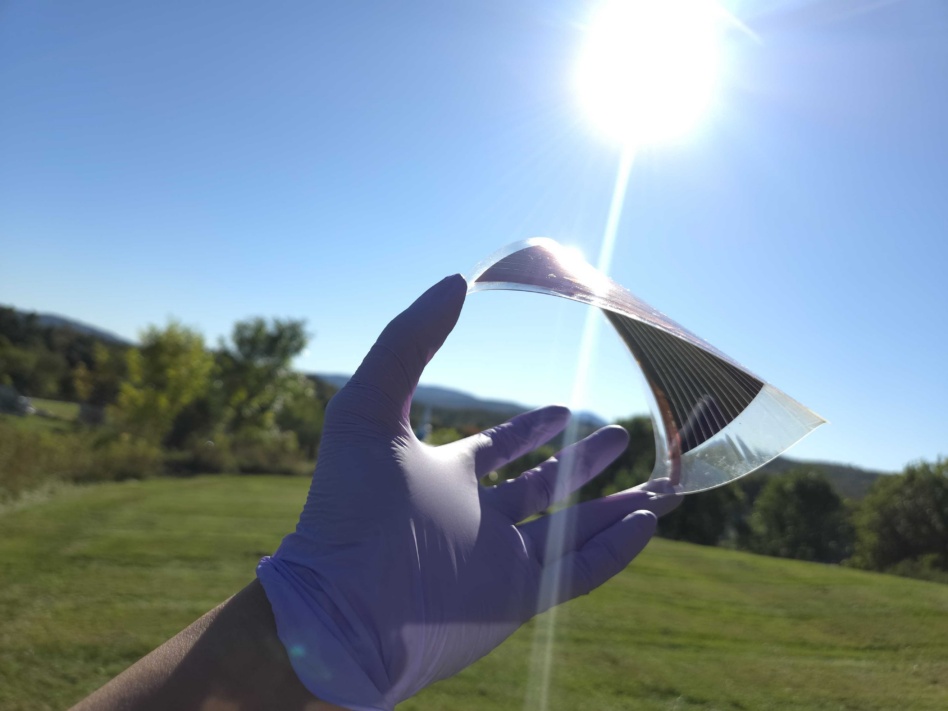
Solar cell manufacturer Verde Technologies signed a contract with NASA to send its lightweight, ultra-thin perovskite solar cells to the ISS NET June, company officials told Payload.
The mission—part of NASA’s Materials International Space Station Experiment (MISSE) , which focuses on testing new materials and components on the orbital lab—will involve bolting Verde’s solar cells to the outside of the ISS for six months before they’re returned to Earth for analysis.
The research aims to validate Verde’s perovskite solar cell technology in space for the first time and open the door for Verde to begin producing and selling solar cells to spacecraft operators at scale.
“The plan for us is to validate the technology completely, then start entering the market in steps,” CEO Jean-Noel Poirier told Payload. “Starting with satellites [and] high-altitude drones that actually really value that type of material…then smallsats and big sats, constellations [and orbital] data centers.”
Pressing need: Verde was founded to serve the terrestrial solar energy market. Its ISS mission will come just one year after the company pivoted to focus on space and high-altitude applications.
The company’s goal is to lighten the solar-cell load for satellites and drones, reducing the overall weight of the vehicles, and—for the space market—driving down total mission cost. A massive increase in demand from satellite builders also drove the pivot, according to Verde officials.
The space industry is projecting tens of thousands of new satellites in orbit over the next five years, many of which are focused on higher-energy applications, such as power beaming, and orbital data centers. The result is that the total demand for satellite solar panels is growing even faster than the demand for spacecraft.
Unfortunately for satellite builders, there aren’t many options out there for lightweight solar cells.
“You have two solutions: One is gallium arsenide, which is the cells used by NASA for long-term exploration. They work great…but there is no [production] capacity,” Poirier said. “Two, you have silicon. Silicon is plentiful on Earth…but it is not a good solution for space. It degrades…it’s inefficient…It’s heavy, it’s clunky, and the transparent elephant in the room right now is that [most] silicon comes from China.”
New kid on the block: Verde’s plan is to offer a third option to the market. Unlike other solar cell manufacturers, who print perovskite onto silicon or glass, Verde is commercializing a perovskite-only cell, printed onto a lightweight, flexible substrate. With this method, the company’s solar cells can be folded or rolled tightly during launch, then deployed into extra-large structures—with the help of partners to maintain the total array’s rigidity.
And without using silicon, the company can get around any international supply-chain headaches, and directly serve the US defense market.
“The industry needs American-made or European-made—let’s say non-Chinese dependent solutions—that work great in space, at low cost, at scale, etc. And that’s what we do,” Poirier said.
Industry Shares Plan for Moon Base Power Tower
NASA tapped three companies—Redwire, Blue Origin’s Honeybee Robotics, and Yank Technologies—to build the pieces of a Mini-Communications and Solar Tower.
Atomic-6 Wants to Shield Astronauts Against Untrackable Debris
Atomic-6 built Space Armor to shield satellites from debris too small to track. Now, it’s exploring whether the same tiles could protect astronauts on spacewalks.
RBC Signals Raises $10M to Commercialize New Comms Tech
The fresh funds are intended to expand the company’s government services business, and scale its product lineup to commercialize capabilities such as intersatellite links, optical ground comms, SDA, and spectrum monitoring.
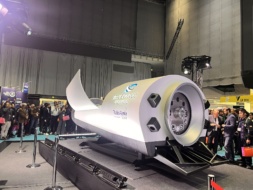
European Hardware Takes Center Stage at Space Tech Expo
Europe is a region chock full of builders. At least, that’s the vibe we got this week watching the news wire from Space Tech Expo in Bremen, Germany.

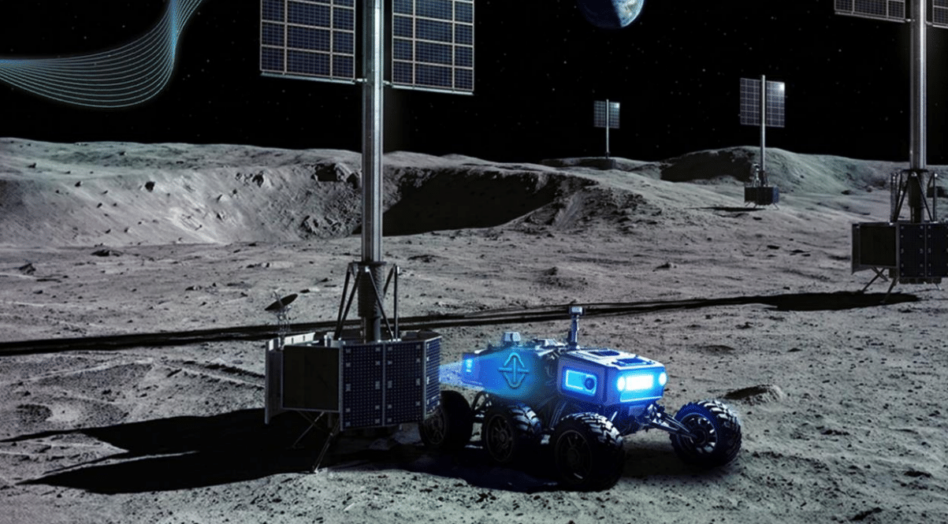
When your phone dies on Earth, you find the nearest outlet. On the Moon, someone has to build the outlet first.
NASA took a first step towards this goal at its Nov. 7 Moon Base update during MAX POWER, tapping three companies—Redwire, Blue Origin’s Honeybee Robotics, and Yank Technologies—to build the pieces of a Mini-Communications and Solar Tower (miniCAST).
Today, Yank Technologies shared more about its role in the project, including that it will deliver flight hardware to power payloads such as rovers.
Keep reading