



As a species, aerospace engineers typically give birth to twins: One spacecraft destined for orbit, and another digital replica to test before its sibling flies. As in real life: Twins are expensive.
Polish engineering software startup Asynchronics today announced the closing of a $3.1M seed round to bring more affordable digital-twin software to the market, and grow its virtual catalog of off-the-shelf components to help space engineers more quickly build and test.
b2venture led the round, which included additional participation from Movens Capital, HEARTFELT, and Hard2beat.
Meet Asynchronics: Airbus veterans CEO Adam Chikha and CTO Serge Barral founded Asynchronics in 2023 to bring high-performing simulation software to the startup sector. The idea was to give space startups access to the same quality of simulation tools used by legacy primes, and spur greater competition in the market.
“Smaller companies or mid-sized companies do not have access to this kind of simulation tooling. What we did was we took our vast experience, [and] created something better,” Chikha told Payload. “It lets the smaller companies create better simulations of their missions, and start competing with big industry.”
Asynchronics’ flagship product—NeXosim—is an open-source simulation tool.
- It allows companies to digitally reproduce their spacecraft and missions before launch, to test the performance of components and the overall spacecraft design.
- Sitting on top of this open-source world is Asynchronics’ marketplace, which features a growing list of digitally recreated spacecraft components that spacecraft builders can quickly—and for a small fee—input into their designs.
“The use of the off-the-shelf components in the industry is very common, but the problem there is that they redo the simulation models or the digital twins for all of their missions,” Chikha said. “Since there are components that are available readily off the shelf, there should be their digital replicas that are also available readily off the shelf.”
Into the metaverse: Asynchronics plans to use the new capital to increase the number of components in its catalog. Chikha told Payload the company is aiming to add 50 components in the next two years—targeting the most popular in each category, including reaction wheels, solar array drive assemblies, and power-control-and-distribution units.
Asynchronics plans to more than double its headcount, from about 11 employees today to 24 in the next few years.
The company will also invest in bolstering its software tools—adding visual representations to help engineers see their designs—and developing an AI-model-generation tool to shorten the creation of digital twins from months to days.
Partner up: Although it’s just a few years old, Asynchronics has locked down partners who are using the company’s simulation tools for major missions, such as K2 Space and Infinite Orbits. Asynchronics has also been working with NewSpace Systems, the European components builder, since 2024 to create digital twins of NewSpace Systems parts. Chikha told Payload that in a recent test, the performance of these parts was “identical” to their digital twins.
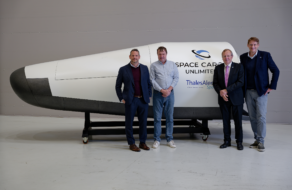
Space Cargo Unlimited Unveils REV1 Reentry Vehicle
Space Cargo Unlimited unveiled its new reusable reentry vehicle—called REV1—at Space Tech Expo in Bremen, Germany today.
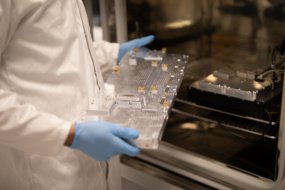
Ramon.Space Raises $124M in Series B Funding
Space computing company Ramon.Space raised $124M in Series B funding, the company announced today.
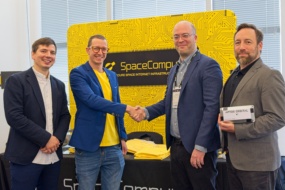
Exclusive: SpaceComputer Books a D-Orbit Demo Mission with Aptos Orbital in 2027
A new security standard is headed to orbit.
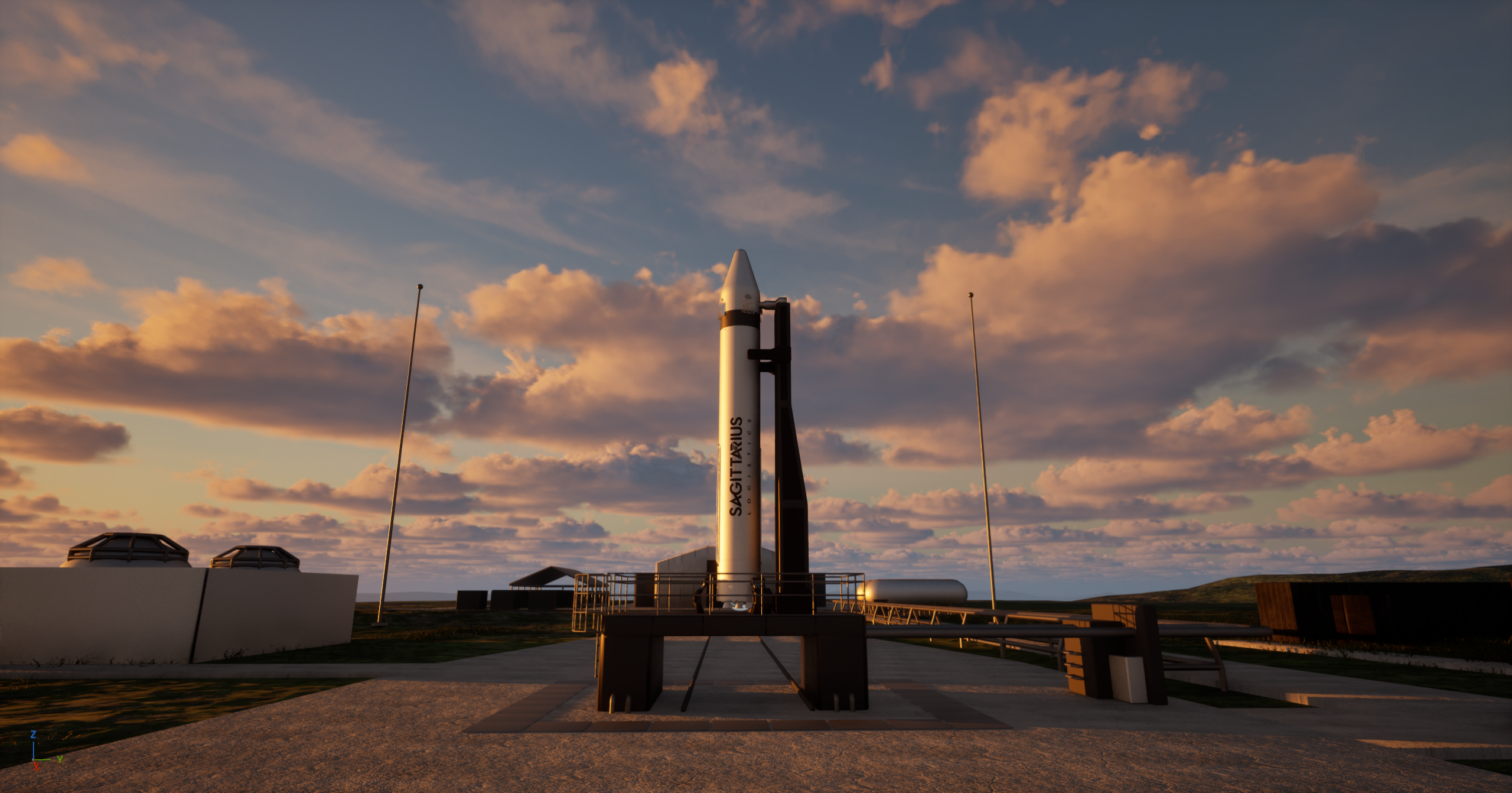
Exclusive: Sagittarius Logistics Raises $1.2M to Build Inland Launch Capabilities
There’s a new launcher in town.

Space computing startup Ramon.Space raised $124M in Series B funding, the company announced today, bringing its total amount raised to $180M.
PSG—a growth equity firm traditionally focused on software—led the round, with Micron Technology, Senvest, and Phoenix Financial joining the group of previous investors. For Micron, the investment is also a strategic one, as Micron builds a space-qualified memory chip and storage is a critical component of any orbital compute solution.
“We are paving the way for a new industry, and customer demand is growing quickly,” CEO Avi Shabtai said in a statement. “This funding can help us scale to create the computing foundation that will serve the space economy’s accelerated growth.”
Keep reading