


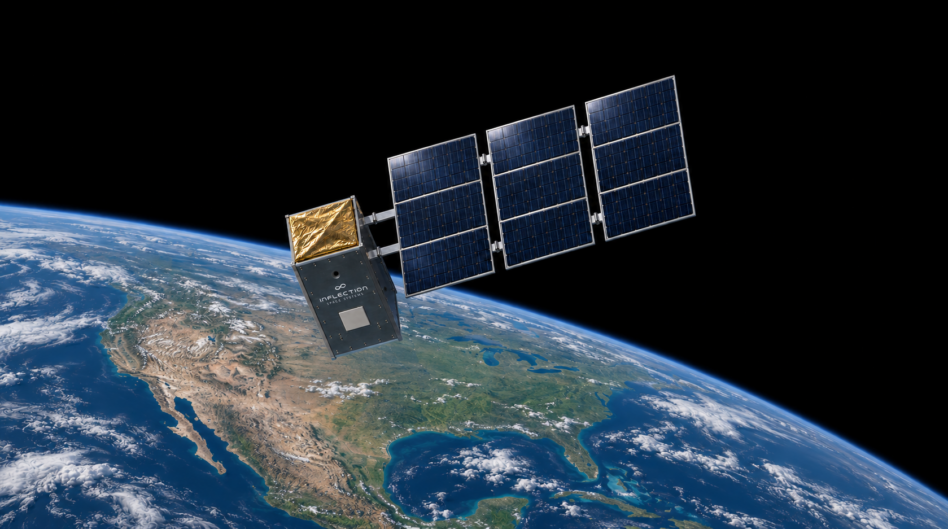
Inflection Space Systems is bringing the Costco model to orbit, where the more satellite buses you buy, the bigger the bargain.
The Y Combinator-backed startup’s first mission, Pax, will launch NET 2028 on a rideshare booked through Exolaunch. The 16U, 36-kg cubesat is flying to gain flight heritage for the avionics, sensors, power systems, and structures that will eventually fly on Exponent, the standardized bus that Inflection wants to build by the thousands. Exponent is far bigger than its pathfinder—up to 300 kg at launch, with 100 kg of payload and 1.5 kW of power.
“Manufacturing is structurally, in our experience in the space sector, high-mix, low-volume,” Inflection CEO and cofounder Alex Lisso told Payload. “We want to bring low-mix, high-volume manufacturing to the space sector.”
Family sized: Most satellite makers still build a handful of each design, often tailored to one customer, Lisso said. Inflection wants to build one design in bulk, betting that constellations for orbital data centers, Golden Dome, and satcom will need far more spacecraft than the industry has ever made.
“30,000 [satellites] is a trivial number compared to the number of drones or boats or cars or iPhones we’ve built,” Lisso said.
- Bulk buying is baked into Inflection’s pricing: $1.5M for one Exponent, falling to $700K each for an order of 100 or more.
- To achieve these costs, the company designed its factory for autonomous assembly and 24/7 lights-out production.
- Lisso said the company is taking an “aggressive approach to vertical integration,” building its own hardware and flight software so that every part is designed to be mass-produced.
Taste test: Pax will test Inflection’s manufacturing readiness level (MRL) as much as its technology readiness level (TRL). The company plans to finish Exponent’s critical design and build a first unit by the end of 2027, then ramp production in 2028.
Pax will carry an on-orbit radiation testbed from The Radiation Team and Indiana University’s Center for Reliable & Trusted Electronics. After commissioning, the testbed will stay switched on for the rest of the three-year mission.
“The longer it operates, the better for them,” Lisso said. The Pax mission will also carry a second customer tech-demo payload, to be named at a later date.
Exclusive: CUBECOM Expands to the Netherlands to Scale European Biz
Europe’s space industry is heating up, and it’s starting to attract outside attention. CUBECOM, the South African company developing RF communications systems for satellites, today announced it’s opening a new office in Delft, the Netherlands as part of an effort to lock down more deals across the continent. The new office will initially host the…
Space Cargo Unlimited Unveils REV1 Reentry Vehicle
Space Cargo Unlimited unveiled its new reusable reentry vehicle—called REV1—at Space Tech Expo in Bremen, Germany today.

Asynchronics Raises $3.1M To Boost its Digital-Twin Software
Asynchronics today announced the closing of a $3.1M seed round to bring more affordable digital-twin software to the market, and grow its virtual catalog of off-the-shelf components.
Exclusive: SpaceComputer Books a D-Orbit Demo Mission with Aptos Orbital in 2027
A new security standard is headed to orbit.

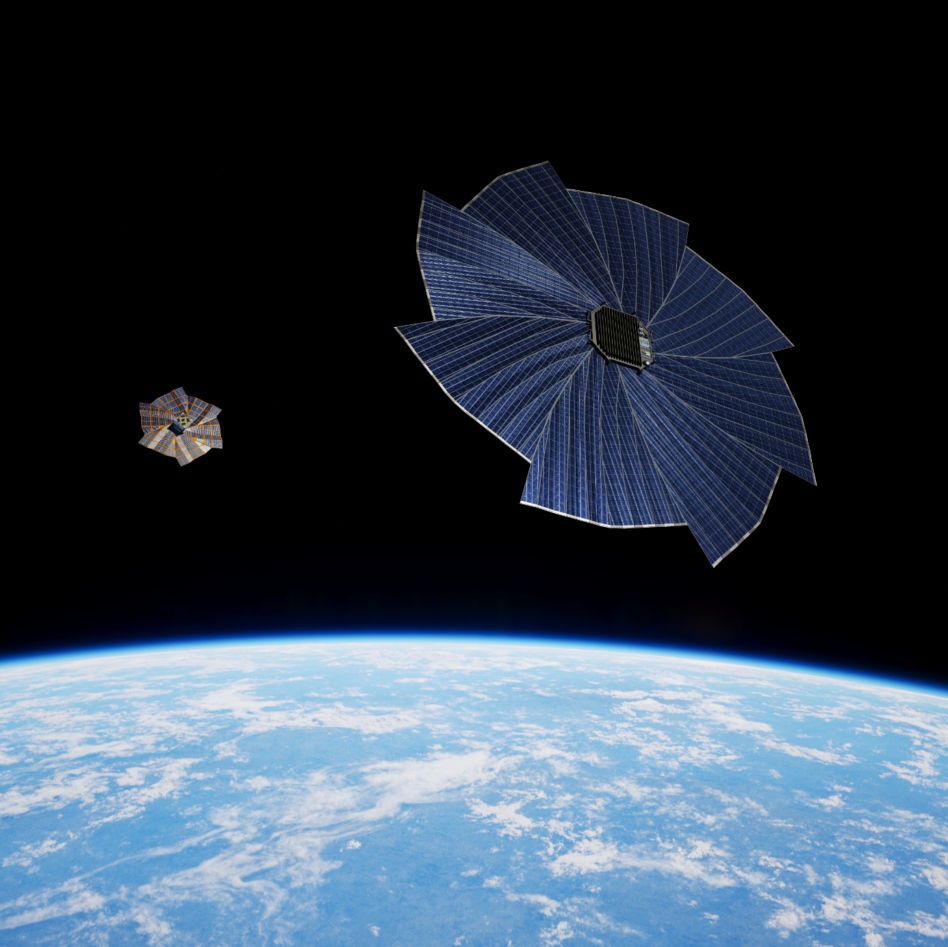
German satellite-components manufacturer Dcubed announced the closing of a €27.2M ($30M) Series A extension round today, which comes in addition to an earlier €4.4M ($4.9M) Series A round, which closed in August 2024.
The new capital will fund an expansion of the company’s production facilities in the US and Germany with the goal of quadrupling its production rate of actuators and solar arrays. It will also pay to develop a new family of advanced solar arrays and satellite power systems—called ARAQYS.
Warsaw Equity Group led the round, which included participation from the European Innovation Council, HTGF Opportunity Fund, BayBG, and Expansion Aerospace Ventures.
Keep reading