


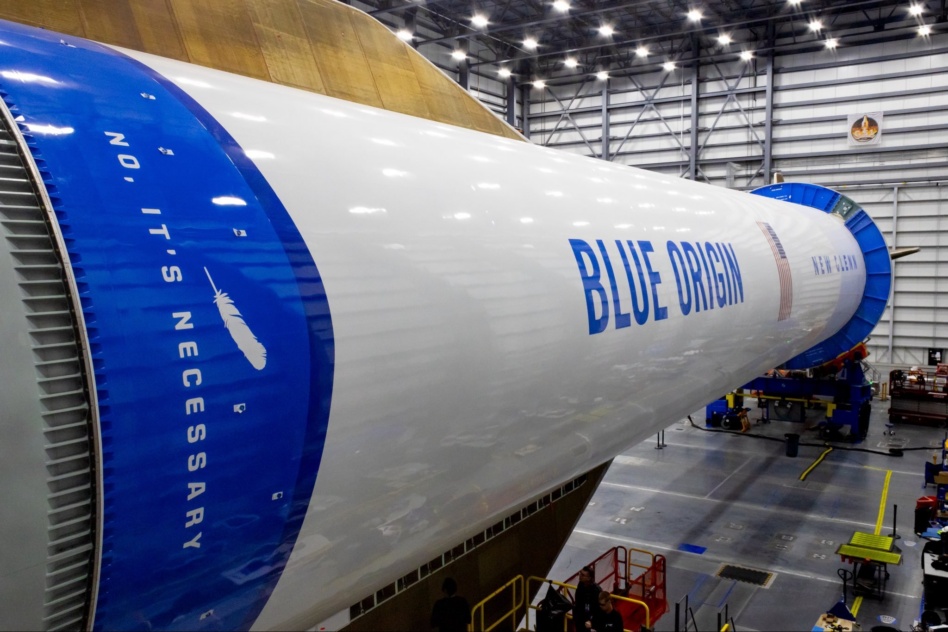
New Glenn launched all over the place last night.
During a static fire test at Blue Origin’s Cape Canaveral launch pad, New Glenn’s first stage exploded into a mushroom cloud that destroyed the rocket, and much of the infrastructure at LC-36A, according to Ars Technica. Debris from the explosion was thrown so far that Space Launch Delta 45 warned that it could wash up on nearby beaches for days or weeks.
“All personnel are accounted for and safe. It’s too early to know the root cause, but we’re already working to find it. Very rough day, but we’ll rebuild whatever needs rebuilding and get back to flying,” Blue Origin Founder Jeff Bezos said on X.
Rough timing: The explosion is an unexpected setback for Blue Origin, and the largest failure in New Glenn’s development to date.
Blue Origin has launched New Glenn three times. During the latest flight in April, an issue in the upper stage caused the mission to fail—deploying AST SpaceMobile’s BlueBird 7 satellite too low to sustain operations.
Returning to the pad so soon after was seen as a positive sign, as the company moved toward higher-cadence launch and longer-range missions. But those may be on hold for a while.
For context, SpaceX’s pad failure in 2016 led to over a year of delays.
Goodnight Moon: At a time when NASA was beginning to ramp up its cadence, New Glenn’s fiery end could also mean delays for America’s lunar ambitions.
- Blue Origin had been preparing to send its first lunar lander, Blue Moon Mark 1, to the lunar surface on top of New Glenn NET this fall.
- The rocket was also expected to bring NASA’s VIPER rover to the Moon next year;
- And on Tuesday, New Glenn was selected to take two lunar rovers to the lunar surface on a mission before Artemis IV.
With Blue Origin out of the picture, NASA’s options for lunar delivery in the short term don’t look great. NASA Administrator Jared Isaacman said on X that the agency “will provide information on any impacts to the Artemis and Moon Base programs as it becomes available.”
The agency can turn to SpaceX’s Falcon 9, which has delivered payloads to the lunar surface in the past, or wait for Starship to come online—though Starship is facing an FAA mishap investigation after anomalies on its latest test flight.
What’s next: Blue Origin is still analyzing the damage, but there are a few shortcuts that could stem the delay.
- Blue Origin has a new pad under development at LC-36B nearby, though it’s unclear when that will be ready to host a launch;
- Blue Origin is also working on a larger variant of New Glenn, and could opt to drop the accident-prone model for a larger alternative.
Skyrora Shifts Orbital Launch Timeline to 2030
First-mover advantage isn’t all it’s cracked up to be—at least, that’s the thought process for UK launcher Skyrora.
Transporter-18 Tests the Building Blocks of Orbital Data Centers
Few rideshares come with a theme, but SpaceX’s Transporter-18 had one: getting power to compute in orbit.
Starship Reaches Orbit on 14th Test Flight
After reaching orbit, Starship deployed 26 V3 Starlink sats over about 30 minutes using its ‘Pez dispenser’ system.
Exclusive: Meridian Space Spins Out from SpinLaunch
“Meridian will carry forward the satcom infrastructure business… SpinLaunch will continue to build on its vision for a lower-cost approach to launch, with further applications in hypersonics to support the Golden Dome program and in the lunar economy,” Meridian Space CEO Massimiliano Ladovaz told Payload.

Europe made its most concrete claim yet for sovereignty in orbit this week.
The EU commission proposed new rules for its spectrum allocation that would reserve at least two-thirds of available frequencies to European satellite operators, leaving foreign satcoms to compete for table scraps.
The move immediately elicited a response from the US Chair of the FCC, Brendan Carr:
Keep reading