


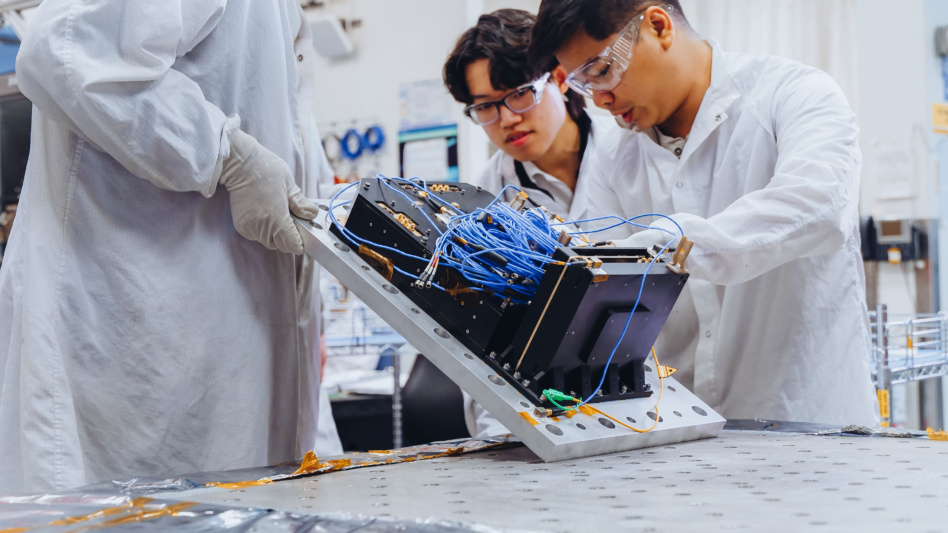
Boeing ($BA) announced today that it successfully demonstrated high-fidelity quantum entanglement swapping during ground tests of its quantum networking satellite—called Q4S.
The test clears the road for Boeing to launch Q4S in 2027 for a one-year demonstration mission, bringing the lab test to orbit.
ELI5: Quantum entanglement describes the unique, seemingly magical quality of subatomic particles. When two photons (or fundamental particles of light) are entangled, the measured state of one photon will necessarily be true in its partner—even at great distances.
The technology could enable sci-fi-sounding technologies, such as quantum key distribution (QKD) for secure, encrypted correspondence; quantum computing for faster, more complex applications; and quantum precision for next-generation PNT.
But the tech also has its limits. The quantum entanglement of two photons fades over long enough distances, meaning that building a worldwide connection between quantum computers or comms nodes requires something greater than what a pair of particles on a single satellite—or even in subsea fiber optic cables—can provide. That’s exactly where Q4S comes in.
While other organizations are working on in-space demonstrations of QKD comms, those demos are essentially point-to-point links. Q4S intends to take the capability a step further, by generating four entangled photons—think two sets of identical twins—to create a network effect. If successful, Q4S will validate that quantum swapping can be achieved in space, and set the stage for global-reaching quantum applications.
Easier said: In lab settings, quantum experiments often require large, delicate equipment and considerable power inputs, so miniaturizing this hardware to fit into a satellite—without a shrink ray on hand—is a feat in-and-of itself. The tech also has to survive a trip to space.
“One of the hardest parts of quantum networking is maintaining strong performance while working within the size, weight, and power limits of a spacecraft,” Boeing Quantum Systems’ Chief Scientist Jay Lowell said in a statement. “These test results show that we can produce high-fidelity swaps on a payload engineered for space, not just for a controlled lab bench. That is a meaningful step toward practical quantum networks.”
Boeing’s recent environmental qualification tests suggest Q4S is ready to withstand the shock of launch, as well as the harsh environment of orbit. To manage the power requirements, Boeing plans to deploy Q4S to SSO, where sunlight is abundant. All that’s left now is to pull the rabbit out of the hat.
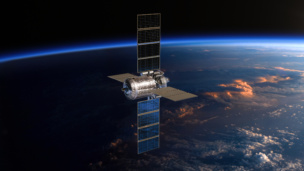
Exclusive: DoD Taps Orbital Operations for Cryogenic Spacecraft Demo
The Long Beach, CA, startup has won up to $35M from the DoD under a prototype Other Transaction Agreement to fly a full-scale, in-orbit demo of Astraeus—its cryogenic-maneuvering vehicle.
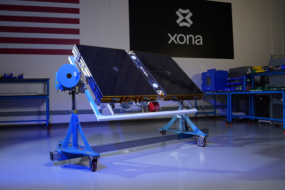
Xona Raises $250M Series D to Scale Commercial GPS Constellation
Xona’s long-term plan is to build a ~258-sat constellation to offer an upgraded commercial alternative to government GPS networks.
National Academies Rank Nonpolar Moon Sites
A new report from the National Academies ranks the top four non-polar sites for future crewed lunar missions.
Hewlett Packard Enterprise to Send AI Compute Module to the Moon
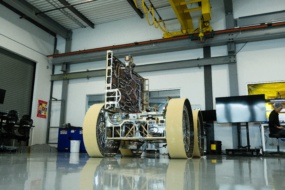
Hewlett Packard Enterprise ($HPE) is taking remote working to a whole new level.

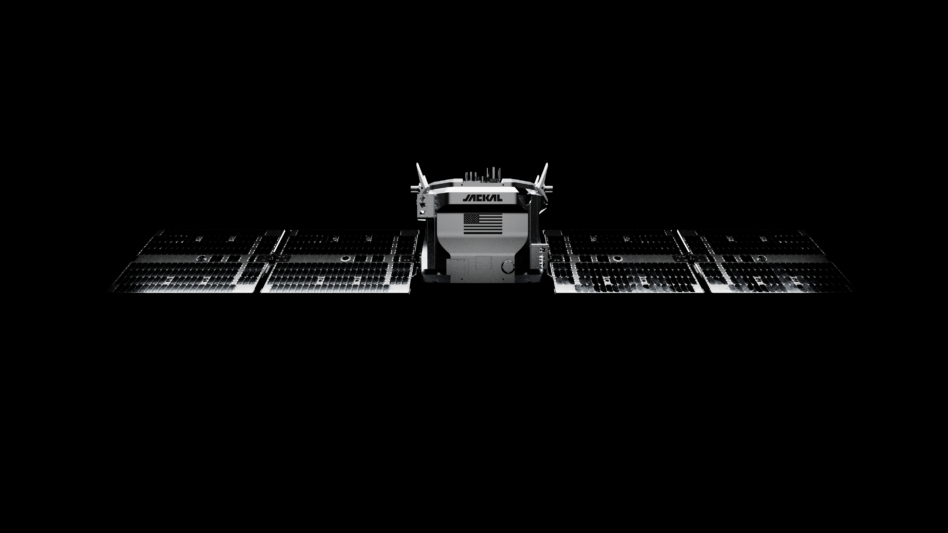
True Anomaly announced today that its autonomous orbital vehicle, Jackal, has completed all of its Mission X-3 test objectives, clearing the final hurdles to being fully commissioned.
“Mission X-3 really demonstrated the capabilities that the Space Force needs across a variety of programs,” True Anomaly CEO and cofounder Even Rogers told Payload. “When we designed Jackal and Mosaic, we designed it explicitly for orbital-warfare and space-domain-awareness missions. Now we’ve demonstrated several of the conops and key capabilities that are core to those missions and those future programs.”
The hard part: X-3 is the company’s third and most complex yet in a series of self-funded flight tests. The campaign challenged Jackal, and the capabilities of mission software Mosaic, for end-to-end uncooperative rendezvous and proximity operations (RPO). The test included:
Keep reading