


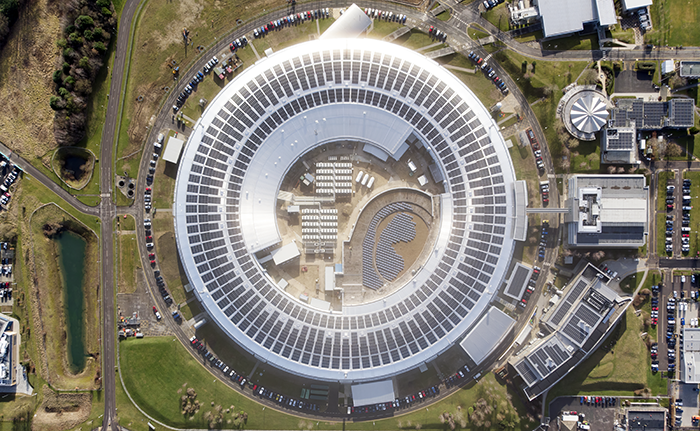
While the rest of Europe pours record funds into ESA and their own national research institutions, the UK seems to be taking a step in the other direction.
The UK government’s Science and Technology Facilities Council (STFC) revealed this week that it needs to cut £162M (€187M) in spending by FY2029-30 to align with a new “outcome-focused approach” in the country’s R&D funding. The UK’s astronomy, physics, and nuclear researchers are likely to bear the brunt of the austerity measures as the UK looks to invest in fewer areas where it believes it can excel.
Saving space: STFC Executive Chair Michele Dougherty sent a letter to the physics and astronomy community, saying that the cuts would build on “last year’s 15% reduction in new grants.” Dougherty estimated that the future STFC spending would likely be around 70% of FY2024-25 levels—and said cuts would impact both future grants, as well as projects already underway.
For many in the UK astronomy community, the news is a death knell.
“Grim is the only way we can describe it,” Royal Astronomical Society Executive Director Robert Massey told Payload. “The consequence of this decision is that you will take a thriving field, where the UK is a world leader, and greatly diminish our status. You also will have a human cost of driving very talented people out of the sector completely.”
If the cuts are implemented, Massey warned they are likely to force postdoc researchers out of academia, and could shutter entire academic departments—a brain drain that will impact the wider economy if researchers can find better funding outside the UK.
Crowded space: Part of the problem, according to Massey, stems from the makeup of the Department of Science, Innovation, and Technology, and its R&D funding arm: UK Research and Innovation (UKRI). Namely, Massey said, disparate science initiatives are all competing against one another to secure parts of a single overarching budget.
Last fall, the UK Space Agency announced it would fold itself into DSIT. While that move has yet to negatively impact funds for the agency—which actually saw a funding boost for the rest of the decade—the writing is on the wall.
Within DSIT, research targeting space applications has to compete for funds with the rest of the UK’s next-generation research programs, including clean energy, life sciences, AI, and quantum computing.
“Decision-makers higher up in the system can’t immediately see the impact that decisions are having,” Massey said. “In places like the space sector, maybe the UK isn’t as committed to it as we’ve been saying.”
White House Requests $18.8B FY27 Budget for NASA
The budget proposal includes the same top line as the administration’s fiscal 2026 request, and would make similar cuts to NASA’s science and STEM missions.
Insurance is Commercial Space Nuclear’s Biggest Headache
Lots of challenges face commercial space nuclear missions—but experts at an industry seminar on Thursday only called one a “show stopper”—insurance.

Jared Isaacman Hits 100 Days In Office With a Bang
NASA Administrator Jared Isaacman has one message: Get in, we’re going to the Moon.

With Artemis Changes, Europe is Left Holding the Bag
ESA and European space primes were developing many of the key components of the planned lunar orbiting station.

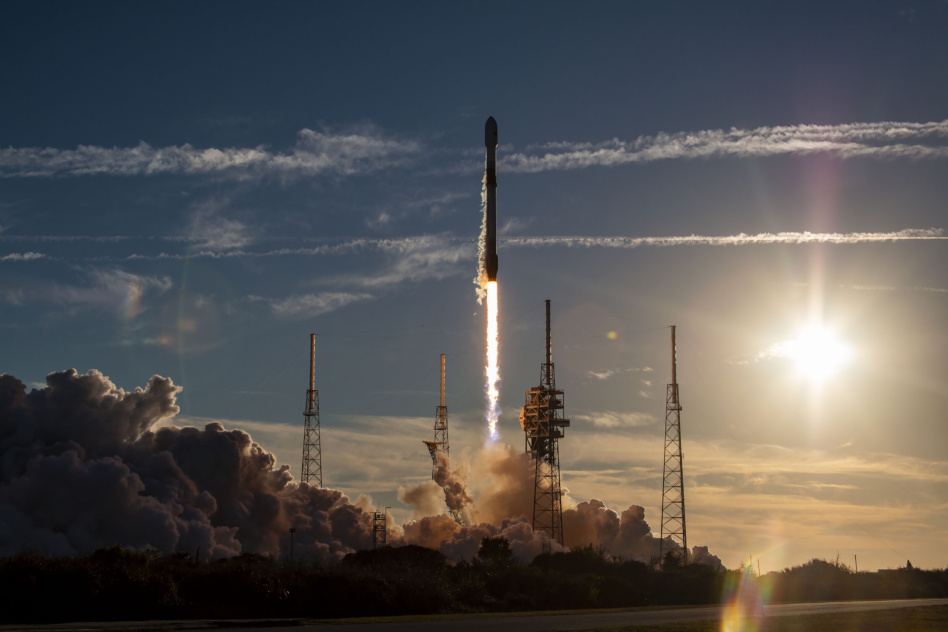
The GAO’s watchful eye has fallen upon the SDA.
In a report released this week, the watchdog agency was unimpressed with the SDA’s planning for the Proliferated Warfighter Space Architecture (PWSA).
Part of this, the report argues, is because the SDA has overestimated the maturity of the technology it’s calling on its contractors to deliver. These contractors—names like Lockheed Martin, L3Harris, Northrop Grumman, and York Space Systems—are experienced satellite manufacturers with assets on orbit. The report alleges, however, that since the contractors are adding specialized equipment to these satellites, the items are not actually as mature as they purport to be.
Keep reading