



Last week, NASA laid out a vision for a lunar base that’s built and supplied through monthly uncrewed lunar landings, with launches beginning as soon as next year.It’s no surprise that CLPS companies are raring to go.
“This was an opportunity bomb,” Intuitive Machines CTO Tim Crain told Payload.
Step back: NASA announced the launch of CLPS 2.0 event on March 24, with details released in a draft RFP. The second phase of the commercial lunar delivery service is expected to include:
- More support from NASA subject matter experts, to help companies succeed;
- Bigger landers and rovers designed to carry more to the lunar surface;
- A 10-year ordering period, for missions to be launched at a faster cadence;
- A $6B budget cap.
The draft RFP also asks companies to describe whether their landers are prepared to carry radioactive heating and power sources to survive the lunar night, and what it would take to return 2 kg to Earth.
Industry on board: Payload spoke with leadership from three CLPS providers—Astrobotic Technology, Firefly Aerospace, and Intuitive Machines—about what the changes mean for their companies. Spoiler alert: All three are super excited.
“We’re pumped about it, because it’s a recognition that the things we were already doing at Firefly are on the right track,” Firefly CEO Jason Kim told Payload. Firefly can make multiple landers a year, instead of one, due to an expansion of the company’s clean rooms for lunar landers.
Intuitive Machines’ Crain commended NASA for its “Apollo practicality”—and the willingness to change even long-standing programs, if they’re not working.
“The overarching message is, we want partners who deliver…That came through loud and clear,” he said. “And nothing is off-limits that they won’t change.”
Astrobotic CEO John Thornton commended NASA for narrowing the field of companies competing in CLPS, saying that the first phase of the program that included potential 13 vendors—not all of whom have been awarded spaceflights—are “a distraction.”
“Imagine if there were 15 launch vehicle companies trying to go for a small market. It doesn’t pencil out,” he said. “That is how you get costs to come down further—a small group that can be more vertically integrated.”
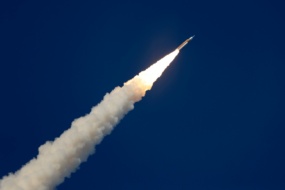
Artemis II Is On The Way To The Moon
NASA astronauts Reid Wiseman, Christina Koch, and Victor Glover, plus Canadian Space Agency astronaut Jeremy Hansen, are on board—with Koch and Glover poised to make history as the first woman and person of color to head to the Moon, and Hansen as the first non-American.
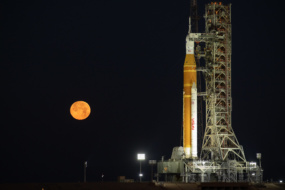
Top Space Lawmaker on Moon Base, Artemis Plans
“What I have heard from colleagues is they’re really rallying behind the idea of going to the Moon,” he told Payload. “Once we establish a base there…that might be the best place to launch to Mars.”
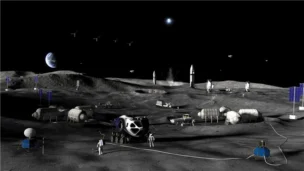
Q&A With Lunar Base Manager Carlos Garcia-Galan
At the start of last week, Carlos Garcia-Galan was working on NASA’s program for a lunar-orbiting habitat. Last Tuesday, however, he became the person overseeing the space agency’s ambitious plan to build a lunar surface base at record speed. During last week’s Ignition event at NASA HQ, Payload sat down with Garcia-Galan, the program executive…

Jared Isaacman Hits 100 Days In Office With a Bang
NASA Administrator Jared Isaacman has one message: Get in, we’re going to the Moon.

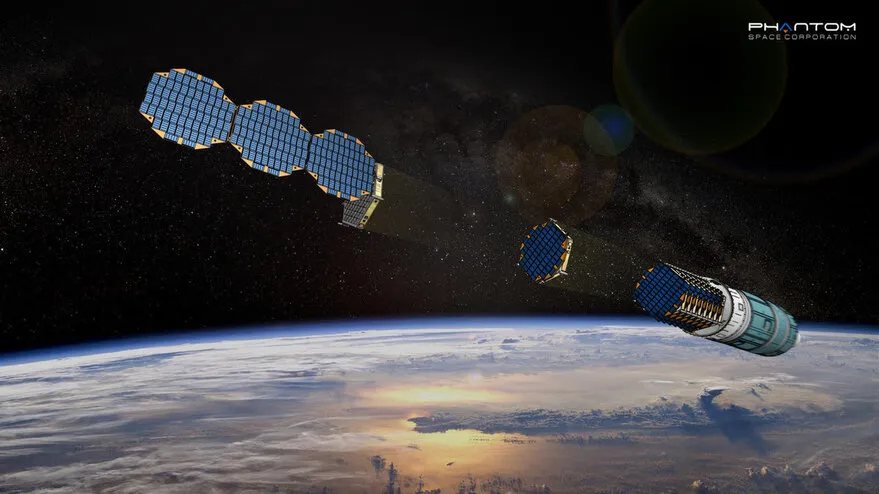
Phantom Space today announced the acquisition of Thermal Management Technologies (TMT), a company that builds advanced satellite thermal components for in-space applications.
With the acquisition, the AZ-based rocket and satellite developer is aiming to spur development of its in-orbit data center constellation—called Phantom Cloud—which is targeting an initial deployment in mid-2027.
Under the agreement, TMT will operate as a subsidiary of Phantom, with founder Scott Schick staying on as the company’s general manager. TMT will also collaborate with Phantom to develop Block 1 Phantom Cloud sats. The companies did not announce the terms of the deal.
Keep reading