


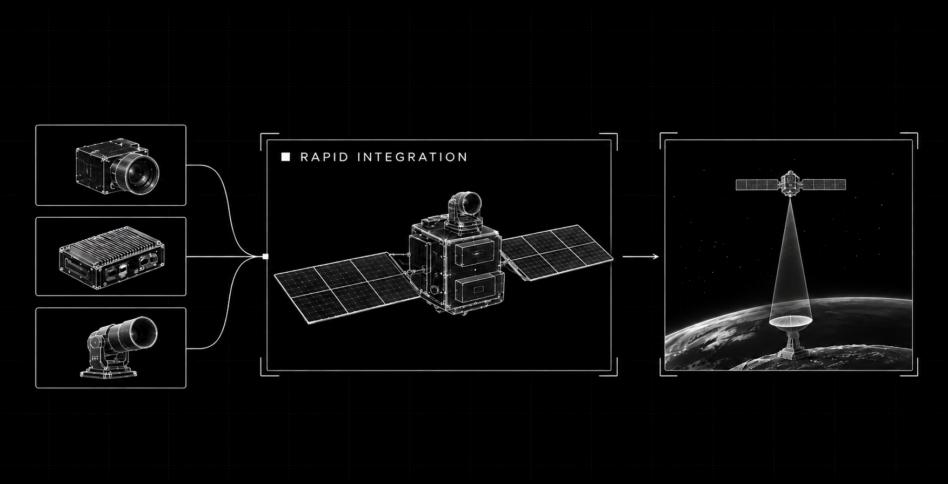
CA-based startup Lyra Systems emerged from stealth on Tuesday, announcing an agreement with the Pentagon aimed at helping early-stage technologies traverse unscathed across the Valley of Death.
Under the five-year Cooperative Research and Development Agreement (CRADA) with AFRL, Lyra Systems will aim to use its AI-enabled mission-integration software to help new tech get demo opportunities in orbit faster. The agreement aims to create “a repeatable integration pathway for nontraditional vendors to gain flight heritage,” according to SpaceWERX Senior Engineer Marcus Bracey.
The problem: As an industry term, the Valley of Death describes the final resting place for promising technologies that never progressed to demonstration missions or commercial sales. Traditionally, tech development has stalled out mainly due to lack of funding opportunities—but Lyra founder and CEO Tanmayi Sai says the money isn’t the problem anymore.
“Budgets and private capital have both more than doubled in defense, and the number of companies that can convert either into a flown mission has barely moved,” she said. “What is missing is the integration work between a qualified component and an operational mission. This agreement gives us a repeatable way to do that work with AFRL, and to field these technologies into operations at the speed of relevance.”
In a July report, the GAO found that major defense-acquisition programs take an average of 12+ years to deliver, and Sai told Payload that—when it comes to space missions—the manual integration process is to blame for slow-moving tech development.
The solution: Lyra’s solution brings AI into the systems-integration process. Lyra has built an AI-enabled systems integrator, which the company says can calculate the physics behind the DoD’s requirements, as well as discern the available technologies in the market, to rapidly find a match.
The AI underlying Lyra’s solution relies heavily on experts in the field, and the company is focused on automating the systems that have worked in the past—albeit slowly—to ensure that future demo missions can build on best practices rather than start from scratch. The end goal? Enabling tech to become operational in under a year—way down from today’s timelines of over a decade, Sai said.
Lyra plans to discuss more with potential vendors in the coming months to form its first in-space demo mission integrated with its in-house AI, and will announce participation opportunities soon.
European Bodyguard Sats are Closer Than You Think
PAVE Space announced plans to launch a demo mission of its IBEX spacecraft—a highly maneuverable platform for commercial and defense payloads. But PAVE isn’t the only startup building a security detail.
Exclusive: Orbital Taps Orca Aerospace for Onboard Autonomy Software
Satellite autonomy startup Orca Aerospace announced a deal worth up to $20M with LA-based Orbital to put its software on Orbital’s planned data-center fleet.
Redwire Wins $20M DARPA Contract for Second VLEO Demo
A group of otters is called a bevy, and DARPA just ordered another round.
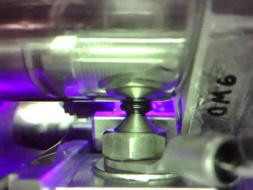
Orbital Matter, EnduroSat Announce an In-Space Manufacturing Mission in 2028
Orbital Matter announced it would partner with EnduroSat for mission in 2028 to deploy a 5 kW solar array with its 3D printing capabilities.
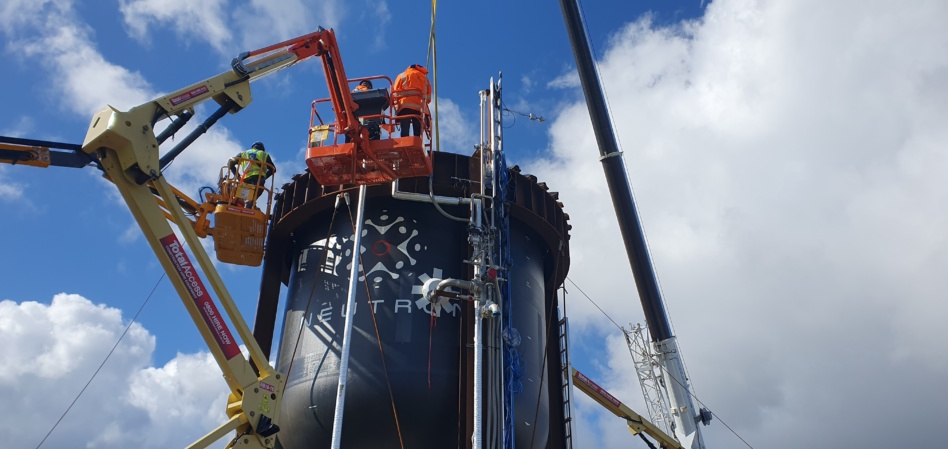
The cost of launch is on the rise. Citing strong customer demand and a constrained market for launch, Rocket Lab ($RKLB) announced it increased the cost of a dedicated Neutron rocket from $55M to $70M.
“Neutron is rapidly establishing itself as the backbone of next-generation constellation deployment and government missions in the medium-lift launch class,” CEO Peter Beck said in a statement. “Strong international demand and a growing launch manifest, at a new price point, is proof that Neutron is the launch vehicle the market has been waiting for.”
Brain blast: In recent months, the coming shortage of launch capacity in the US—due, mainly, to SpaceX sunsetting its Transporter rideshare program—has caused a flurry of activity.
Keep reading