



A new startup is challenging the idea that reentry from orbit has to be destructive.
Reditus Space, founded by two Georgia Tech engineering grads, emerged from stealth with plans for a reusable reentry vehicle that can offer quick turnaround flights for microgravity researchers and in-space manufacturers.
Move fast, and don’t break anything: Reditus expects to complete the build of its first spacecraft, called ENOS, just a year and a half after its founding in October 2024. The goal for the mission is to hitch a ride on a SpaceX rideshare mission next summer.
“On a fundamental level, it is just about pursuing the decisions that allow us to learn, and get to a good and functional system as quickly as we can,” CEO and cofounder Stef Crum told Payload. “We make the minimum viable version of everything.”
Reditus has raised $7.1M in seed financing and employs just 13 full-time workers and six interns, who have poured all of their energy into finishing the ENOS Mk 1 as quickly as possible.
Crum told Payload that even the name of the company—Reditus is Latin for return—was the result of a one-hour limit the founders gave themselves to find an identity—and move on to more important matters.
The vehicle: On its first mission to orbit, ENOS will attempt to validate many of the technologies that will help Reditus fly fully reusable flights, which it aims to do in 2027 and beyond. The debut flight is scheduled to spend two months in orbit, hosting an undisclosed pharmaceutical R&D payload, before shooting through the atmosphere and splashing down for recovery off the coast of Florida.
While the in-house designed heat shield won’t be ready for multiple flights until later missions, Reditus will attempt to reuse many of the components inside the spacecraft including the propulsion system, avionics, and power systems, between flights one and two.
“Reusing the heat shield, obviously, is a great thing from a logistical perspective,” Crum said. “It allows you to really, drastically reduce the turnaround times between [flights] because you don’t have to take everything apart again, and rebuild your spacecraft.”
From a financial perspective, reusability also allows Reditus to save money on expensive components, and scale without needing to produce large fleets of spacecraft—further driving down costs for customers looking to test and build things in orbit.
ENOS Mk 1 will be one of the largest free flying reentry spacecraft on orbit, the company says. In its first flight it will have a payload capacity of 40 kg, and be able to survive speeds in excess of Mach 24. (For comparison, the Artemis I uncrewed mission coming back from the Moon in 2022 had a reentry speed of Mach 32.)
Successive vehicles will be designed to fly over 20 missions each during their lifetimes, and Crum told Payload that future spacecraft could also offer greater payload capacities to customers.
Sky-high demand: While the reentry industry is growing rapidly, with an increasing list of vehicles from around the world coming online at around the same time, Reditus officials are confident that there’s more than enough demand to support their reusable alternative—especially amid the expected retirement of the ISS in the 2030s and the growing understanding that reentry vehicles can help fill the research and manufacturing gap that the orbiting lab will leave.
“A lot of [potential customers] had slots on the International Space Station, and then now don’t anymore…that has probably been a big driving factor for us,” Crum said. “We provide a mid-deck locker in the same manner that you would get on the ISS—it just goes up and down a lot more efficiently.”
Albedo Ratchets Up the Power for its Second VLEO Flight
Albedo announced a new VLEO capable satellite bus today that’s aiming to fly the company’s second orbital mission in 2027.
Moog’s “Tip to Tail” Contributions to the Artemis II Flight
“Moog supplies more than 100 different pieces of hardware that go from tip to tail of the rocket, [and] into the Orion system.”
Phantom Space Acquires Thermal Management Technologies
Thermal Management Technologies builds advanced satellite thermal components for in-space applications.
Exclusive: In-Orbit Manufacturing Startup Dispatch Emerges from Stealth
Dispatch emerged from stealth this week with $500,000 in funding to build an uncrewed space station that will host manufacturing infrastructure on orbit
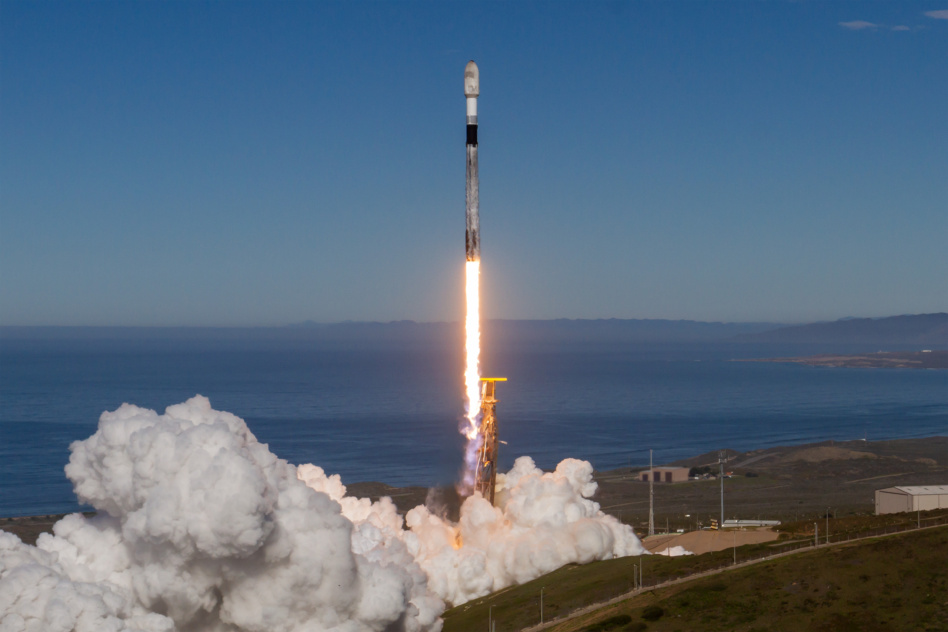
While SpaceX rideshare missions are always chock-full of new tech headed to orbit, Friday’s Transporter-15 flight was busier than most. The launch from Vandenberg Space Force Base in California deployed 140 payloads, which is the second-largest haul since regular Transporter flights began in 2021.
Here’s a peek at what was on board:
Bird’s eye views: Like past rideshare missions, Transporter-15 carried dozens of EO sats intended to kickstart constellations—or build upon tech that’s already in orbit. Highlights of some sats hitching a ride include:
Keep reading