


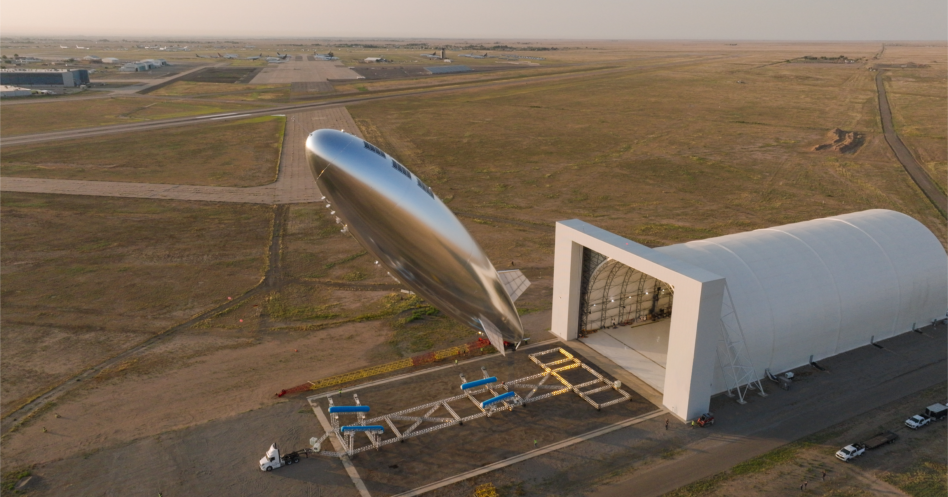
As satellite operators stress over finding launch slots, Sceye wants to put cell towers in the stratosphere in under 30 minutes—no rocket required.
Sceye signed a five-year, master-services agreement with SoftBank to manufacture, launch, and operate a fleet of Sceye’s high-altitude platform systems (HAPS) over Japan, the companies announced today.
At roughly 20 km in the air, the companies see HAPS as a stratospheric bridge between terrestrial communications infrastructure and satellite networks.
“This is not a competition between the stratospheric layer or the LEO layer…both layers are required to make sure that nobody is left behind,” Sceye founder and CEO Mikkel Vestergaard Frandsen told Payload. SoftBank is also adopting Starlink’s direct-to-cell service in Japan.
In the forecast: The agreement builds up to “a very significant fleet of at least 40 units” over five years, Vestergaard Frandsen said. Sceye will own and operate the platforms and sell SoftBank the service. Most of the fleet will provide mobile broadband, and a subset will form a free-space optical (FSO) laser network in the stratosphere.
SoftBank backed several HAPS efforts before putting $15M into Sceye’s Series C in 2025. It invested once Sceye became the first to “close the power loop,” holding altitude with its platform over the same area through the night until the sun came up to recharge its batteries, according to Vestergaard Frandsen.
Round trip: In September, Sceye completed its Service Test 1 mission with SoftBank, which spent 30 days traveling from New Mexico to Japan and back, testing several HAPS applications.
- SceyeCell, Sceye’s “cell tower in the sky,” delivered texts, voice calls, Internet, and video streaming directly to standard phones, including indoors.
- Sceye demoed stratospheric laser ranging, which involved tracking a HAPS from the ground,and laid the groundwork for the FSO network.
- Edge-computing tests aboard the platform reduced latency by 40% compared with cloud computing, according to Vestergaard Frandsen.
Liftoff: Sceye pitches its platforms as complementary to satellites and terrestrial networks, but its ability to get in the air offers a possible alternative to operators worried about a launch crunch. Sceye’s platforms are able to reach their cruising altitude in under 30 minutes, using lifting gas.
“It’s just a massive strategic upside that we are completely independent from other companies’ launch vehicles, and have our entirely own setup that is fully integrated,” Vestergaard Frandsen said.
Sceye compares its platforms to GEO sats—with the ability to maintain a consistent altitude and area of operation— just 1,800x closer to the Earth’s surface, replaceable, and serviceable.
However, Sceye’s current flight record is only 30 days, and recovered platforms are currently broken down and tested before parts are reused, with a turnaround time currently “in the months.” Vestergaard Frandsen wants to see that time cut down to weeks, with single vehicles remaining in the sky for six months or more.
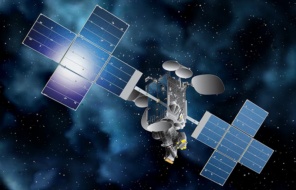
Telesat Stays Quiet on C$2.4B GEO Debt Due in December
Telesat CEO Dan Goldberg told analysts the company was “pretty constrained” in what it could say about refinancing its legacy GEO debt.
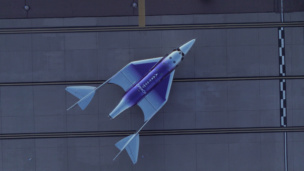
Virgin Galactic Unveils Apeiron, Delays Commercial Flights to Q2 2027
Virgin Galactic introduced Apeiron to the world on Wednesday, drawing from the ancient Greek concept of the boundless in naming its newest spaceship.
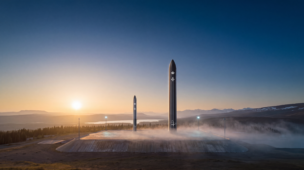
Reaction Dynamics Targets 2031 for Borealis Medium-Lift Launch
In the contest to build up commercial launch capabilities in Canada, Quebec-based startup Reaction Dynamics has entered a new weight class.
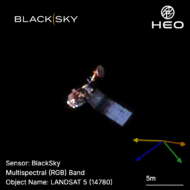
BlackSky Renews HEO Deal, Adds Gen-3 Imagery for Space Domain Awareness
BlackSky Technology inked a seven-figure deal to extend its partnership with Australian non-Earth imaging (NEI) provider HEO for another year.

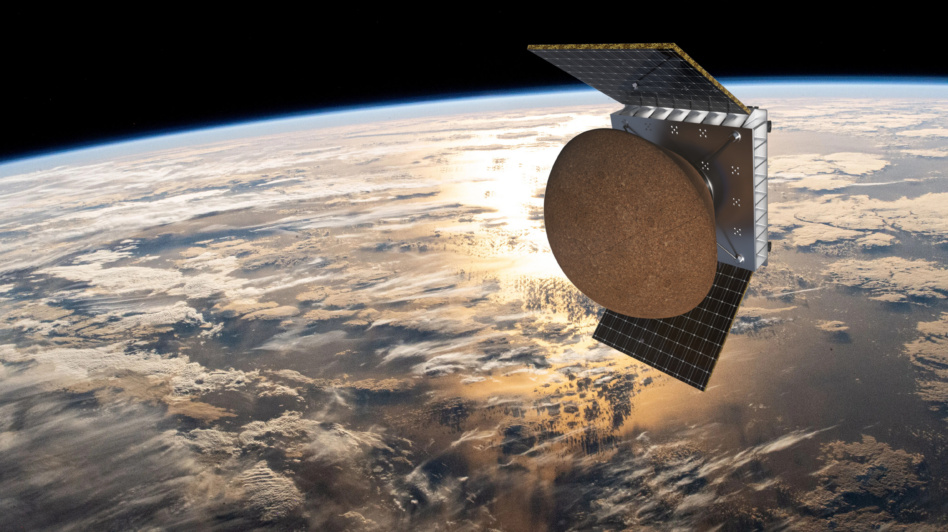
Vienna-based startup Tumbleweed is attempting to build an anti-gravity machine—one that looks strangely like a reentry vehicle.
Today, the company announced the closing of a €6.9M ($7.7M) seed round to fund the development of an in-orbit research vehicle—called Oasis Beta—that will be capable of reentering the Earth’s atmosphere, with missions set to begin in 2028. The round will also fund at least three missions in 2027 of Tumbleweed’s Pod payload.
Pact VC led the round, with additional participation from Vanagon Ventures, Prototype Capital, EWOR, and a group of angel investors, including SES cofounder Candace Johnson.
Keep reading