

With summer winding down, the environmental heat is turning back to regulations.
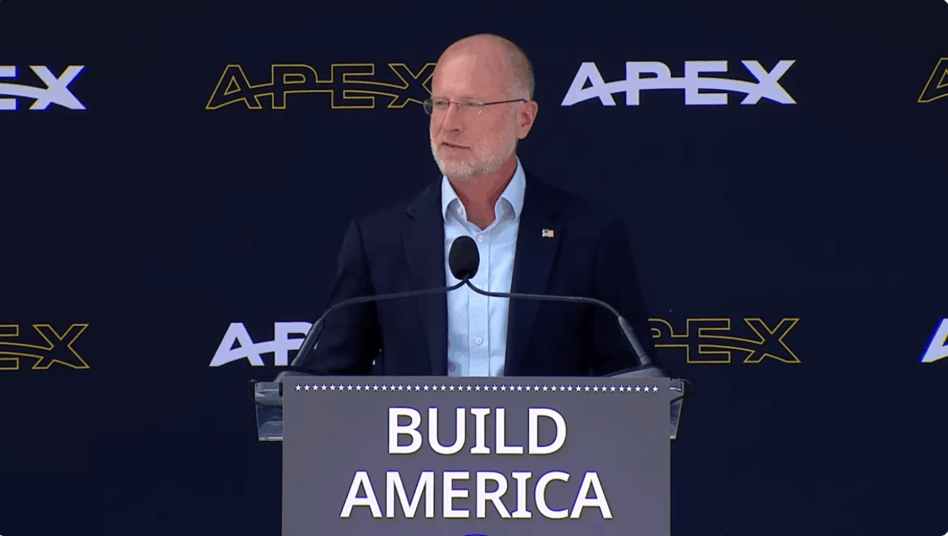
The FCC will vote Sept. 30 on whether to overhaul its National Environmental Policy Act (NEPA) rules—narrowing which commission activities face environmental review, and streamlining the process for the ones that require assessment.
The draft order would find that space-based operations are not “major federal actions,” which is the legal trigger for NEPA review. Satellite licensing has been categorically excluded from FCC environmental review since 1986, but the new rule goes a step further by solidifying those operations as outside NEPA’s reach entirely, rather than just excusing applicants from paperwork within it.
The paperwork, briefly: NEPA doesn’t actually set environmental standards. Instead, it requires agencies to study and disclose the environmental effects of what they approve, before they approve it.
Two terms doing the heavy lifting:
- Major federal actions are the threshold for review. Congress codified the definition and wrote in exclusions, including “extraterritorial activities,” meaning effects located entirely outside US jurisdiction.
- Categorical exclusions are a class of actions an agency has predetermined to carry no significant impact. Commercial satellite licensing has been categorically excluded for decades.
How we got here: In January 2025, President Donald Trump issued an executive order revoking a Carter-era order that granted the Council on Environmental Quality authority to issue government-wide NEPA regulations.
As a result, agencies now write their own NEPA procedures. The change set off a wave of rule-making over what needs the scrutiny of added paperwork, and what doesn’t.
Above the pay grade: There are two main arguments in the FCC’s case that space operations fall outside NEPA:
- Extraterritorial jurisdiction: The commission points to the Outer Space Treaty’s provision that space cannot be claimed as sovereign territory. If space isn’t US territory, any impacts up there are “extraterritorial,” and outside NEPA by definition.
- Not a major federal action: Beyond jurisdiction, the FCC argues a spectrum license doesn’t give it control over how an operator builds, flies, or disposes of a satellite, so licensing isn’t the kind of action NEPA covers.
When it comes to atmospheric activity, the FCC defers to the FAA, which regulates launches and reentries.
Speaking of…: The FAA is getting in on the deregulation fun as well. In July, the agency proposed waiving NEPA and 12 additional statues for commercial space licenses and permits. Comments on the proposed rule closed Aug. 31, with over 3,200 received.
Some of the 13 statutes that would be waived:
- Endangered Species Act,
- Clean Water Act,
- Clear Air Act,
- Noise Control Act.
The FAA’s filing concedes that waiving NEPA shifts the responsibility to other agencies rather than eliminating it, since federal site operators like the Space Force still run their own reviews. This means that the effects of the FAA rule would be felt mostly at private sites like SpaceX’s Starbase, rather than federal ranges such as the Cape and Vandenberg.
Supporting cast: The FCC and the FAA are not the only agencies making moves.
- NASA replaced its NEPA rules on July 1, borrowing 19 categorical exclusions from other agencies. Only one area drew tighter scrutiny: launching spacecraft with nuclear systems will now typically require an environmental assessment.
- The Space Force is still producing full environmental impact statements for launch infrastructure—including a December 2025 statement that approved up to 76 annual Starship launches and 152 landings at Cape Canaveral.
Into the unknown: By volume, the environmental impact of space is a rounding error next to aviation, even at the National Space Transportation Policy‘s target of more than 1,000 launches and reentries a year by 2030. Yet, there are still a number of unknown environmental impacts from space activity, including the extent of the atmospheric impact of so many launches and reentries. How these impacts will scale is a question requiring further research.
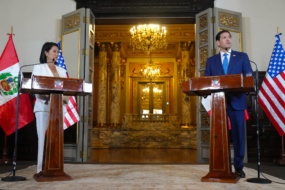
State Department Launches New Space-Diplomacy Effort
Alongside the announcement, Rubio also unveiled the SCP’s first project—a two-year, $6.5M effort to bring satellite internet to rural southern Peru.

Schiess Becomes CSO Amid Space Workforce Shortages
Gen. Douglas Schiess became the chief of space operations on Sept. 3, following the retirement of Gen. B. Chance Saltzman, who led the almost-seven-year-old service for nearly four years.
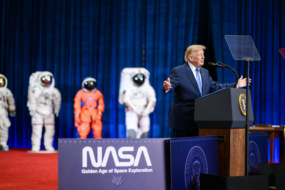
Trump Orders Study To Establish US Space Academy
Is the US about to add a new service-academy rivalry to college football Saturdays?
White House Wants 1,000 Annual Launches and Reentries by 2030
The new National Space Transportation Policy, signed Aug. 20, which replaces the 2013 edition, asks what it would take to get to 1,000 annual launches.


HEO, the Australian non-Earth-imaging startup, announced Monday it closed a $25M Series B to expand its imaging network to GEO.
Beaten Zone Venture Partners led the round, which included participation from Australia’s National Reconstruction Fund Corporation (NRFC), DCode Capital and Wunala Capital, as well as existing investors Airtree and Salus Ventures.
“GEO is a kind of a weird orbit where governments will subsidize the crap out of capital-intensive solutions,” CEO Will Crowe told Payload. “So really critical that we get up there fast…We really want to give our customers confidence that they can rely on this—way more cost-effective—commercial solution.”
Keep reading