


Is the US about to add a new service-academy rivalry to college football Saturdays?
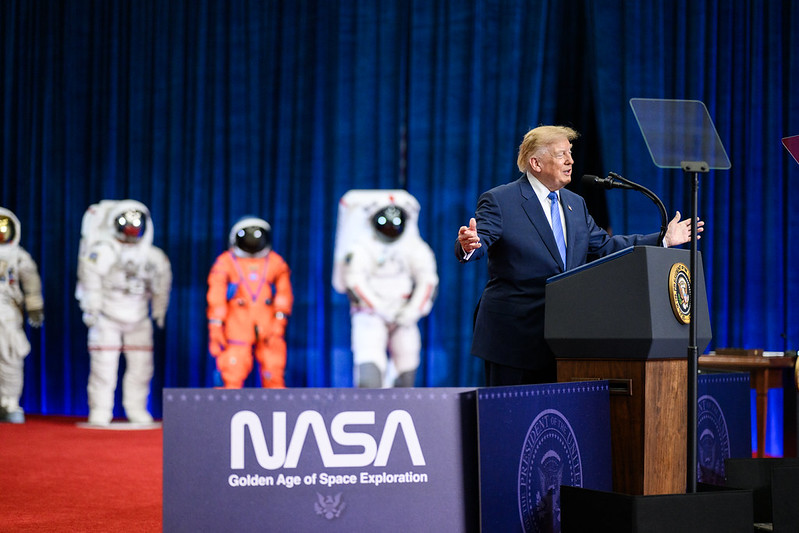
President Donald Trump signed an executive order on Friday calling for the establishment of a US Space Academy, modeled after the US service academies for military branches. The administration can’t open up a school on its own—that will take action from Congress—but Trump did set up a commission to study the idea and consider some big questions, including the curriculum focus and service requirement for grads.
“American superiority in space depends on the strength, skill, and character of those who explore, secure, and build the industries critical to it,” the executive order reads. “To continue to lead the world in space exploration and technology, while securing and defending our national interests in space, the nation must prepare the next generation of astronauts, scientists, engineers, operators, entrepreneurs, civil servants, and warfighters and ensure that they are capable of advancing American interests in space.”
The big picture: The space industry has a hiring problem. 15% to 25% of open positions at space companies remain open for more than six months, with some more specialized roles sitting vacant for over a year, according to a workforce report released last year by the Space Foundation.
Board of education: The Presidential Commission on the United States Space Academy will be led by the NASA administrator, who is currently Jared Isaacman. It will also include:
- White House officials focused on science and technology, economic policy, and national security;
- The assistant to the president and chief of staff;
- The NASA deputy administrator;
- The secretary of defense;
- The Office of Management and Budget director;
- The secretary of the Air Force.
Homework: Trump isn’t wasting any time. He’s asking the panel to provide him with recommendations within 120 days, on questions including:
- The governance framework for the Space Academy;
- The curriculum and degrees offered;
- Where and how long grads will need to serve;
- What requirements applicants will need to meet to be admitted;
- Where the academy should be based;
- What Congress will need to do to make the recommendations reality.
Past precedent: The closest parallel here is likely the military service academies: the United States Military Academy (better known as West Point), the US Naval Academy, and the US Air Force Academy. Students of these institutions must be nominated by a member of Congress, and once they are accepted at one of them, they receive a free education.
- After graduation, West Point students serve as officers in the Army, Naval Academy students serve in the Navy and Marine Corps, and Air Force Academy students serve in the Air Force and Space Force for at least five years of active duty and three years in the inactive reserves, though specialties that require more training can have a longer service requirement.
- There is also a Coast Guard Academy, that sends graduating students to the Coast Guard, and the Merchant Marine Academy, whose grads go on to serve in the military or the federal (and civilian) Merchant Marine.
It’s important to note that the order does not establish a US Space Force Academy. Students who graduate from the US Space Academy would serve in the military as well as civilian federal service, according to the order.
What’s next: Mark your calendars—this guidance is due to the president by Dec. 26, though we all know the government is no stranger to missing a deadline.
The idea quickly attracted bipartisan reaction on Capitol Hill—though any concrete legislative action will likely take until at least 2027.
Rep. George Whitesides (D-CA) said the idea “deserves consideration,” but raised several concerns, including the lack of Congressional representation on the commission, how the school would differentiate itself from existing public and private institutions with technical and scientific specialties, and who would foot the bill. West Point and the Naval Academy each cost $1B per year, according to Whitesides. While that’s a drop in the bucket for the ~$1T DoD budget, it represents a much larger chunk of NASA’s $24.4B in FY26.
In a surprise to no one who watches Congress, lawmakers were quick to try to get the new school based in their home state, even while the idea itself is still being debated.
“The first thing I’ll do when the Senate floor is back open in DC is drop legislation to bring the Space Academy to the Space State—FLORIDA,” Sen. Ashley Moody (R-FL) wrote on X.
Velos’ Election Day Tracker for Space
Space may not be top of mind when voters head to the ballot box, but Election Day outcomes still have a big impact on US policy and funding above the Kármán line.
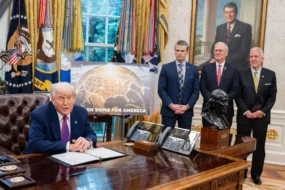
Colorado Springs, Huntsville Team Up on Golden Dome
“It’s a transformed relationship between Colorado Springs and Huntsville,” Rep. Jeff Crank (R-CO) told Payload. “When I took office, I don’t think it was a bad relationship, but it was one where both communities were kind of looking over their shoulder at the other. That wasn’t good for America, and I don’t think it was good for Colorado Springs or Huntsville either.”
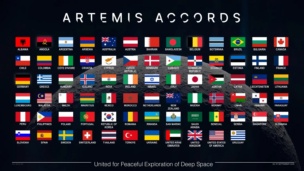
Artemis Accords To Meet on Lunar Debris, Emerging Space Help
The Artemis Accords Principals’ Meeting in Turkey will be led by NASA Deputy Administrator Matt Anderson and Maj. Gen. Roberto Melgar Sheen, director of the Peruvian Space Agency.
FCC to Vote on Waiving NEPA Review for Space Ops
The FCC will vote Sept. 30 on whether to narrow which commission activities face environmental review, and streamline the process for the ones that require assessment.

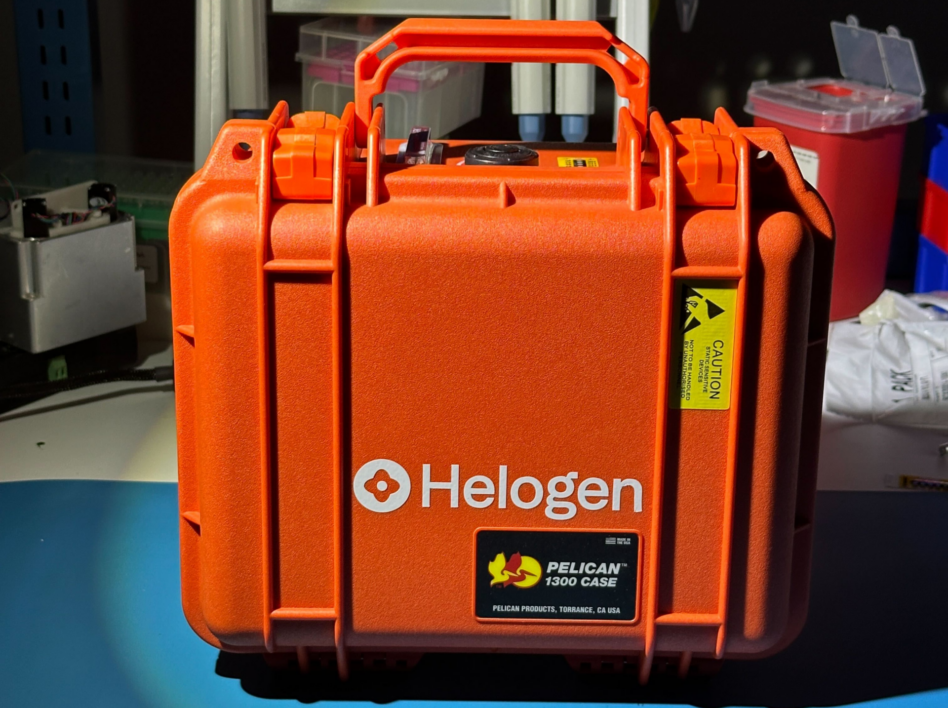
In-space manufacturing startup Helogen today announced two upcoming missions of its HEL-IOS biomaterials manufacturing platform, both scheduled to launch in October.
The missions will fly on separate SpaceX launch vehicles, and aim to demonstrate Helogen’s ability to manufacture biological materials on orbit—once for a customer, and once for Helogen’s internally developed products. While Helogen has flown subsystems in the past, the missions will mark the first flights of the entire HEL-IOS platform.
Both missions will push Helogen closer to its goal of in-space biological manufacturing at scale, and help the company advance toward regulatory approval for the use of in-space manufactured materials in terrestrial medical procedures.
Keep reading