


The robots are coming for our jobs. Luckily, they’re replacing astronaut labor first—phew.
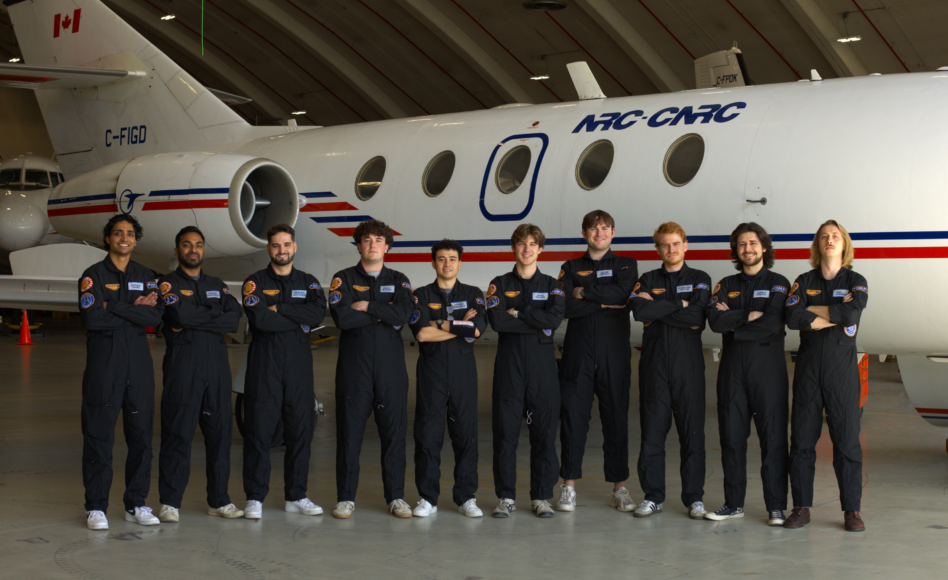
Icarus Robotics, the startup building robotic systems to operate on crewed space stations, completed a four-flight parabolic test campaign of its free-flying robot—named JOY—in preparation for its first ISS mission, which is expected to launch in partnership with Voyager in 2027.
“The robot worked way better than we expected,” CEO and cofounder Ethan Barajas told Payload. “We have very, very high confidence in our ISS deployment now.”
Flying colors: The test campaign included 66 periods of weightlessness across four flights, totaling 22 minutes of active testing. Icarus had to first travel to Canada for the mission, as the US currently lacks the capability for parabolic flights. In July 2025, Zero Gravity Corporation sustained “extensive damage,” to its Boeing 727-200 aircraft G-Force One during maintenance operations, and the company doesn’t expect to return to flight until next year.
While Icarus has tested JOY terrestrially, the parabolic flights allowed the team to briefly validate three critical capabilities in zero gravity for the first time, including:
- Manipulation: JOY followed commands, and was able to move its arms and handle temporary disturbances, as the company’s preflight models predicted.
- Positioning: The robot was able to consistently track its position and velocity during each period of weightlessness, including the initial and final moments of zero-G.
- Movement: JOY also demonstrated its ability to control its flight, despite experiencing a “settling period as the robot adjusted to being released,” according to Barajas, who added that the issue is a known problem in parabolic-flight campaigns and not due to a flaw in the flight-control system itself.
Icarus is planning to make minor improvements in JOY subsystems to ensure the robot can operate reliably over its year-long ISS mission, but the parabolic flight campaign represents the final major step before Icarus ships JOY to NASA in January.
By popular demand: While the ISS mission was originally designed as a demo flight, Barajas told Payload that JOY has been promoted to a full-fledged mission operator due to market demand.
“As the robot has grown in maturity…we’ve been receiving interest from the industry in what this capability looks like, and what it unlocks,” Barajas said. “It’s actually going to be a true capability and a true platform that we see operating on ISS, working on ISS, and working with hardware that has heritage and that has done experimentation before.”
The ISS mission will begin with a week-long test campaign to validate JOY’s ability to move around the station and wave its arms controllably. From there, JOY will get to work, taking over tasks like rearranging cargo bags—a notorious time-suck for astronauts in the cramped station—and carrying out biological experiments “the same way that a NASA astronaut would,” according to Barajas.
Icarus’ intention for the ISS mission is to prove that robotic labor is not just nice-to-have, but a necessity for humanity’s off-world future to remain a productive one.
“If we’re talking about a lunar base, if we’re talking about sustained human presence in orbit, and an entire economy in orbit, labor has to increase,” Barajas told Payload. “For us, the only way we see to increase labor is [with] robotic labor.”
What’s next: Icarus’ ambitions lay well beyond the walls of crewed stations, however. The company aims to build future robotic systems to fly in the vacuum of space and on other planetary bodies, offering services like debris removal and spacecraft servicing, as well as logistics and infrastructure construction on the lunar and Martian surfaces.
“It’s our goal to unleash that first on the ISS, and then across every single orbit,” Barajas said. “Whether it’s ISAM…whether it’s the logistics on the Moon base, or whether it’s our first missions to Mars…It’s become clear that robots are a need. There’s going to be a continued need.”
Update: This story was updated at 10:30am ET on Sept. 17.

Fortastra Raises $30M Series A to Fund its Next Security Spacecraft
The US military has weapons in space, and—with the orbital arsenal expanding—security is becoming a top priority.
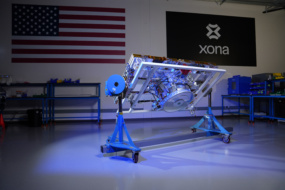
Exclusive: Xona Ramps Up Production Ahead of Pulsar Launch
With FCC approval in hand and six sats ready for the pad, Xona is turning to its next challenge: building the next 250.
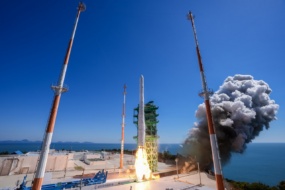
ArbaLabs Launches AI Verification Demo On South Korea’s Nuri Rocket
“In short, tons of companies are looking at the latest and greatest physical AI deployments,” ArbaLabs CEO Ashley Reeves told Payload. “Nobody is really thinking about putting some checks and balances on what these AI models are doing.”

Nebex Partners with Thrusters Unlimited to Unlock $700M for Mexico’s Space Ecosystem
The capital will fund EO, telecoms and other strategic capabilities, according to Nebex.

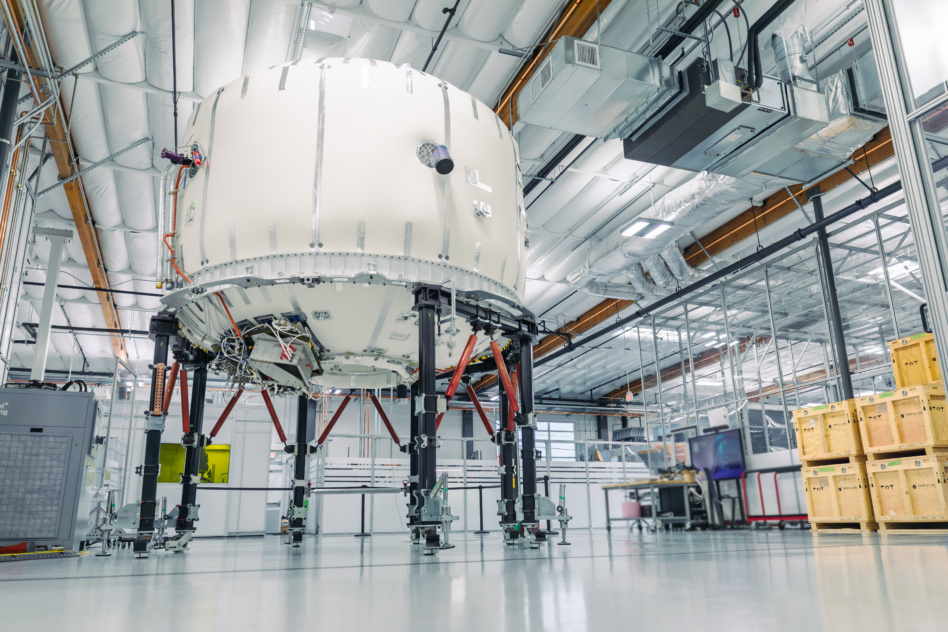
Impulse Space announced a $308M extension to its Series D round yesterday—bringing the round’s total to $808M.
The in-space mobility company announced the first $500M in June, at a $4.26B valuation. A source close to the company told Reuters that the valuation for the extension has risen to $5.4B.
The extension featured many returning faces, including 137 Ventures, BANNER VC, DFJ Growth, Linse Capital, Lux Capital, and Valor Equity Partners, among others.
Keep reading