

The deadly waters rushing down the Guadalupe River in Texas this month had first responders deploying helicopters, boats—and SAR satellites.
ICEYE, the Finnish space radar operator, mapped nearly 100 square miles for FEMA as the disaster unfolded. The company’s goal was to help search and rescue workers understand the extent of the deluge. ICEYE’s data will be used by insurance companies and banks in an effort to speed up the recovery process.
“I’ve been in this business a long time, and never seen an event with those types of impacts,” Andy Read, ICEYE’s VP of government solutions, told Payload. Delivering a clear picture of the situation faster “completely changes the trajectory of the recovery for survivors, and means that governments can deliver better assistance,” Read added.
Overwatch: SAR’s value in flood monitoring makes sense—the sensor can detect water at night, through clouds, trees, and plant matter.
Read began his career in emergency management and the insurance sector before joining ICEYE to sell that data to the people who need it. In 2021, ICEYE introduced a flood monitoring product that delivers a picture of peak flooding every 24 hours.
Previously, that kind of data would be gathered by crews on the ground or in aircraft, which Read says can take days or weeks to assemble: After Hurricane Helene in 2024, cloud cover persisted for days over flooded North Carolina, blocking other overhead sensors.

On the ground: First responders need to know where they can safely stage recovery efforts, and where victims are most likely to need assistance. As floodwaters subside, insurance adjusters can arrive more quickly, and homes that are still standing can be dried out sooner to stop mold development.
Rapid response: A key early client for ICEYE’s flood business is the Australian government, which asked if the company could provide more frequent updates. A new product called Flood Rapid Impact uses a machine-learning model trained on radar data gathered from more than 300 floods to detect new inundations and provide fresh data every six hours.
Solutioneering: Read says ICEYE’s investment in the making its data useful sets the company apart from its competitors: Hundreds of analysts, including a team of meteorologists, make the company’s satellite data into more comprehensive products for customers that include agencies in Australia, New Zealand, Japan, Europe and most recently, Brazil.
Read says his clients can replace drones, planes and terrestrial assets with ICEYE satellites. “Our clients are telling us that they’re saving millions and millions of dollars by tuning down those [other] investments.”

HEO Raises $25M Series B to Fuel GEO Expansion
HEO, the Australian non-Earth-imaging startup, announced Monday it closed a $25M Series B to expand its imaging network to GEO.
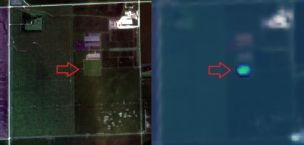
InnerPlant’s Glowing Soy Demos Hyperspectral Use Case
InnerPlant, which was founded in 2018, has enabled plants to let humans know when they’re under stress.
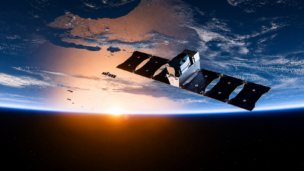
Hydrosat Unveils Osiris Constellation Ahead of 2027 Launch
Very rarely can someone offer you the best of both worlds, but Hydrosat’s newest constellation claims to do just that.
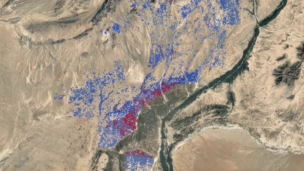
Kuva Space Spots Illegal Poppy Farms from Orbit
Kuva Space released data today from a pilot program that demonstrated its ability to monitor illegal crop farming from space.


US Transportation Secretary Sean Duffy took the helm for his first full day as NASA’s interim administrator on Friday amid growing concerns from lawmakers and employees about the agency’s spending plan.
The same day, 64 members of Congress sent a letter to Duffy urging him to ensure that NASA doesn’t shutter science missions before proposed budget cuts are approved by Congress
NASA leadership reportedly laid the groundwork for those closures; asked about this last week on the Hill, Duffy said he would follow Congress’ plans but that time is of the essence.
Yesterday, a small group of NASA employees gathered outside of the agency’s headquarters in Washington, DC, to protest the budget cuts.
Keep reading