

Japan’s commercial rocket ambitions are inching ever-closer to reality.
Interstellar Technologies Inc., a Japanese space infrastructure company aiming to be the nation’s first startup to master launch, won a SBIR grant from the Japanese government worth up to ¥4.63B ($32.5M), the company announced yesterday.
The grant comes almost exactly a year after the company secured up to ¥2B ($13.9M) in SBIR funds for Phase 1 of the project to boost domestic launch.
Supply and demand: The SBIR grant is part of a Japanese government directive to achieve 30 domestic rocket launches per year by the early 2030s. While Japan already has domestic launch capabilities through Mitsubishi Heavy Industries, the demand to get to space in the region far outstrips supply.
“We feel the growing demand for rockets, which are essential for autonomy and the expansion of the space market within Japan, on a daily basis,” Interstellar CEO Takahiro Inagawa said in a statement.
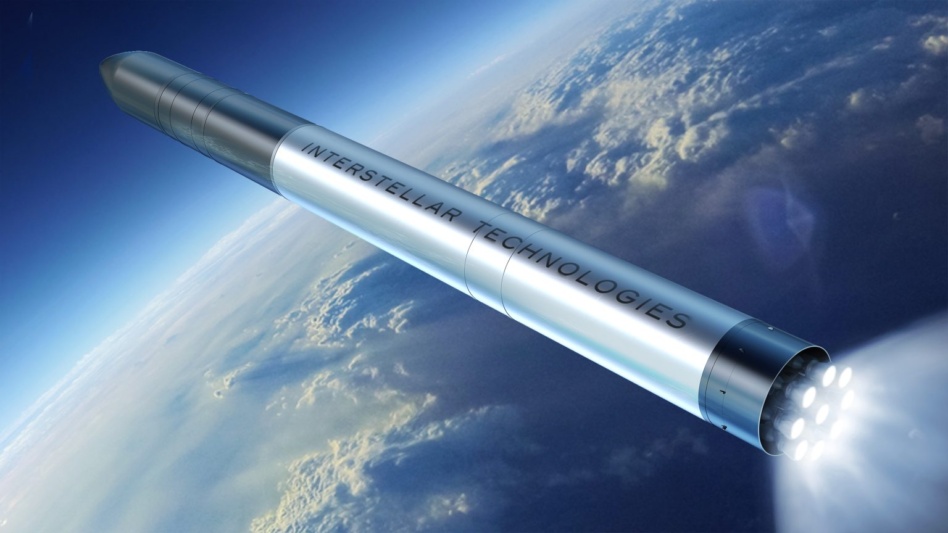
Meet ZERO: To meet this need, Interstellar is developing its own high-frequency, low-cost rocket—ZERO—which is expected to launch as early as 2025.
- Dimensions: The two-stage rocket stands at 32m tall, 2.3m in diameter, and weighs 71 tons.
- Fuel: The rocket’s 10 engines—nine in the first stage and one in the second stage—are fueled by liquid oxygen and bio-methane, manufactured from cattle manure.
- Payload: ZERO’s fairing has a height of 5m, a diameter of 2.3m, and the ability to carry 800 kg to LEO, and 250 kg to SSO.
Once operational, ZERO is expected to have the capability to launch at a price point below Rocket Lab’s Electron, according to COO Keiji Atsuta.
Cowboy Space Reveals “Big Iron” Data Center Rocket
Cowboy Space pulled back the curtain on Big Iron—a launch vehicle whose upper stage is designed to remain in orbit as a megawatt-class data center.

Colare Raises $2.5M to Expand its Hardware-Focused Hiring Platform
Colare’s technical-assessment platform maps the requirements of a role, and recreates decisions future engineers could face on the job.

Inside Starburst’s First Flight, and Portal’s New Bothell Office
“I feel like 80% success now,” CEO Jeff Thurnburg said. “But honestly, to get this far this fast, I’m tempted to call it 100%.”
Reaction Dynamics Targets 2031 for Borealis Medium-Lift Launch
In the contest to build up commercial launch capabilities in Canada, Quebec-based startup Reaction Dynamics has entered a new weight class.

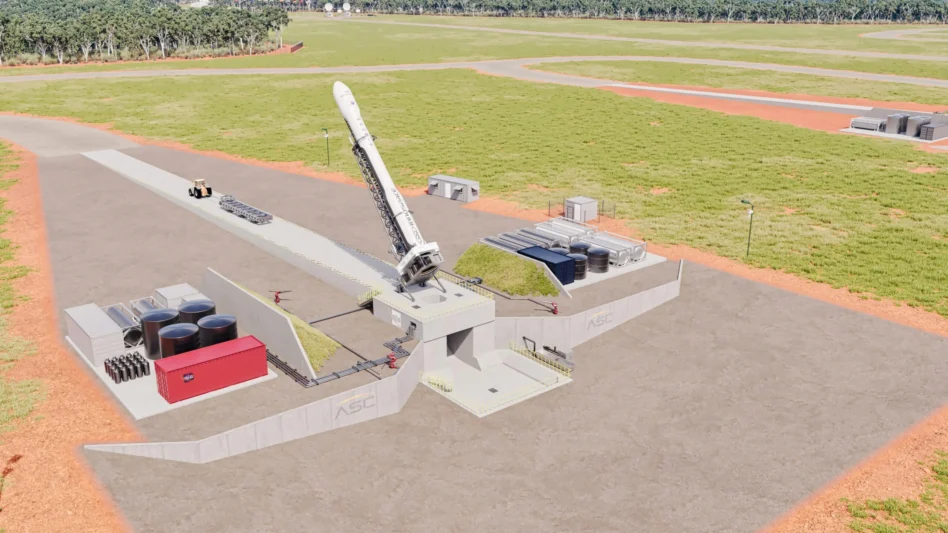
French small rocket startup Sirius Space Services signed an agreement this week with Equatorial Launch Australia to launch from the Australian spaceport starting in 2026.
Siriusly: Under the deal, Sirius will become a resident launcher at Arnhem Space Centre in 2025, with the first test flight of its SIRIUS 1 rocket coming in 2026 and the first launch of its larger SIRIUS 13 following in 2027.
ELA provides its resident launchers an ELA-built horizontal integration facility, for which the rocket company pays rent. They also get two launch pads and an interface plate that’s unique to their rocket, giving ELA a lot of flexibility.
Keep reading