

Through unrivaled infrastructure, reliable ground station services, and unwavering support, KSAT enables operators to scale seamlessly as constellations set the course for the next era of space.
The boom in small-sat launches is reshaping the economics of space. Imaging, IoT, and comms constellations are coming online at breakneck speed. But every mission still relies on a ground backbone to operate, connect, and deliver insights from space.
Ops Made Simple
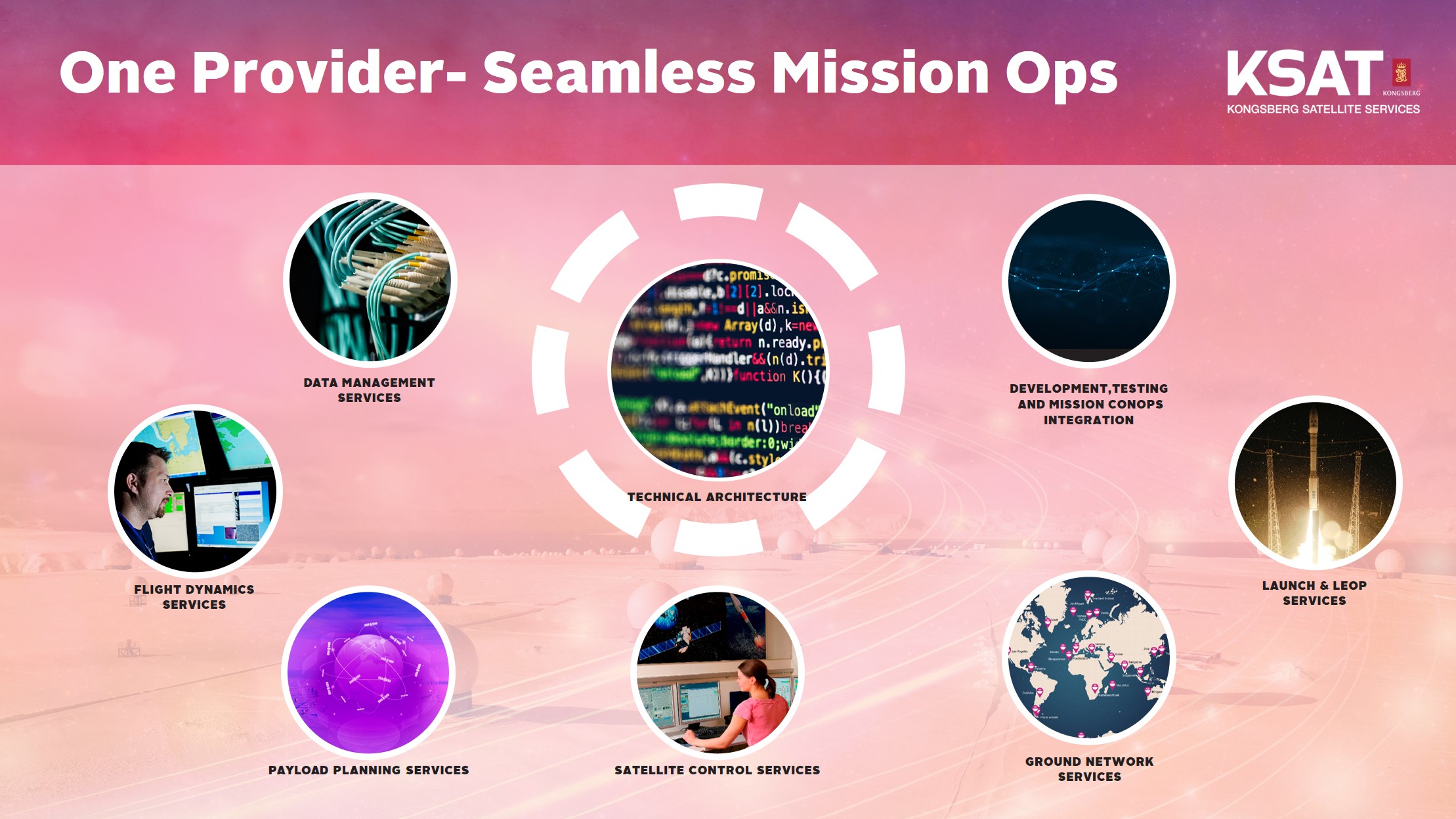
KSAT has already helped satellite operators move away from running their own ground assets by offering a multi-mission ground network at scale. Integrated Mission Services (IMS) takes that model further—bundling launch support, mission operations, and data delivery into a single subscription. The result: a low-latency service without heavy upfront investment, that lets customers focus on their downstream business instead of up-stream operations.
Operators can stop worrying about building teams to fly satellites or manage ground contacts. KSAT’s Integrated Mission Services brings together ground network access, satellite operations, and mission monitoring – delivered by a flight-proven, multi-mission team that is always on a mission. With automation built in, low latency, and high resiliency, customers stay focused on turning payload data into downstream value.
Three Pillars of Value
For satellite operators, KSAT’s value comes down to three pillars:
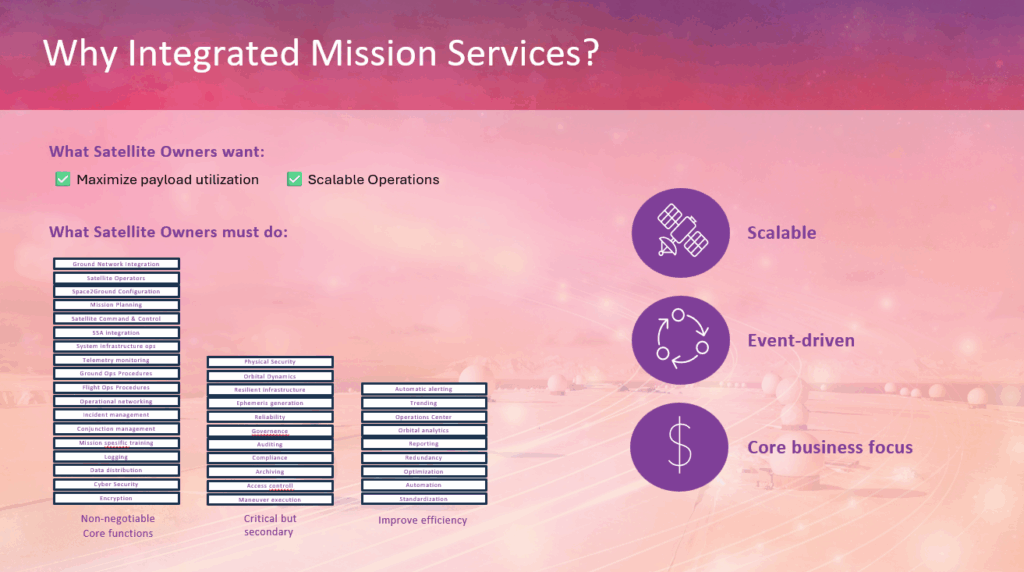
- Cost-efficient scale: As constellations grow, operators can add services without hiring teams of highly trained operators or building costly systems. KSAT’s multi-mission platform scales together with our customers’ constellations, keeping growth simple and OPEX cost scalable.
- Robust and secure: A global, redundant network with strong cyber safeguards protects the data streams operators depend on.
- Faster fixes: Event-driven operations cut recovery times from hours to minutes, reducing operational downtime and improving mission value.
One Contract, No Chaos
Running a mission means wrangling ground stations, ops teams, and cyber defense – often across a tangle of providers. For many operators, that overhead drains capital and focus from the products and markets that matter. With KSAT’s pay-as-you-grow model, operators add capacity as fleets expand – without the burden of new infrastructure.
Built, Proven, Resilient
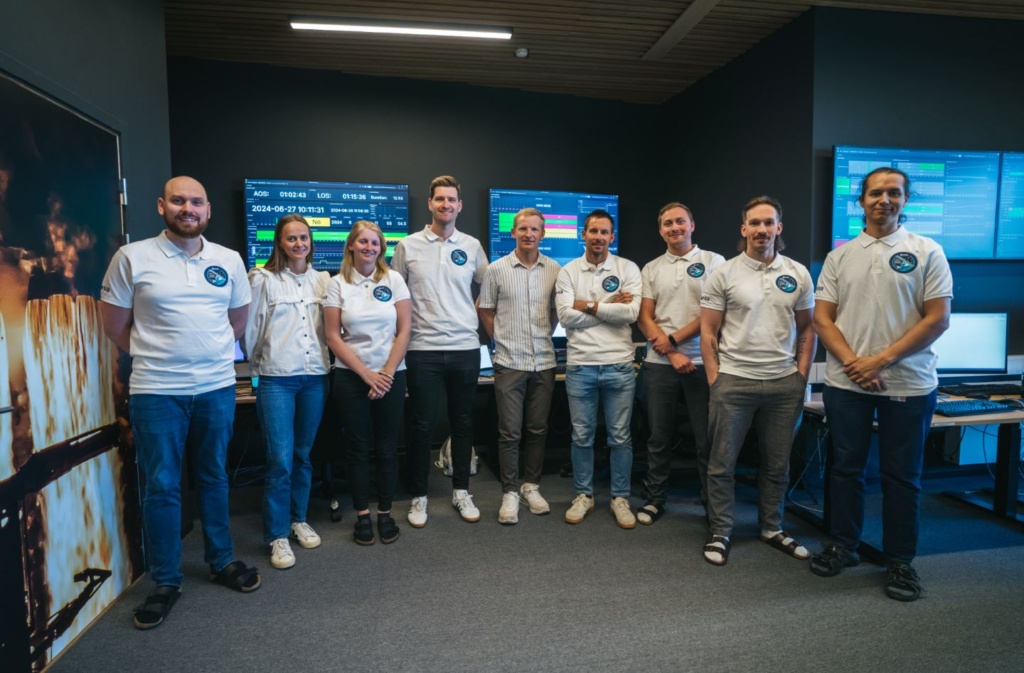
KSAT has already made those investments, standing up a flight-proven, multi-mission team and an automated operations concept designed for resilience.
The payoff: customers get end-to-end services without overhead, simplifying life for satellite owners while keeping their missions on track.
From Launch to Last Contact
- Launch to decommissioning: KSAT can provide full lifecycle support —first contact, orbit raising, routine station-keeping, and even end-of-life maneuvers—through its worldwide antenna network.
- Lights-out automation: Continuous health checks trigger automated recovery routines, calling in human operators only when behavior strays from the norm. The result: less downtime, more resiliency.
- One interface: Customers interact through a single window for everything that happens after launch, cutting complexity and simplifying life for satellite owners.
More Than Ground
KSAT doesn’t just fly satellites. The company also provides an environment where customers can task their payloads, whether snapping an image over a hotspot or running an experiment, while KSAT takes care of the heavy lifting behind the scenes. Automated workflows keep latency to a minimum, so data moves downstream fast.
Proof in Orbit
KSAT is already flying for some of the toughest customers and environments. From ESA’s Arctic Weather Satellite to GHGSat’s greenhouse-gas monitors and the Arctic Broadband constellation, the company has shown it can deliver reliable operations where failure is not an option.
Always on a Mission
As constellations grow, core business focus will become even more important for satellite owners. The satellites need to work, but their focus should be on downstream data and products generated from satellite data.
KSAT’s integrated offering positions the company as the mission-operations backbone for a constellation-heavy era.
We are always on a mission to keep every satellite online enabling operators to focus on their primary payload capabilities and downstream growth.
Explore KSAT’s Mission Services here.