


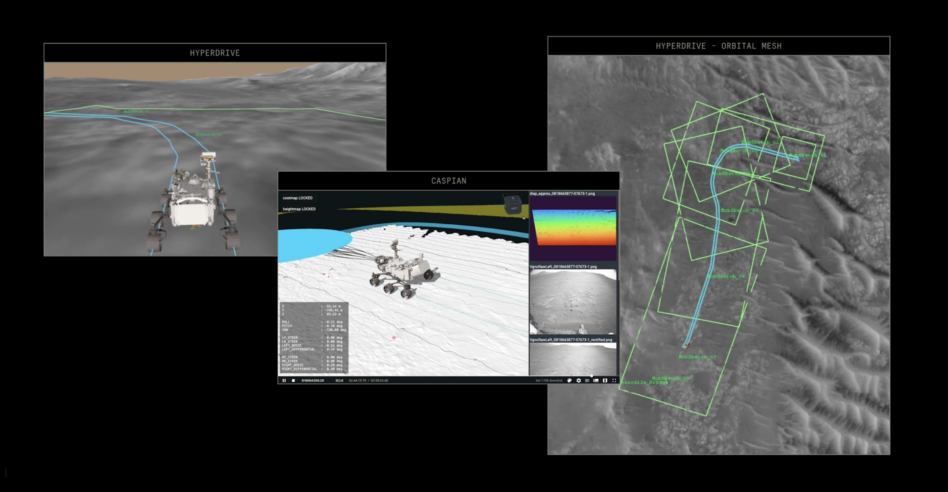
AI is everywhere these days—even on Mars.
Engineers at JPL announced Friday that they had successfully used Anthropic’s AI model, called Claude, to map a 450-meter Martian path for NASA’s Perseverance rover.
The demonstration in December has big implications for the future of deep space missions. Engineers estimate that using Claude to map Martian journeys in the future will cut route-planning time in half. The technology could increase the viability of uncrewed journeys to more distant destinations that have a longer comms lag—such as Europa or Titan, the moons of Jupiter and Saturn, respectively.
Stop and go: Nothing about remotely piloting Perseverance is easy—with or without AI. Driving the car-sized rover begins with a mountain of planning, lest the ~$2.4B rover become stuck in the dirt or fall off a cliff.
First, engineers at JPL plot a route using a combination of images taken from space and the rover’s internal cameras. Once set, the roadmap is sent ~225M miles to Mars—which takes on average, 20 minutes to arrive. From there, Percy follows the “breadcrumb trail,” making only minor adjustments using the onboard AutoNav system to avoid obstacles in its path.
Using Claude, engineers were able to hand the reins over to the AI for much of the planning, and instead act as supervisors to the AI system.
The mission: Engineers provided Claude with years of data gathered since the rover landed in 2021. Claude then wrote commands in the Rover Markup Language, which is a unique XML-based coding language developed for the Mars Exploration Rover missions at the turn of the millennium.
Claude put together 10-meter segments, modeling over 500,000 variables and iterating multiple times to suggest the best path forward.
While engineers ended up making minor changes to the journey—using images that Claude hadn’t seen—the entire process took far less time than manually mapping out each wheel turn. While the AI-powered joyride was just a test run, engineers said the tech would make deep-space flight more productive.
The bottom line: Autonomous capabilities could allow rovers operating millions of kilometers away to take on more ambitious journeys, conduct more science, and send back more data for researchers to analyze. The benefits of AI-plotted drives go beyond a time savings for engineers. The systems are also expected to be able to perform missions where long communication lag times make remote operations near-impossible.
ArbaLabs Launches AI Verification Demo On South Korea’s Nuri Rocket
“In short, tons of companies are looking at the latest and greatest physical AI deployments,” ArbaLabs CEO Ashley Reeves told Payload. “Nobody is really thinking about putting some checks and balances on what these AI models are doing.”
HawkEye 360 Turns its RF-Sensors to Orbital Targets
The DoD wants to better understand what’s going on in orbit. HawkEye 360 ($HAWK) has the inside scoop.
Transporter-18 Tests the Building Blocks of Orbital Data Centers
Few rideshares come with a theme, but SpaceX’s Transporter-18 had one: getting power to compute in orbit.
Star Catcher’s Orbital Power-Beaming Demo is Ready for Launch
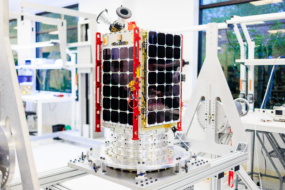
Star Catcher announced today that its prototype power node is prepped and ready for launch NET Oct. 1.

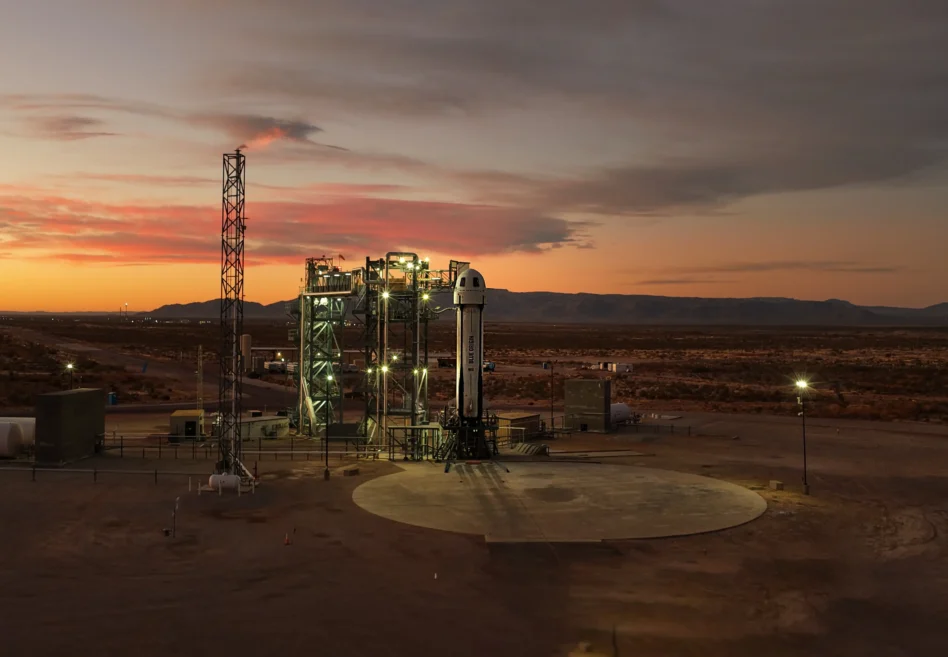
If you were waiting for your chance to spend ten minutes suspended in microgravity at the edge of space aboard one of Blue Origin’s tourist vessels, well, you’re just going to have to wait a little longer.
After 38 launches, including a mix of science payloads and 17 crewed flights, Blue announced Friday that it’s taking a step back from space tourism aboard New Shepard.
The announcement came as a surprise to employees at Blue Origin, who found out via an internal company email on Friday.
Keep reading