

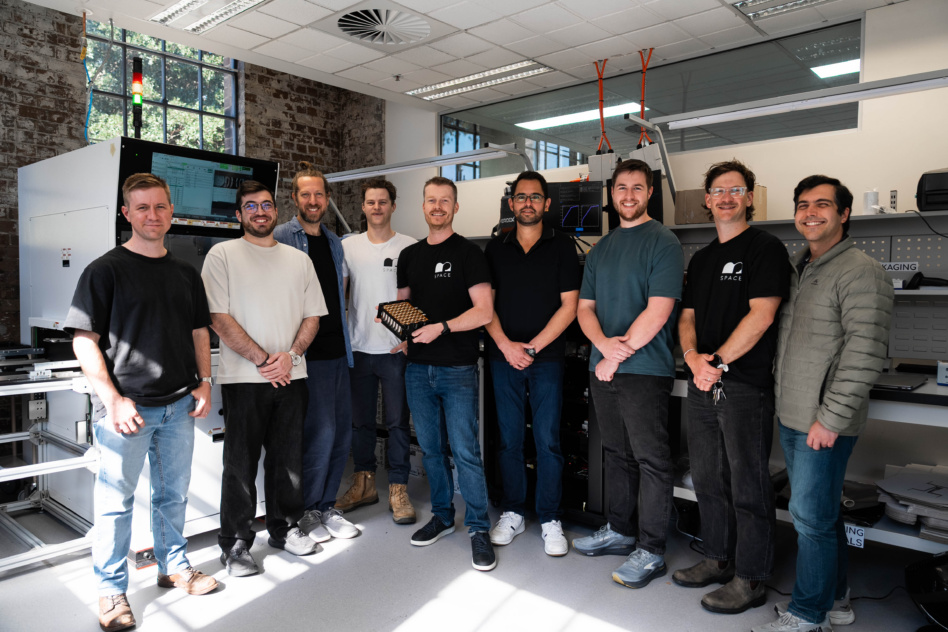
Australian startup MP Space raised an AUD $23M ($16.1M) seed round to expand its satellite battery manufacturing capacity, and begin building other pieces of satellite power systems, the company announced on Monday.
Blackbird VC led the round, which included additional participation from Seraphim Space, Systemiq Capital, Speedinvest, and MFV Partners.
Meet MP: MP Space was cofounded in 2024 by two ex-Tesla engineers—CEO Jay Manley and CCO Sam Paterson—with the aim of manufacturing low-cost, high-performing power systems for space applications. Manley explained that the company is trying to provide a new option to satellite operators who currently only have two choices: buying batteries and power systems from an expensive, slow-moving supply chain, or building them in-house.
“We’re kind of becoming this third option,” Manley told Payload. “I can sell this product…about a fifth to a third below the market average while still making a profit, which basically brings it in line—or below—the cost to develop [batteries] in-house.”
The market seems to be responding well to the pitch.
MP Space’s batteries launched for the first time last week with an undisclosed customer on SpaceX’s Bandwagon-5 mission, and already the company has orders to support 500+ spacecraft.
To meet this demand, MP Space plans grow its manufacturing capacity and engineering team at its facility in Sydney, Australia. The goal, according to Manley, is to be able to produce “5,000 space widgets per year, by the end of next year.”
Power training: MP Space will also use the new funds to grow its product line beyond small-sat batteries. The company aims to produce low-cost products for sat-power parts between the solar panels and the payload—including maximum power point trackers and chargers, power-conditioning and distribution units, and solar-array drive assemblies.
The company is also looking ahead to products that can support larger, more power hungry satellites, since power demands are increasing as the industry prepares for SpaceX Starship to come online. Today, the company’s two batteries both weigh in at under 5 kg, but Manley told Payload power products for Starship will need to be ~10x bigger and more powerful.
“We’re trying to go engineer a power backbone that would bring Starlink satellite-unit economics to everyone who’s not Starlink,” Manley said.

Colare Raises $2.5M to Expand its Hardware-Focused Hiring Platform
Colare’s technical-assessment platform maps the requirements of a role, and recreates decisions future engineers could face on the job.

Exclusive: DoD Taps Orbital Operations for Cryogenic Spacecraft Demo
The Long Beach, CA, startup has won up to $35M from the DoD under a prototype Other Transaction Agreement to fly a full-scale, in-orbit demo of Astraeus—its cryogenic-maneuvering vehicle.
Inside Starburst’s First Flight, and Portal’s New Bothell Office
“I feel like 80% success now,” CEO Jeff Thurnburg said. “But honestly, to get this far this fast, I’m tempted to call it 100%.”
Xona Raises $250M Series D to Scale Commercial GPS Constellation
Xona’s long-term plan is to build a ~258-sat constellation to offer an upgraded commercial alternative to government GPS networks.

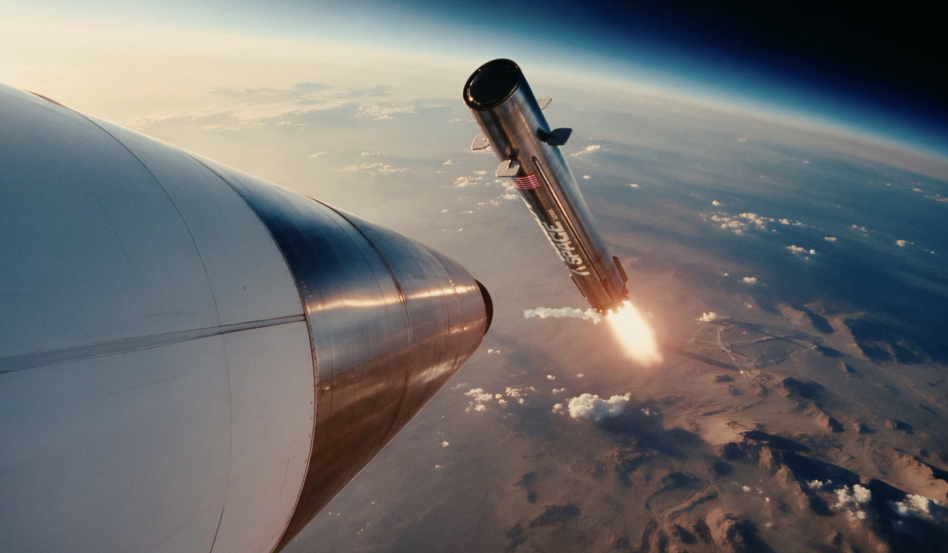
This town ain’t big enough for just one launch provider.
On Monday evening, Cowboy Space pulled back the curtain on Big Iron—a launch vehicle whose upper stage is designed to remain in orbit as a megawatt-class data center.
“What we want to do is put a lot of available power in orbit, in our case to power chips, to power AI data centers,” Cowboy Space COO and Chief Legal Officer Joseph Yaffe told Payload. “The most efficient and most effective way to do that is to build our own vehicle to get us into space.”
Keep reading