



Africa is jockeying to become one of the next world space powers.
The continent, once dominated by a few national space agencies and reliance on international space infrastructure, is quickly building a space ecosystem of its own. What lies ahead, according to researchers at The Aerospace Corporation’s Center for Space Policy and Strategy (CSPS), will be largely dependent on how the African Union’s newly inaugurated African Space Agency (AfSA) manages its rollout.
The Aerospace Corporation released a report today diving into the progress the AfSA has made in its first year of operations, and charting possibilities for what might lie ahead.
History lesson: Founded in 2025, AfSA was given a mandate to coordinate the expansion of the continent’s space activities, and to ensure African countries have their interests aligned for the future.
AfSA is planning to become fully operational by 2029. In the meantime, the agency is focused on establishing facilities and kicking off programs.
- AfSA’s access to infrastructure, funding, and tech is markedly lower than ESA, the report notes, because the European organization can more efficiently pool resources for regional space systems due to what the report terms “economic cohesion.”
- While AfSA’s long-term ambitions include coordinating regional space projects in a similar way to ESA—though, not apples for apples—its current power is restrained to a supporting role.
“The structure right now is entirely about coordination…support, endorsement, facilitation for African space activities at the national level,” Michelle Herman, senior policy analyst for strategic foresight at CSPS, told Payload. “[The agency is] not running any satellite systems; they’re not building anything…their budget is just about setting them up as an organization.”
Good, bad, and ugly: Africa’s future is rife with opportunities, however. The report outlined a few scenarios, each largely associated with how well AfSA can foster its influence across the region:
- The highest-influence scenario allows AfSA to orchestrate continental space projects, pool resources, and promote the adaptation of foreign technologies to create domestic capabilities. In this scenario, AfSA doesn’t morph into a central planner—à la ESA—but serves as a coordinator for sharing space assets and data, with operations of space assets remaining with national powers.
- The lowest-influence scenario is largely where Africa was 10 years ago. If AfSA fails to grow its influence, the result will feature disconnected national space agencies, imported systems functioning without regional input, and a workforce that cannot support multi-year projects.
The road ahead: While Herman cautioned that the future of AfSA will likely fall between these two extremes, the stakes are extremely high, and the continent isn’t starting from Square 1.
“There’s some actual money being spent,” Herman said. “There’s sometimes an assumption that African countries don’t have money, and that’s not true.”
Africa has a long history of forming international partnerships to build domestic space capabilities, but these deals have often been transactional, and not in the best interests of domestic industry. They’ve also been incorrectly framed as Africa “being won” by world powers, according to Herman.
However, Africa finds itself at an inflection point. It can either continue to buy international space capabilities off-the-shelf, or it can invest in building its own.
“Africans aren’t a passive player in all of this,” Herman said. “There’s a large diaspora of skilled African engineers who work in Europe, who work in the United States, who work in China…they don’t lack the quantity of trained engineers. They lack enough going on in their space program to keep those people around.”
The international question: Africa holds a unique position as a buyer of space systems. It’s open to working with the US, Europe, China, or Russia. Senegal, for example, has been able to sign onto the Artemis Accords, as well as China and Russia’s International Lunar Research Station initiative.
Going forward, Africa can benefit from using this unique position not just to drive costs of international infrastructure down, but to ensure that new agreements are made with Africa’s interests baked-in. And potential international partners will benefit by understanding the complexities of the region, and forming mutually beneficial relationships to grow the region’s capabilities.
“As [Africa’s] capabilities grow…they want to be less a purchaser of capability and more like a co-developer—or they want to be able to sell their own product somewhere else,” Herman said. “The nature of their relationship with the foreign groups will be different.”
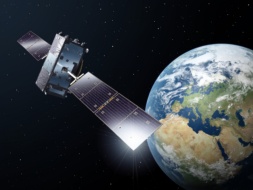
Europe’s Space Defenses Fall Just Shy of Weaponization
Europe doesn’t have any weapons in space—but that doesn’t mean the region is comfortable flying around in orbit defenseless.
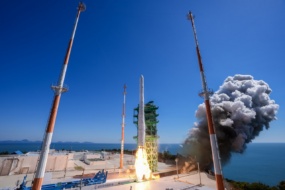
ArbaLabs Launches AI Verification Demo On South Korea’s Nuri Rocket
“In short, tons of companies are looking at the latest and greatest physical AI deployments,” ArbaLabs CEO Ashley Reeves told Payload. “Nobody is really thinking about putting some checks and balances on what these AI models are doing.”
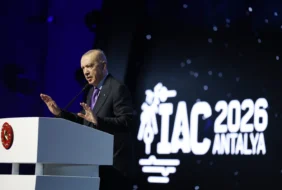
Turkey Uses IAC Stage to Pitch Peace & Homegrown Hardware
During the 2026 IAC in Antalya, representatives from Turkey are leveraging the opportunity to showcase the country’s prgoress in space.

Nebex Partners with Thrusters Unlimited to Unlock $700M for Mexico’s Space Ecosystem
The capital will fund EO, telecoms and other strategic capabilities, according to Nebex.
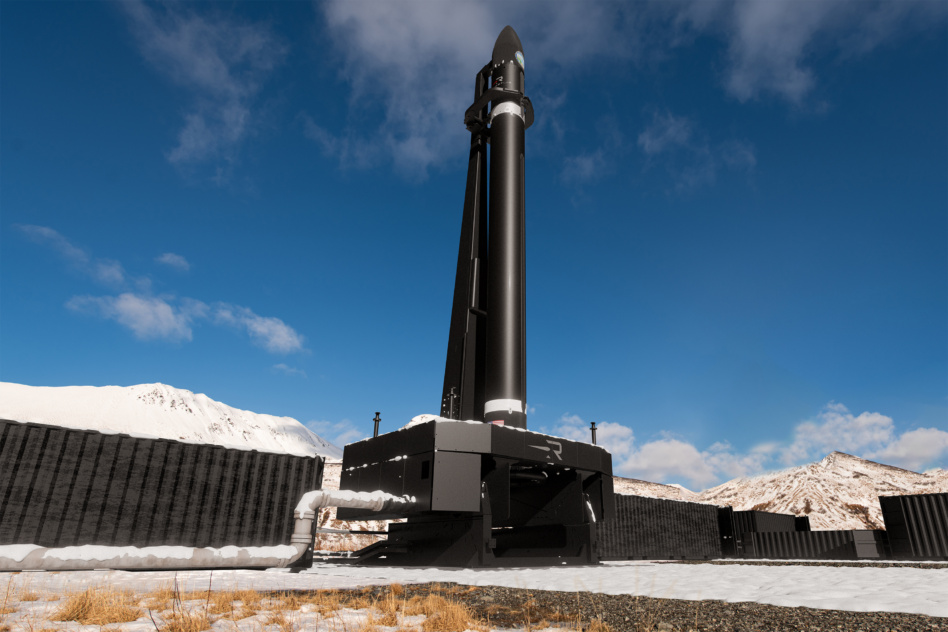
Rocket Lab ($RKLB) announced its largest launch contract to date yesterday: a $266M multi-launch agreement with SSC covering 12 suborbital launches, including the option for SSC to add six more.
To complete the mission, Rocket Lab will open up a new launch site—its fourth—at the Pacific Spaceport Complex-Alaska (PSCA) in Kodiak. Launches are expected to begin no earlier than the end of this year.
Speed racer: The announcement is yet another example of the surge in launch demand from the DoD, specifically for missile defense testing.
Keep reading