



Northrop Grumman ($NOC) announced the first demo of its deep-space advanced radar capability (DARC) last week, opening the door for the US and its allies to track objects in GEO 24/7, no matter the weather.
The successful test is the result of a multi-year development campaign, initially funded through a $341M contract from the Space Force’s Space Systems Command in 2022.
The ultimate aim for the DARC program, which is also being supported by the UK and Australia, is to build a DARC site in each country to maintain worldwide eyes on GEO and eliminate the ability of adversarial satellites in GEO to perform surprise maneuvers.
Out of the DARC: As opposed to optical SDA techniques, DARC can see through clouds and track objects during the daytime.
The main issue with using radar to monitor satellites in GEO is the power required for a single antenna to send and receive signals across that 36,000km distance. Northrop, however, solves this physics problem by consolidating multiple antennas in an array.
Northrop engineers expect it to be even more powerful once they can combine all 27 antennas at the site.
“[DARC] combines the capability of multiple affordable antennas to create the equivalent of an extremely large radar with immense capabilities,” Kevin Giammo, Northrop’s director of space surveillance and environmental intelligence, told Payload via email. “Once complete, all 27 antennas at DARC Site 1 will work together to effectively create the world’s most capable deep-space tracking radar system.”
The real game changer—beyond the technological capability to detect small objects from vast distances—is the global scale provided by multiple international sites, according to Giammo.
What’s next: Last year, the Space Force awarded Northrop Grumman a $200M contract to build DARC Site 2 in Pembrokeshire, UK, which is scheduled to be completed in 2030.
The location of the third and final DARC site is still being considered, but the Space Force confirmed this year that it will be built in the continental US, with the goal to be operational by 2032.
Correction: This story was updated to clarify that the DARC demo was announced last week. It’s part of an ongoing multi-week campaign.
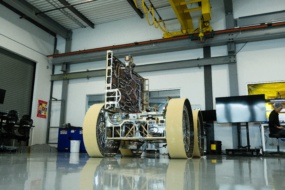
Hewlett Packard Enterprise to Send AI Compute Module to the Moon
Hewlett Packard Enterprise ($HPE) is taking remote working to a whole new level.
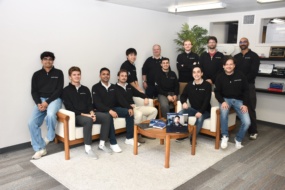
Exclusive: EraDrive Lands $13M DoD Award For Autonomy Module
EraDrive won a $13M DoD award, under which the Space Force will buy an undisclosed number of the company’s Era-Node vision-based autonomy modules.
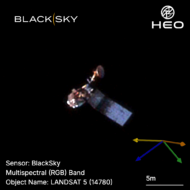
BlackSky Renews HEO Deal, Adds Gen-3 Imagery for Space Domain Awareness
BlackSky Technology inked a seven-figure deal to extend its partnership with Australian non-Earth imaging (NEI) provider HEO for another year.
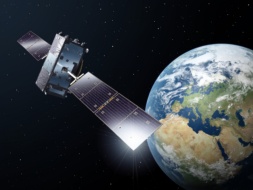
Europe’s Space Defenses Fall Just Shy of Weaponization
Europe doesn’t have any weapons in space—but that doesn’t mean the region is comfortable flying around in orbit defenseless.


The biggest talking point on Wall Street in recent years has been the rise of private credit—corporations receiving loans from non-bank financial institutions, instead of taking on bank debt or issuing bonds themselves. Now, that trend is coming to orbit.
Rocket fuel: The vast majority of funding for new space companies is venture capital. That may be starting to change, however, as entrants from the last decade mature and underwriters become more confident in the value of space technology.
Payload spoke to Trinity Capital Senior Managing Director Ryan Little about this trend. His portfolio at the publicly traded asset manager ($TRIN) includes $500M in asset-backed loans made to the space industry in the last three years, with deals including $120M to Rocket Lab, $100M to AST SpaceMobile, and, most recently, $60M to EarthDaily.
Keep reading