



Luxembourg-based OwlO Cloud emerged from stealth today with plans to build a sovereign European orbital-cloud network.
The company is aiming to help European satellite operators process more of their data in orbit. To do so, OwlO Cloud is planning to have at least 10 spacecraft—orbital cloud nodes (OCN)—operational by 2030. Each OCN will be equipped with data processing and storage hardware, as well as optical-comms tech, provided largely by European suppliers.
“There’s people in Europe doing a lot of those pieces: either the busses, the compute, optical comms…but nobody’s working on an integrated end-to-end system that they plan to finance, build, commission, and then operate as an actual infrastructure service,” CEO Jason Aspiotis told Payload. “Our goal as a company is to come in as an operator of this infrastructure that catalyzes all the pieces—[and] to move forward and deploy it by 2030.”
A parliament of owls: OwlO Cloud was founded this year by Aspiotis, former Axiom Space global director of in-space data and security; CTO Gert Villemos, the former CTO of Leanspace; and CSO Mike Delis, who the company describes as an “innovator in infrastructure financing.”
Although OwlO has barely left the nest, it’s already obtained buy-in from some major names in the European market to kickstart its build-out.
- OwlO was selected to take part in Thales Alenia Space’s Space Business Catalyst;
- OwlO also signed an MoU with Luxembourg-based Edge Aerospace to collaborate on the compute payloads operating on each of OwlO’s orbital cloud nodes.
To build the full constellation, however, OwlO is going to need a mix of venture investment and infrastructure financing.
Aspiotis declined to share how much money the company will need to deploy its first batch of 10 sats. However, he said he plans to use venture capital to fund the initial development of IP and R&D, and rely on infrastructure financing to fund the deployment of the constellation over time.
Who gives a hoot: OwlO comes online at a time of maximum hype for orbital data centers (ODC).
But while many ODC startups are pitching investors on the idea that space can one day host replacements for terrestrial data centers, OwlO’s ambitions are more focused on the immediate needs of satellites in orbit today—which are already gathering more data than they can reasonably process themselves, according to Aspiotis.
As a result, the company can be more targeted in its initial technology. To bring down the cost of the network, each OCN is expected to generate 10 kW of power—compared to the 100+ kW being pitched by competitive ODC networks.
“Most of the use cases that we focus on are about helping other satellites store and process their data much faster, much cheaper,” Aspiotis told Payload. “So, [we’re] playing into the ability to facilitate more near real-time intelligence from sensors residing on civil, military, science, and commercial satellites.”
Exclusive: Lyra Systems Emerges from Stealth to Solve the Valley of Death
Lyra Systems announced an agreement with the DoD aimed at helping early-stage technologies traverse unscathed across the Valley of Death.
European Bodyguard Sats are Closer Than You Think
PAVE Space announced plans to launch a demo mission of its IBEX spacecraft—a highly maneuverable platform for commercial and defense payloads. But PAVE isn’t the only startup building a security detail.

Exclusive: Orbital Taps Orca Aerospace for Onboard Autonomy Software
Satellite autonomy startup Orca Aerospace announced a deal worth up to $20M with LA-based Orbital to put its software on Orbital’s planned data-center fleet.

Redwire Wins $20M DARPA Contract for Second VLEO Demo
A group of otters is called a bevy, and DARPA just ordered another round.

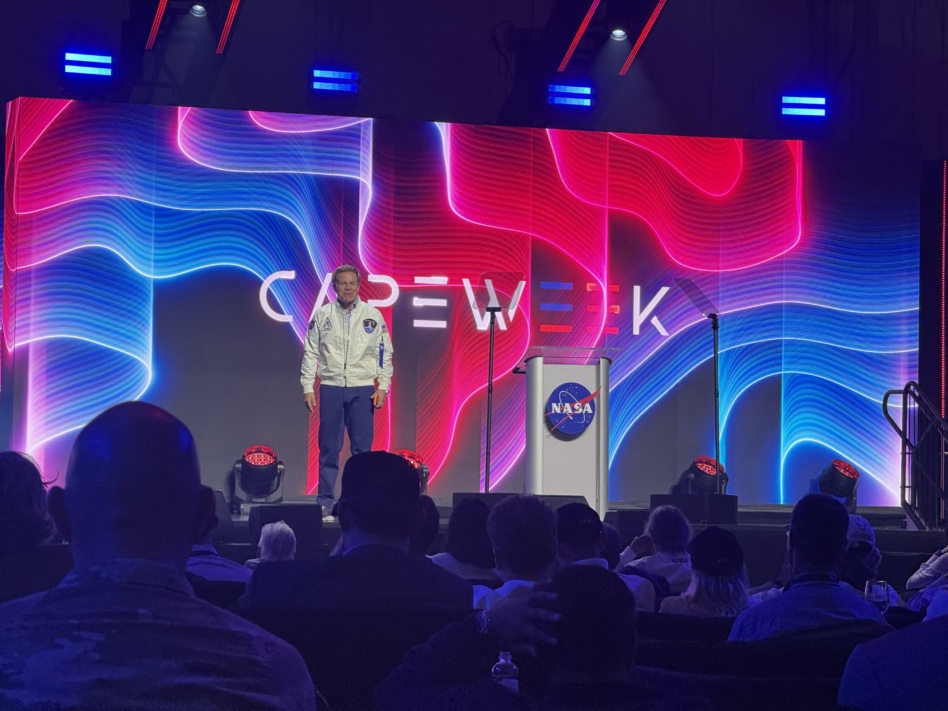
CAPE CANAVERAL, FL—Rep. Mike Haridopolos (R-FL) survived the Blue Wave—and he’s optimistic bipartisan support for NASA’s Artemis program means the program will survive the political upheaval on Capitol Hill as well.
The space subcommittee chair spoke with Payload on the sidelines of the UP.Summit at KSC about why he thinks NASA’s funding and the Artemis schedule can weather a Democratic House, and why he isn’t sweating a launch crunch.
This transcript has been edited for length and clarity.
Keep reading