

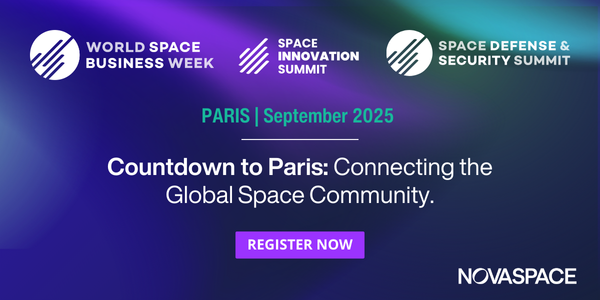
From September 15–19, 2025, Paris will once again become the capital of the global space domain. Over five days, three flagship summits will bring together more than 1,800 decision-makers, 250+ senior speakers, and 600 organizations from over 60 countries to define the future of space business, defense, and innovation.
Three Events. One Global Stage.
The World Space Business Week (WSBW) is returning for its 28th edition at the Hôtel du Collectionneur. Recognized as the premier global stage for the space industry, WSBW gathers more than 1,400 senior executives and 200 speakers to discuss the market, financial, and technological trends reshaping the sector. Topics span satellite communications, Earth observation, launch and infrastructure, mobility, and global investment flows.
Running in parallel, the Space Defense and Security Summit (SDSS) will convene at Les Salons Hoche. After a highly successful inaugural edition in 2024, SDSS 2025 will gather over 300 defense leaders, policymakers, and industry executives from 35+ nations. Its agenda will address deterrence and resilience, space situational awareness, secure satcom, ISR, innovation pathways, and international cooperation in a contested and fast-changing domain.
New this year, the Space Innovation Summit (SPIN) will debut at the Hôtel du Collectionneur on September 17. Dedicated to breakthrough technologies, dual-use innovations, and entrepreneurship, SPIN will feature start-up showcases, investor panels, and an awards ceremony recognizing the sector’s most promising ventures. With 200 decision-makers, 80 organizations, and 25 speakers, SPIN adds a critical innovation dimension to the week’s discussions.
Why Paris Matters
The strategic proximity of these three events creates an unparalleled environment for cross-sector collaboration. Business executives, defense officials, entrepreneurs, and investors will have the opportunity to meet not only within their own communities but also across domains, forging new partnerships and exploring synergies between civil, commercial, and military space.
Notable confirmed speakers include European Commissioner Andrius Kubilius, General Brian W. Gibson (United States Space Command), General Vincent Chusseau (French Space Command), General Michael Traut (German Space Command), Jeong Gyuheon (Defense Acquisition Program Administration – DAPA), Josef Aschbacher (ESA), Gwynne Shotwell (SpaceX), Adel Al-Saleh (SES), Max Haot (Vast), Jean-François Fallacher (Eutelsat Group), and Ricky Freeman (Amazon Kuiper Government Services).
Their presence underscores the scale and diversity of this gathering, where government leaders, agency heads, military officers, CEOs, investors, and entrepreneurs come together to debate strategy, sign deals, and shape the trajectory of the global space economy.
More Than a Conference
Hosted by Novaspace, the global space consulting and market intelligence leader, these summits are designed not just as forums for discussion but as catalysts for action. From networking and business development to market insights and investment opportunities, the week offers unmatched value for participants seeking to strengthen their role in the global space ecosystem.
For over 40 years, Novaspace has advised governments, institutions, and companies across the entire space value chain. WSBW, SDSS, and SPIN reflect this legacy — providing platforms where vision meets strategy, and where the global space community gathers to move the industry forward.
Secure Your Place
Registration is closing soon. Don’t miss your chance to be part of the most powerful week in space:
- World Space Business Week (WSBW): wsbw.com
- Space Defense and Security Summit (SDSS): sds-summit.com
- Space Innovation Summit (SPIN): wsbw.com/space-innovation-summit
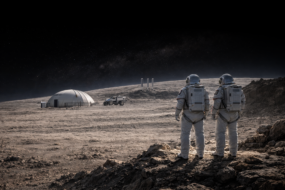
The Lunar Economy Could Be Worth $566B by 2050. First, We Have to Build It.
The return to the Moon is an infrastructure story, and Deloitte has created numbers to back it up. The number: A new report from Deloitte, Building the Lunar Economy: How a Sustained Presence on the Moon Could Transform Life, Industry, and Infrastructure on Earth and Beyond, puts the lunar economy’s cumulative economic value through 2050…
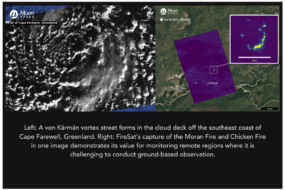
The Commercial-First Shift in National Security Space
For decades, the model for building national security space systems was relatively straightforward. The government defined a mission, established requirements, funded a spacecraft designed specifically to meet them, and ultimately owned and operated the resulting capability.
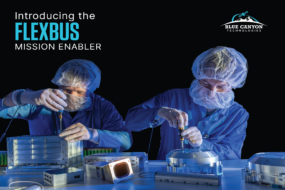
The New Middle Ground in Spacecraft Development
For years, the commercial space industry has focused on making spacecraft more affordable and accessible. Today, a new wave of customers want to build their own hardware to gain full ownership of the systems that define their mission.
A Faster Path to Orbit: How Hosted Payloads Are Changing Access to Space
Historically, deploying a new capability in space required significant time, investment, and technical expertise. Companies often had little choice but to build nearly everything themselves—from spacecraft and payload integration to ground infrastructure and mission operations. Today, the space industry offers a different model: hosted payloads. “We’re seeing companies looking for the fastest, most economical way…

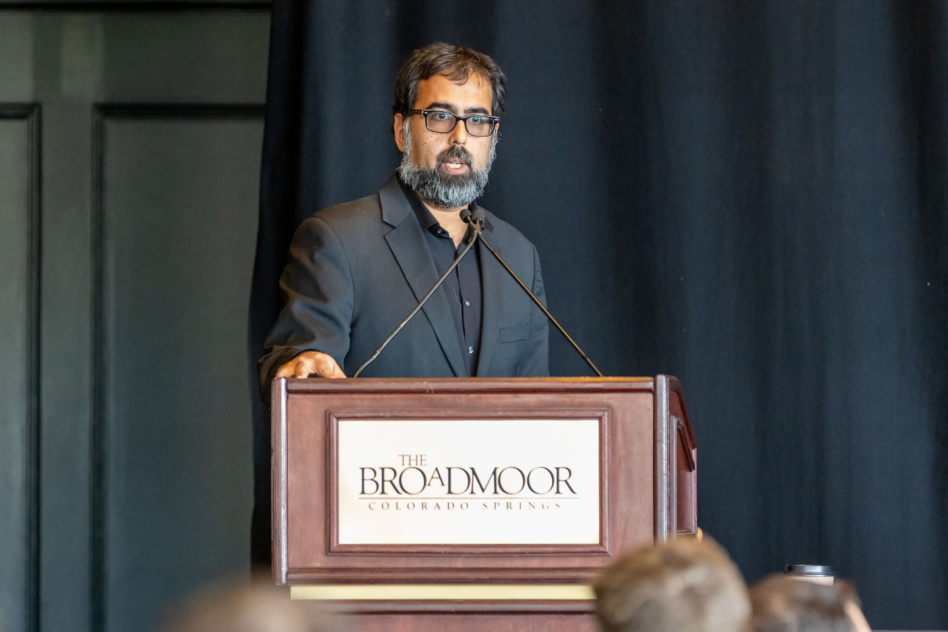
NASA’s acting administrator Sean Duffy named Amit Kshatriya as the agency’s new associate administrator yesterday, making Kshatriya the agency’s top full-time employee.
Path to the top: In his 20 years at NASA, Kshatriya has spent time on many of the technical teams driving America’s human exploration capabilities.
Now that he has the top civil service job—reporting to the part-time acting administrator—Kshatriya will lead the agency through a new era, where NASA aims to work more closely with industry to achieve its sole mission of beating China to the Moon.
Keep reading