



We have a rare Wednesday release of the Pathfinder podcast, but we promise the wait was worth it.
Joining us today is Kelly Larson, who’s the CEO of Aquarian Space. The Boulder, Colorado startup is building “internet for the solar system.” Or, to get a bit more technical, Aquarian is developing a communications network for interplanetary exploration.
In March, Aquarian announced it had raised $650,000 in seed funding to get to work on its solar system internet. Draper Associates led the seed round, which is especially notable because Draper was an early investor in SpaceX.
What we cover in today’s episode
For starters, we get a status report on what Aquarian’s been up to over the last six months. But there’s plenty more on tap, such as:
- How Kelly landed at Aquarian, with a serial entrepreneur background and non-space resume
- NASA’s Deep Space Network (DSN) and new opportunities with today’s technology
- Going to market with CLPS rovers and landers
- What a lunar Wi-Fi network will look like and its first applications
- The capital required for the initial network buildout
- Is Kelly worried about aliens free-loading on Aquarian’s Wi-Fi?
…and more! Come for the above topics, stay for ever-so-brief discussions of yoga and astrology (Ryan’s totally unbiased opinion: Aquarians rule).
Where to get Pathfinder #0015

Exclusive: Kapta Space Raises $24M Series A to Build Moving Target Radar Payload
Seattle-based Kapta Space announced a $24M Series A to build next-gen radar payloads designed to track moving targets.

NASA Signs Space Nuclear Pact, Says Moon Base Is Ahead of Schedule
Isaacman gave updates at the White House’s “Science: A New Golden Age Summit.”

Europe’s Earth Observation Providers Set Their Sights on Satcom
Open Cosmos recently laid out plans for a 192-satellite comms constellation, and ICEYE announced a partnership with Nokia for its own comms satellite network.
The post Europe’s Earth Observation Providers Set Their Sights on Satcoms appeared first on Payload Pro.
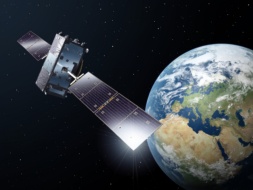
Europe’s Space Defenses Fall Just Shy of Weaponization
Europe doesn’t have any weapons in space—but that doesn’t mean the region is comfortable flying around in orbit defenseless.

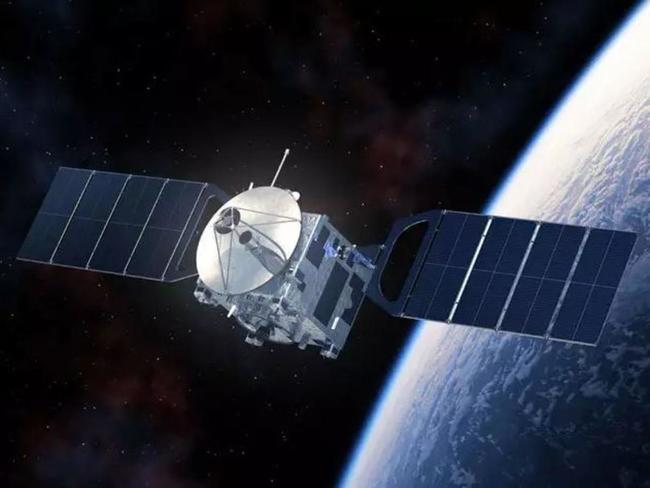
Skyroot Aerospace has raised $51M in a Series B round led by GIC, a global investment firm based in Singapore. This is the largest funding round in the Indian private space sector to date. The company raised an $11M Series A in 2021.
The launch startup is developing India’s first private launch vehicle and was the first to sign an MoU with the Indian space agency ISRO. The Vikram Series—a nod to Dr. Vikram Sarabhai, India’s space program founder—will be able to launch up to 800kg to LEO. A demonstration is planned for later this year.
So far, Skyroot has tested and validated its engine and propulsion tech. The funds will go towards expanding its space engineering team, as well as funding infrastructure and developmental launches. The startup has already begun booking payload slots.
Keep reading