


PiLogic is bringing its predictive tech for satellite failures to the military.
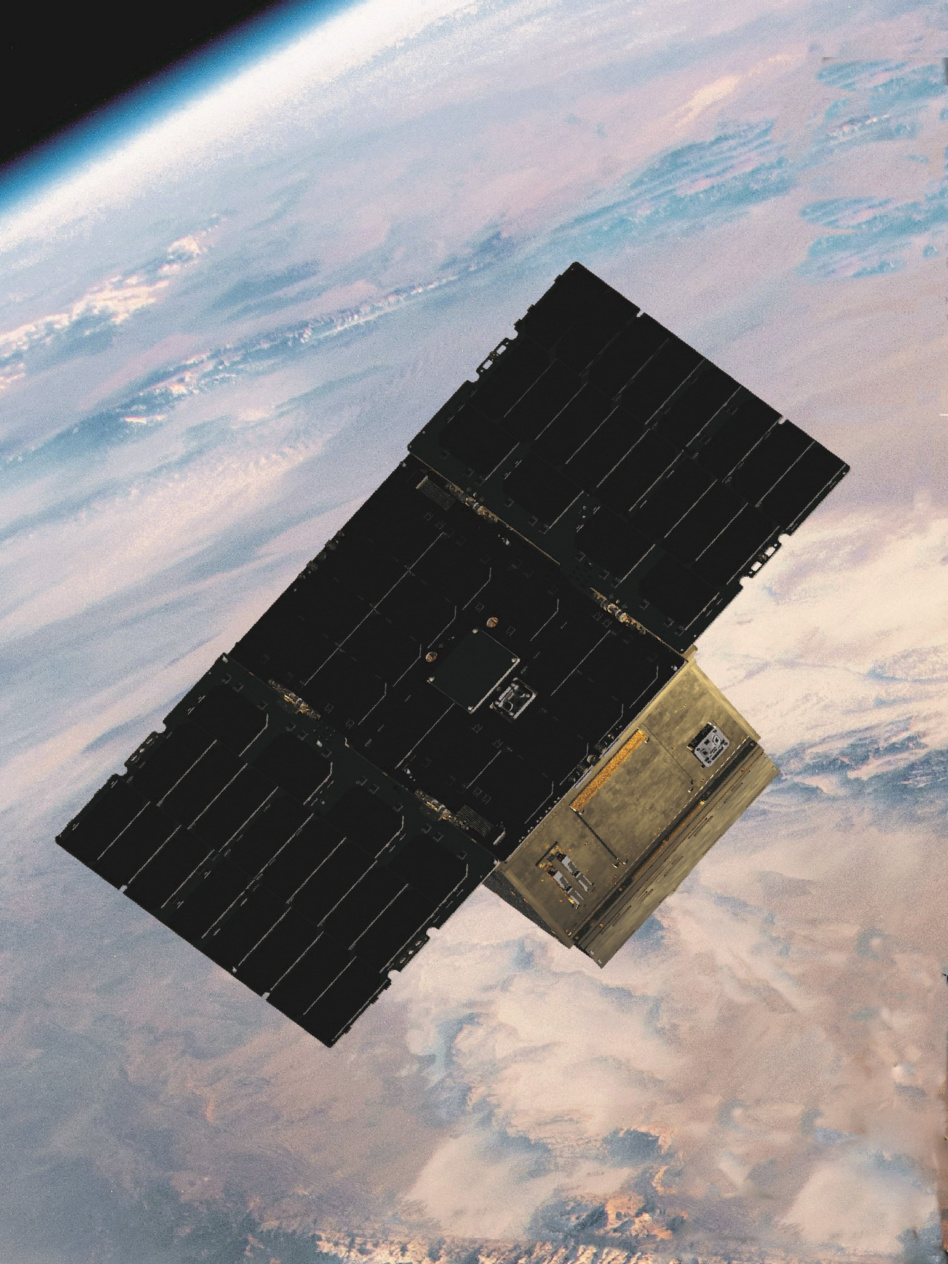
The LA-based space company is working with the Air Force Research Laboratory (AFRL) under a Cooperative Research and Development Agreement (CRADA). PiLogic is already testing its AI on two terrestrial based flat sats with AFRL, with hopes of expanding the military partnership into orbit.
The benefits: The CRADA has no monetary value. But PiLogic does get some unique benefits, including working closely with the AFRL on development, access to testing equipment at Kirtland Air Force Base, the ability to demo the tech for military customers, recommendations to commercial customers, and sponsorship for a TS/SCI clearance, according to PiLogic CEO Johannes Waldstein.
How it works: The company first builds a model for that specific satellite—a process that PiLogic has been able to speed up through automation. Then, the model ingests satellite data and telemetry to suss out sat failures due to things such as internal faults, electronic warfare,or cyber attacks, and space weather. Once the system finds an issue, it can respond in three ways, Waldstein said:
- Taking autonomous action without notifying a person—useful for saving mission-critical functions, such as immediately going into safe mode for things like temperature climbing out of control.
- Notifying a person that the sat system is going to take action, so that operators are aware of the development.
- Keeping a person in the loop by recommending an action, and requiring that person to press a button to select next steps—typically used for things that don’t require immediate decision-making, such as changing the satellite’s orientation or orbit.
Whodunit? Attribution in orbit is especially important for natsec missions, where the response could be different for a solar flare in comparison with a Chinese attack. While it’s extraordinarily difficult to attribute attacks in orbit, Waldstein said PiLogic’s system works through a process of elimination.
- If a failure is not due to internal issues or a manufacturing defect, then it has to be something outside the satellite.
- The system then looks at things like solar flares, and whether the satellite took a hit.
- Once it’s looked at other possible options, the system will say it’s likely an electronic warfare or cyber attack.
- It won’t attribute the attack to a particular satellite or nation, since the sat system doesn’t have access to data off the satellite—including what is nearby in orbit.
“We can say…’We believe it’s this.’ To get further, you need another source of data,” Waldstein said. “It’s very smart, but it’s not magic.”

Exclusive: DoD Taps Orbital Operations for Cryogenic Spacecraft Demo
The Long Beach, CA, startup has won up to $35M from the DoD under a prototype Other Transaction Agreement to fly a full-scale, in-orbit demo of Astraeus—its cryogenic-maneuvering vehicle.

Exclusive: EraDrive Lands $13M DoD Award For Autonomy Module
EraDrive won a $13M DoD award, under which the Space Force will buy an undisclosed number of the company’s Era-Node vision-based autonomy modules.

Europe’s Space Defenses Fall Just Shy of Weaponization
Europe doesn’t have any weapons in space—but that doesn’t mean the region is comfortable flying around in orbit defenseless.

Fortastra Raises $30M Series A to Fund its Next Security Spacecraft
The US military has weapons in space, and—with the orbital arsenal expanding—security is becoming a top priority.


SpaceX ($SPCX) began trading on the NASDAQ on Friday, closing the day at $161.11—19% higher than its IPO target price of $135.
SpaceX’s strong first day out was coupled with a significant pullback among investors in other publicly traded space companies, sending major players down across the board, including:
Making sense: For long-time space investors, the single-day dip could be explained—at least in part—by some investors switching teams.
Keep reading