


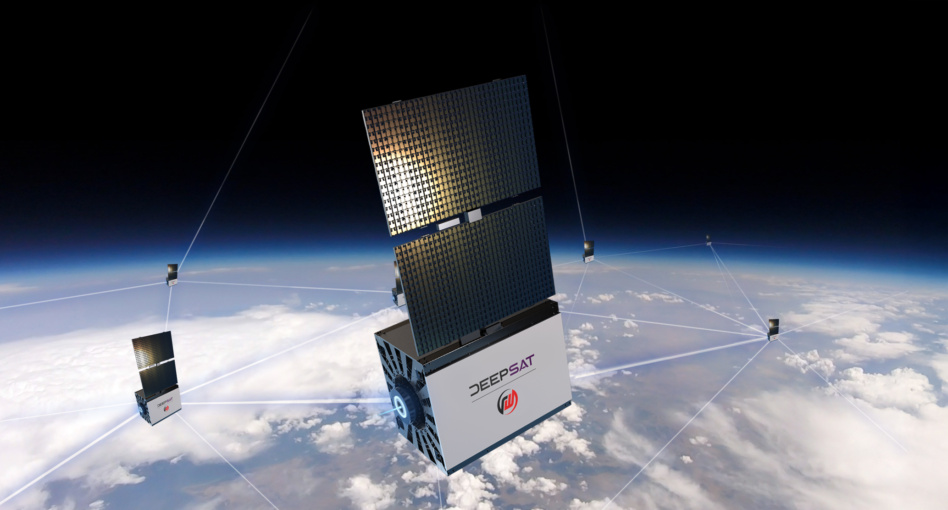
DeepSat, a LA-based startup with dreams of building multiple EO monitoring constellations in VLEO, partnered with Redwire last week to develop the initial phase of its planned constellation.
Under the contract, Redwire will deploy AI simulation software and digital mission planning software—called Acorn 2.0 and DEMSI, respectively—to design DeepSat’s constellation.
“This [software] is really the core of solving the VLEO problem,” Tom Campbell, Redwire’s president of space missions, told Payload. “It enables us to fuse multiple engineering tools in a way that we can fully model and render a solution before we ever bend metal.”
Buy or build: Operating in VLEO and overcoming the higher atmospheric drag there requires finetuning the satellite design to keep it from being sucked back down to Earth for as long as possible.
DeepSat turned to Redwire for its expertise in VLEO mission planning. Last year, Redwire won contracts with DARPA and ESA to develop VLEO sats.
Redwire’s software are essentially physics models that allow the company to determine which components—from propulsion systems to solar panels—are most capable of completing DeepSat’s mission. The models also predict how the satellites in the constellation will work together to maintain optimal monitoring of the ground below.
Keep it up: “We are incredibly bullish on VLEO, but…we want to be a resilient layer,” DeepSat’s CEO Nerses Ohanyan told Payload. “We’re not trying to prove out a whole lot of new, novel technologies. We’re trying to package existing, proven technologies and provide new services.”
DeepSat’s ultimate plan is to deploy a 15-20 sat constellation over the Indo-Pacific to monitor maritime activity and changes in the region. The hope is to build a constellation with a lifespan of 5-10 years, that can revisit the area every 30 minutes.
DeepSat is working with Satlantis to acquire sensors for the constellation that can provide images with resolution as low as 40cm, and expects to turn to the COTS market for its onboard GPUs as well.
The case for VLEO: If the atmospheric drag can be overcome, both Campbell and Ohanyan agree that VLEO is the future for the space industry. Operating at 250km can give EO sats better resolution. Comms sats in VLEO can also offer far lower latency transmission than their counterparts in LEO.
Exclusive: In Orbit Aerospace Pivots From Re-entry Vehicles to Spacecraft Autonomy
In Orbit has won new government contracts for its onboard AI system, which the company says can run a spacecraft’s operations without waiting on ground control.
Reflect Orbital Buys Two Skyroot Aerospace Launches
Reflect Orbital announced the purchase of two launches today from Indian launcher Skyroot Aerospace.

Fortastra Raises $30M Series A to Fund its Next Security Spacecraft
The US military has weapons in space, and—with the orbital arsenal expanding—security is becoming a top priority.
Exclusive: Xona Ramps Up Production Ahead of Pulsar Launch
With FCC approval in hand and six sats ready for the pad, Xona is turning to its next challenge: building the next 250.

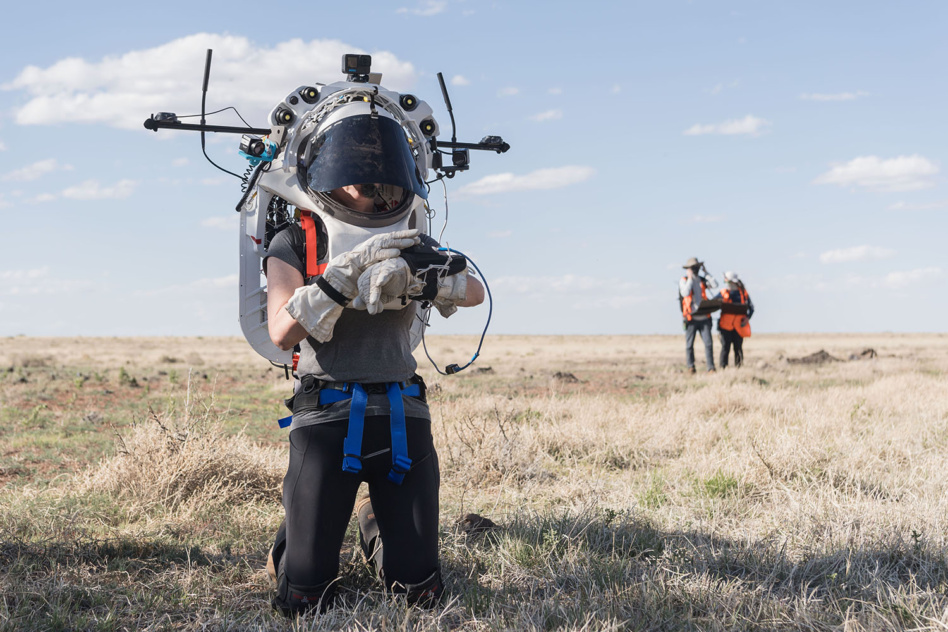
NASA is continuing its tradition of not gatekeeping success by unveiling a major update to its public software catalog, which has been behind many commercial advancements since its launch more than a decade ago.
More than 1,200 codes are available for download in the catalog, which sees nearly 6,000 downloads a year. Categories include autonomous systems, design and integration tools, data and image processing, and propulsion systems.
Who are the users? “Every commercial space company is employing software of ours…[and] most government agencies are also using it,” Dan Lockney, NASA’s program executive of tech transfer, told Payload.
Keep reading