


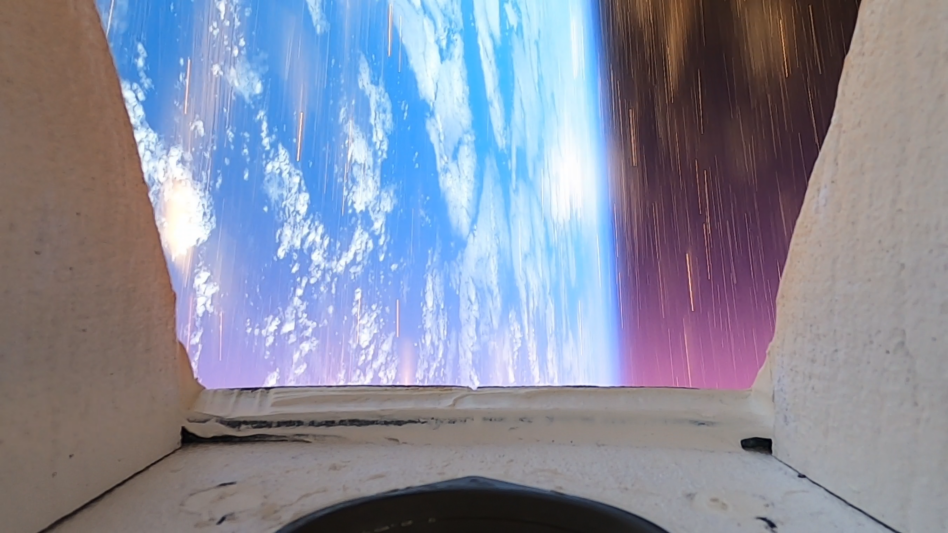
In a magic trick, making something disappear is only part of the act—bringing it back is what earns the applause. The same is becoming true in the space industry: Launching something to orbit is great and all, but the real wizardry is bringing payloads back in one piece.
For the growing orbital reentry sector, 2025 was a huge year. More than a dozen companies passed crucial milestones in their efforts to build return vehicles. Some emerged from stealth or received their first funding rounds, while others completed their first missions or turned demos into reliable operations.
At the same time, demand for reentry services has grown considerably. Much of that is driven by defense-focused hypersonic research, but the re-entry sector is also ready and willing to fill the vacuum for microgravity research customers when the ISS is retired in 2030.
Waiting in the wings: At the start of the decade, reentry services were almost exclusively offered by expensive, human-rated, or ISS-compatible vehicles often built by aerospace and defense primes with decades of history flying in space.
This year, that model changed. At least three startups flew reentry vehicles to space and back, marking a new era of comparatively low-cost launch-and-return missions.
- Varda Space Industries launched its first reentry mission in 2023, landing in the Utah desert the following year. In 2025, the company started to make reentry flights look easy, launching four missions throughout the year, with two still in orbit today.
- In April, ATMOS Space Cargo launched the demonstration mission of its Phoenix reentry capsule, which spent two hours in orbit before streaming back to a splash down off the coast of Brazil. (The reentry took place early due to SpaceX trajectory requirements.)
- The Exploration Company launched its first demo mission in June, dubbed Mission Possible, and says it became the first private European capsule to deorbit successfully—though it lost contact with the vehicle before it lost contact with the vehicle at 26km altitude.
The bad and ugly: 2025 wasn’t a great year for everyone, however, and a handful of reentry-capable vehicles spent the year plagued by delays and technical setbacks.
- Boeing’s Starliner spacecraft came off a rough 2024, during which the capsule returned to Earth months before its crew due to safety concerns. The spacecraft’s next flight was delayed this year to at least April 2026. (The company’s next effort will also be without a crew on board, which wasn’t the OG plan.)
- Sierra Space’s Dream Chaser also suffered a delay in its debut flight due to ongoing technical challenges. The first mission has now been pushed to late 2026, and the vehicle—once destined for ISS resupply flights—won’t dock with the orbital lab.
New kids on the block: More than a handful of startups in 2025 emerged from stealth, notched their first fundraising deals, or signed their first reentry agreements.
Next year, however, stands to be even busier, as many of these companies attempt their first flights. Here’s what to watch in the new year and beyond:
- SpaceWorks plans to fly a demonstration mission of its RED 25 reentry vehicle in 2026.
- Orbital Paradigm expects to fly the demo mission of its Kestrel reentry vehicle—which was originally set for this year—in early 2026, according to CEO Francesco Cacciatore.
- Reditus Space closed $7M+ in seed funding and plans to fly a demonstration mission in the summer of 2026.
- Inversion unveiled its Arc lifting body reentry vehicle, which it expects to fly for the first time in 2026.
- Radian Aerospace intends to build a reusable reentry vehicle (R3V), which could fly as early as 2026.
- Outpost, the startup building shipping containers for orbit, is booked to fly its first orbital reentry mission in early 2027, according to CEO Jason Dunn.
- Elevation Space expects to fly its first ELS-R reentry mission in late 2026 aboard Isar Aerospace’s Spectrum rocket.
- Lux Aeterna signed a reentry agreement with Southern Launch just this week, and plans to fly its first demo mission in 2027.
Correction: This article was updated to clarify that Outpost’s 2027 flight is its first reentry mission.
Xona Space Systems Raises $170M Series C to Scale Private GPS
Xona has spent the past few years building its ability to transmit PNT signals in LEO that are stronger, more accurate, and more secure than traditional GPS.
Arkadia Space Secures €14.5M to Develop New Biprop Engine
Spanish propulsion startup Arkadia Space just secured a stamp of approval from the European Investment Council.
PAVE Space Raises $40M for In-Space Propulsion Tech
PAVE’s propulsion systems rely on a storable rocket bipropellant, which aims to make launch operations simpler and more cost-effective, compared with cryogenic fuels.

Airbase Emerges From Stealth With $5M to Automate Spectrum Allocation
As demand for spectrum grows alongside the rising number of missions in orbit, a new startup is looking to ease management of this precious, finite resource.

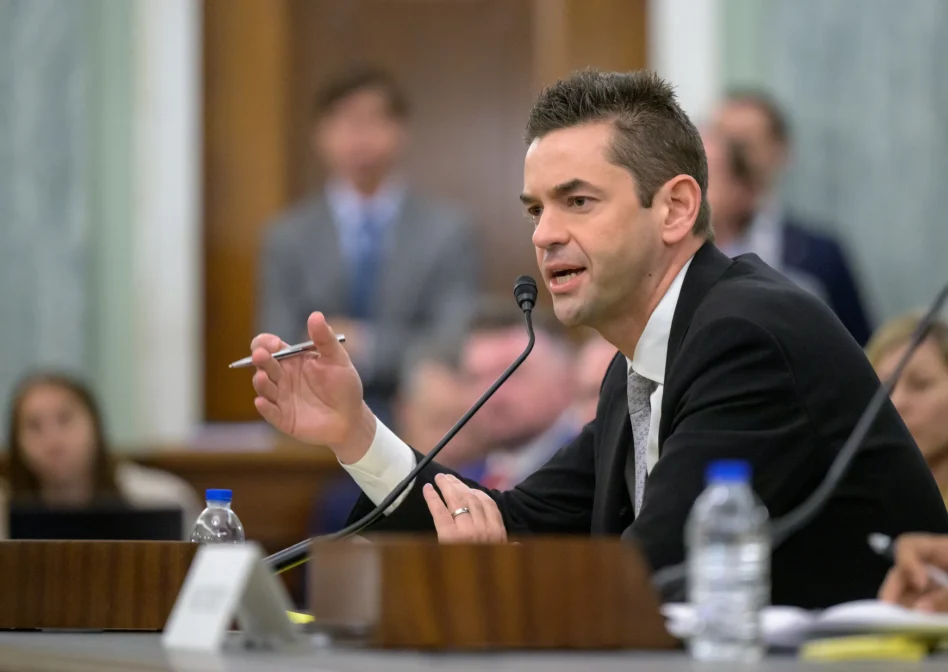
At long last, NASA has a head again.
The agency had a year of trials and tribulation., Without a permanent administrator at its head, lack of direction ran alongside budgetary and workforce woes. Fixing that mess will be a tough job. But someone’s gotta do it.
That someone will be Jared Isaacman—now that the Senate has confirmed the billionaire private astronaut and entrepreneur—for whom the second time was the charm. The Senate voted 67–30 in favor of the appointment.
Keep reading